_
Hope
Links
- Get link
- X
- Other Apps
La haine (Hate 1995)
The film's ending is more or less predictable and inevitable, but effective all the same. The film is not about its ending. It is not about the landing, but about the fall. “Hate” is, I suppose, a Generation X film, whatever that means, but more mature and insightful than the American Gen X movies. In America, we cling to the notion that we have choice, and so if our Gen X heroes are alienated from society, it is their choice--it's their “lifestyle.” In France, Kassovitz says, it is society that has made the choice.
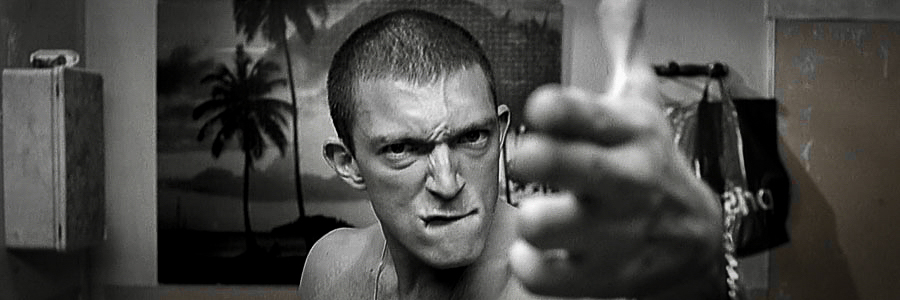
Directed by Mathieu Kassovitz, La Haine (translated as Hate) remains one of the most influential works in contemporary French cinema. Shot in stark black-and-white, the film is a 24-hour chronicle of three young men living in the banlieues (suburban housing projects) on the outskirts of Paris following a night of violent riots.
The story begins in the aftermath of a riot triggered by the police beating of a local youth, Abdel Ichaha, who remains in a coma. The film follows three friends—Vinz, Saïd, and Hubert—as they navigate the tension of their neighborhood and eventually travel into the center of Paris.
Visual Style and Impact
Cinematography: The decision to use black-and-white was both aesthetic and political, lending the film a documentary-like "realness" and removing the romanticized "City of Light" colors of Paris.
Dynamic Camerawork: The film is famous for its creative shots, such as the long tracking shots through the estates and the "dolly zoom" used during the trip to Paris to symbolize the characters' disorientation.
Sound Design: The film utilizes silence and ambient noise to build tension, most notably in the "DJ scene" where music from a window floats over the rooftops, providing a rare moment of transcendence.
Legacy
La Haine was a critical and commercial sensation, winning the Best Director award at the Cannes Film Festival and three César Awards (including Best Film).
Decades later, the film remains tragically relevant. It is frequently cited during periods of civil unrest in France (such as the 2005 and 2023 riots) as it perfectly captured the festering social and economic grievances that continue to define the relationship between the French state and its suburban youth.