American Classic-Fargo Coen Brothers'1996 is daring brutal, dark comedy
It's daring black comedy by one of the most consistently inventive moviemaking teams of the last few decade, brothers Joel and Ethan Coen.
“Fargo” (1996) was directed by Joel Coen, produced by Ethan Coen, co-written by the brothers, and set in the American upper Midwest where they grew up. It begins with the information that it is “based on a true story."
Fargo’s narrative follows a pathetic failure of a man, car salesman Jerry Lundegaard (William H. Macy), desperate, wretched and incompetent car salesman and hapless husband, who is pathetically in debt.
In an attempt to wriggle his way out of tone of debt, Jerry hires two lumbering ex-cons, Carl Showalter (Steve Buscemi) and Gaear Grimsrud (Peter Stormare), to kidnap his wife.
He’ll then secure the ransom money from his wealthy father-in-law (Harve Presnell), pay off the goons and get out of debt.
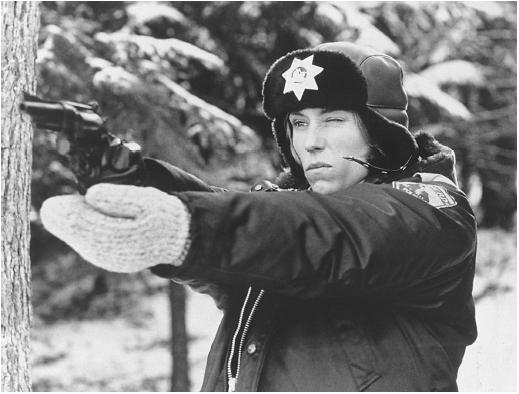
The following morning, local police chief Marge Gunderson (Frances McDormand) wakes up with a triple homicide on her hands. Well into her second trimester, she pulls on her mukluks, drives to the crime scene and makes a first-class assessment of what transpired. It’s not anythinglike the typical goings-on in Paul Bunyan country.
The Coens had working scripts for both Fargo and The Big Lebowski before they even shot The Hudsucker Proxy, so when the latter tanked they were well positioned to move on quickly. Fargo had been written with Frances McDormand in mind and for The Big Lebowski they wanted Jeff Bridges.

Fargo achieves nothing short of cinematic perfection. It never steps wrong, never misses a beat in its precise characterizations, remarkable performances by Frances McDormand and William H. Macy and the visual style that emphasizes the almost spiritual vastness of the bleak Upper Midwestern setting. Because it values small, carefully observed character based details over the mechanics of the plot it’s a rich, endlessly rewarding experience. It’s the most complete film the Coens have ever made, nothing short of a movie for the ages.
Its critical and box-office success also came with seven Academy Awards nominations, including Best Supporting Actor (William H. Macy), Best Cinematography Best Director (Joel Coen), Best Film Editing (alias Roderick Jaynes, actually the Coens), and Best Picture (Ethan Coen). The film's two well-deserved Oscars were for Best Original Screenplay (Joel and Ethan Coen), and Best Actress (Frances McDormand, Joel Coen's real-life wife).

The Faux-True Story Framing
One of the most famous aspects of Fargo is its opening title card:
“This is a true story. The events depicted in this film took place in Minnesota in 1987. At the request of the survivors, the names have been changed. Out of respect for the dead, the rest has been told exactly as it occurred.”
Despite this solemn declaration, the story is entirely fictional. The Coen brothers admitted they framed it this way to prepare the audience to accept the bizarre sequence of events and to anchor the film’s domestic realism. By convincing the audience of its truthfulness, the film heightens both the tragic gravity of the violence and the absurdity of the characters' incompetence.

Key Themes
The Banality of Evil vs. Simple Decency
Fargo contrasts extreme, senseless violence with the mundane, comforting routines of Midwestern life. The evil in the film isn't grand or operatic; it is messy, stupid, and petty. Marge’s famous closing monologue to a captured Gaear encapsulates this theme perfectly:
“And for what? For a little bit of money? There’s more to life than a little money, you know. Don’t you know that? And here ya are, and it’s a beautiful day. Well. I just don't understand it.”
"Midwestern Nice"
The film famously satirizes the regional culture of Minnesota and North Dakota—characterized by polite euphemisms, heavy accents, passive-aggressive pleasantries, and a relentless desire to avoid conflict. This polite facade is juxtaposed against the raw, ugly violence of the plot, creating a unique tension that is both hilarious and unsettling.
Chaos and the Illusion of Control
Jerry, Carl, and Wade all believe they can control their circumstances through deals, contracts, and schemes. However, Fargo presents a universe governed by chaos. A minor traffic stop ruins a kidnapping; a chance encounter leads to triple murder. Only Marge, who accepts the world as it is and focuses on doing her job, navigates this chaotic landscape successfully.

Cinematography and Score
Roger Deakins' Visuals
Cinematographer Roger Deakins utilizes the stark, white, desolate landscape of the Midwestern winter to create a sense of isolation and moral blankness.
Carter Burwell’s Score
Carter Burwell’s haunting score is based on a Scandinavian folk song, The Lost Sheep. It features a soaring, melancholic main theme played on a hardanger fiddle. The grand, operatic scale of the music contrasts beautifully with the small-mindedness of the characters and the flat, snowy plains, giving the film an unexpected, almost mythic emotional weight.
6. Legacy and Impact
Fargo was a critical and commercial triumph. It received seven Academy Award nominations, winning two (Best Original Screenplay for the Coens and Best Actress for McDormand).
In 2006, the film was deemed "culturally, historically, or aesthetically significant" by the Library of Congress and selected for preservation in the National Film Registry. Furthermore, its unique blend of dark comedy, crime, and regional flavor laid the groundwork for the highly acclaimed FX anthology television series of the same name, which premiered in 2014 and continues to expand on the Coens' cinematic universe.


.jpeg)


.jpeg)