In Prague in 1988 Russian trucks rumble through the streets and Czechs make an accommodation with their masters, or pay a price.
Frantisek Louka (Zdenek Sverak), a cellist, has fallen out of grace with the Czech Philharmonic Orchestra and is now reduced to playing music at funerals, but his nonchalance remains intact. Gruff and sly, a born seducer, he finds work or women wherever they are available without considering the consequences.
He leads a life of quiet dissipation. His favorite pursuits are musicianship, skirt-chasing and looking after his elderly mother, not necessarily in that order. Louka's mother is very vocal in her political opinions. The year is 1988, and she thinks the Russian troops occupying her country are locusts.
The story is set in motion when Louka is coaxed into a marriage of convenience. After all, he's a man who seeks out extra work restoring gold-leaf paint on gravestones, so he's open to any reasonable offer. The bride is the niece of his friend and she needs Czech papers, but there are some sticking points. For one thing, she's Russian; for another, she has a little son.
When his "wife" escapes to Germany shortly after arranged wedding he finds himself the custodian of an angelic little Russian boy.
“Kolya” was written by its star, Zdenek Sverak, and directed by his son, Jan. It is a work of love, beautifully photographed by Vladimir Smutny in rich deep reds and browns, with steam rising from soup and the little boy looking wistfully at the pigeons on the other side of the tower window. It is said that American audiences are going to fewer foreign films these days. Missing a film like “Kolya,” winner of a 1997 Golden Globe, would not be a price I would be willing to pay.
Roger Ebert
Watch movie
Kolja (1996) HD EN - Kolya - YouTube
Set in 1988–1989 Soviet-occupied Czechoslovakia, the story follows František Louka (Zdeněk Svěrák), a middle-aged bachelor and concert cellist. Once a prestigious member of the Czech Philharmonic, Louka has been blacklisted for political unreliability and now survives by playing at funerals in crematoriums and painting gravestones.
Desperate for money to buy a car and pay off debts, Louka agrees to a "sham marriage" with a Russian woman named Nadežda so she can obtain Czech citizenship. Shortly after the wedding, Nadežda uses her new papers to defect to West Germany, leaving behind her five-year-old son, Kolya (Andrej Chalimon).

Major Awards & Recognition
Academy Award (1997): Best Foreign Language Film.
Golden Globe Award (1997): Best Foreign Language Film.
Czech Lion Awards: Won 6 awards, including Best Film, Best Director, and Best Screenplay.
Critical Reception: Holds a 96% rating on Rotten Tomatoes. Critics praised it for being "heartwarming without being saccharine," noting the chemistry between the elder Svěrák and the young Andrej Chalimon.
Ending and Legacy
The film concludes with the inevitable separation of Louka and Kolya as the borders open and Kolya is reunited with his mother. The bittersweet ending emphasizes that while their time together was brief, it fundamentally "cured" Louka of his isolation.
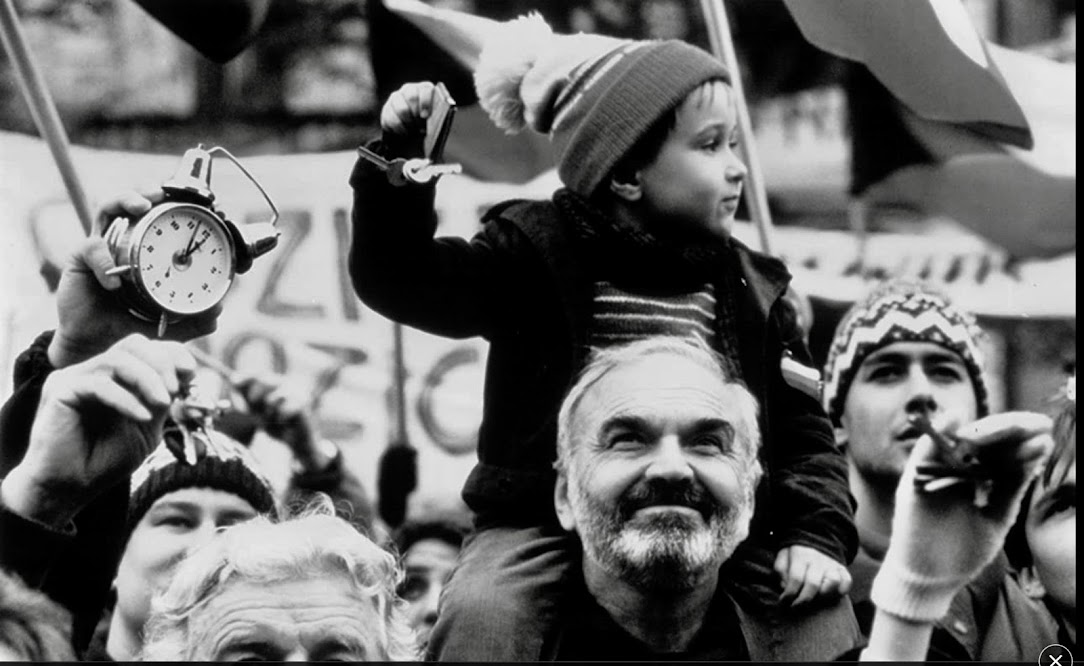
Kolya remains the most successful Czech film on the international stage since the country's split from Slovakia. It is often cited as a masterpiece of "show, don't tell" filmmaking, using quiet moments—like a child's toy left behind or a look shared during a protest—to convey deep emotional truths about poverty, aging, and human connection.


-3.jpg)





.jpg)