"It is not often given to a director to make a perfect film. Some spend their lives trying, but always fall short. Robert Altman has made a dozen films that can be called great in one way or another, but one of them is perfect, and that one is "McCabe & Mrs. Miller" (1971). This is one of the saddest films I have ever seen, filled with a yearning for love and home that will not ever come -- not for McCabe, not with Mrs. Miller, not in the town of Presbyterian Church, which cowers under a gray sky always heavy with rain or snow. The film is a poem--an elegy for the dead."
McCabe & Mrs. Miller is a beautiful pipe dream of a movie — a fleeting, almost diaphanous vision of what frontier life might have been. The film, directed by Robert Altman, and starring Warren Beatty as a small-time gambler and Julie Christie as an ambitious madam in the turn-of-the-century Northwest, is so indirect in method that it throws one off base. It’s not much like other Westerns; it’s not really much like other movies. We are used to movie romances, but this movie is a figment of the romantic imagination.
MCCABE & MRS. MILLER (1971) – REVIEW BY PAULINE KAEL >>>
Few films have such an overwhelming sense of location. Presbyterian Church is a town thrown together out of raw lumber, hewn from the forests that threaten to reclaim it. The earth is either mud or frozen ice. The days are short and there is little light inside, just enough from a gas lamp to make a gold tooth sparkle, or a teardrop glisten. This is not the kind of movie where the characters are introduced. They are all already here. They have been here for a long time. They know all about one another.
A man rides into town through the rain. He walks into a saloon, makes sure he knows where the back door is, goes out to his horse again, comes in with a cloth, and covers a table. The men are pulling up chairs before he has settled down. He is a gambler named McCabe (Warren Beatty). Somebody thinks they heard that McCabe once shot a man. In the background, somebody is vaguely heard asking, "Laura, what's for dinner?"
The town of Presbyterian Church is almost all male, and most of the men are involved in building the town. It looks like a construction site, holes half-dug, lumber piled up waiting to be used, an old painted door joined to a raw new frame. Apart from work, there is nothing to do but drink, gamble and hire the pleasures of women. McCabe takes his winnings and purchases three fancy women--not as entertainment, as an investment.
Mrs. Miller (Julie Christie) arrives in town and wants to become his partner. She is a Cockney who has long since ceased to be interested in her own beauty, except for what it will earn her. She explains to McCabe that he knows nothing of women, cannot see through their excuses, cannot quiet their fears or see them through female troubles, does not even know enough to keep the whole town from being clapped out within a week. She will import some classier women from San Francisco. They will do better than he can do on his own. He has to agree.
Men arrive from a big mining company to make McCabe an offer for his holdings. Full of beans, he rejects their offer and names his price, much too high. That night he brags to Mrs. Miller, whose face shows what a mistake he has made. The men are gone by breakfast time. McCabe rides into town to try to accept their offer, but is too late to find them. He knows the company will send someone to kill him.
Read the title. "McCabe & Mrs. Miller." Not "and," as in a couple, but "&," as in a corporation. It is a business arrangement. Everything is business with her. What sorrows she knew before she arrived in Presbyterian Church are behind her now. Everything else is behind her now, too, the opium promises. Poor McCabe. He had poetry in him. Too bad he rode into a town where nobody knew what poetry was but one, and she already lost to it.
https://www.rogerebert.com/reviews/great-movie-mccabe-and-mrs-miller-1971
Release date: June 24, 1971 (USA) Starring: Warren Beatty; Julie Christie; René Auberjonois
FILM DIRECTORS--ROBERT ALTMAN >>>
"I don't make movies, I make films."
McCabe & Mrs. Miller is widely regarded as one of the greatest "Revisionist Westerns" (or "Anti-Westerns") ever made. Directed by Robert Altman during the height of the New Hollywood era, the film deconstructs the romanticized myths of the American frontier, replacing them with a gritty, melancholy, and deeply human portrait of capitalism, community, and failure.
Why It Is a "Revisionist" Western
Altman deliberately subverts almost every trope associated with the genre:
The Hero: John McCabe is not a stoic, capable lawman or a noble outlaw. He is a "small-time" man with big-time aspirations, often seen mumbling to himself in frustration. He is fundamentally inadequate for the world he tries to conquer.
The Setting: Instead of the sun-drenched deserts of Monument Valley, the film is set in a muddy, rainy, and eventually snow-covered wilderness. The environment is hostile and suffocating rather than expansive and liberating.
Capitalism vs. Individualism: The "villain" is not a specific "bad man" but an faceless, encroaching corporate entity. The film suggests that the rugged individualist of the old West stands no chance against the organized machinery of modern capitalism.
The Shootout: The final battle is not a face-to-face duel in the street. It is a desperate, messy, and lonely game of hide-and-seek where the participants use trickery and shoot each other in the back.
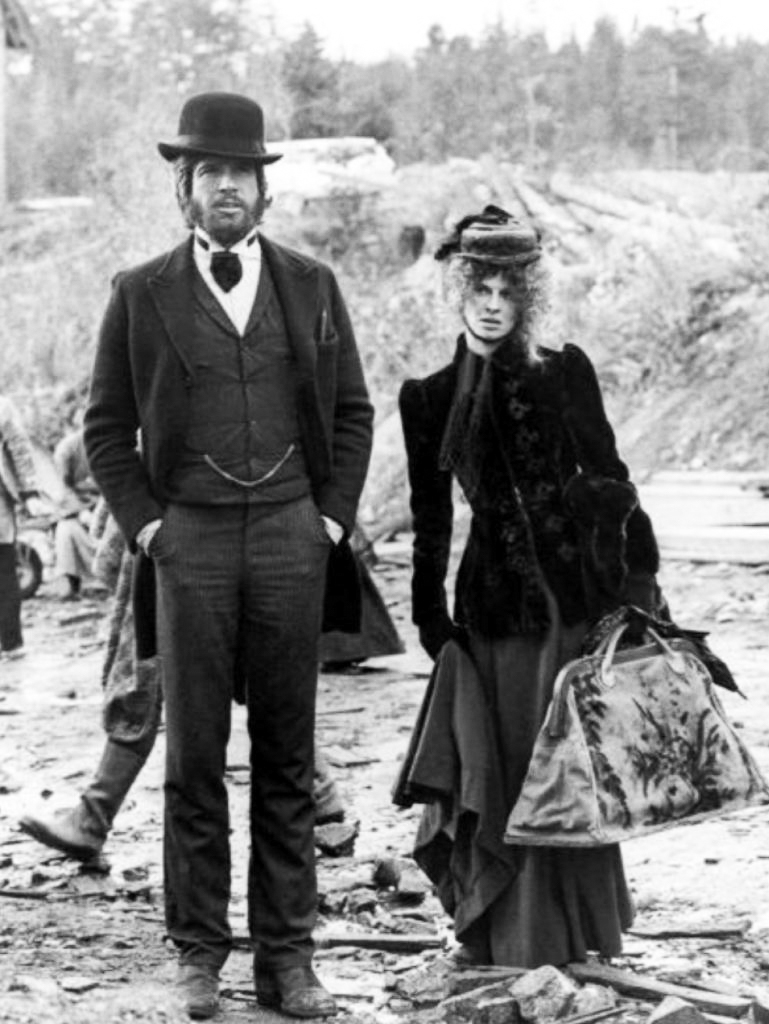
Cinematography: Vilmos Zsigmond used a technique called "flashing" (pre-fogging the film) to create a faded, grainy look that resembles old daguerreotype photographs. This gave the 1971 film an "antique" feel that felt more authentic than the technicolor Westerns of the 1950s.
Sound Design: Altman pioneered a "multi-track" recording system that allowed for overlapping dialogue. In many scenes, multiple conversations happen at once, making the viewer feel like an eavesdropper in a real environment. This technique added to the "naturalistic" feel but was controversial at the time because audiences found it hard to follow.
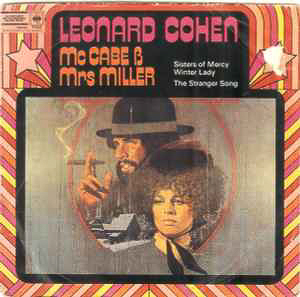
The Soundtrack: The film features several songs by Leonard Cohen (notably "The Stranger Song," "Sisters of Mercy," and "Winter Lady"). Interestingly, Cohen's music was not written for the film; Altman simply felt the melancholic folk style matched the visuals perfectly. The music serves as a sort of Greek chorus, commenting on McCabe's internal state.


.jpg)





.jpg)