Washington directs and stars in this intelligent and brilliantly cast adaptation of August Wilson’s play about a garbage collector who was once a baseball star
Every payday, garbage collector Troy Maxson (Denzel Washington) holds court in the backyard of the Pittsburgh home he shares with his wife, Rose (Viola Davis) and their son, Cory (Jovan Adepo). By Troy’s side are his two best friends, Bono (Stephen Henderson), the co-worker he’s known for decades, and a bottle of gin, which Troy has also known for decades. Both are very good listeners, and there’s nothing Troy enjoys more than a captive audience. When his tales spin too wildly into fiction—at one point, Troy reminisces about wrestling with Death itself—Rose steps outside to playfully call him on his nonsense. Troy cuddles with her, tossing the raunchiest dialogue he has to offer in her direction. As the evening progresses, Troy is sometimes joined by his eldest son, Lyons (Russell Hornsby), who borrows money, or his disabled war veteran brother, Gabe (Mykelti Williamson), who has just moved from Troy’s home in a defiant display of his independence. Life is a series of routines culminating in death. Every payday brings Troy Maxson closer to his wrestling partner.
This repeated scenario forms the basis of August Wilson’s Pulitzer Prize-winning play, “Fences.” 29 years after its Broadway premiere, “Fences” arrives in theaters courtesy of a screenplay by the late playwright himself. With two Pulitzer Prizes and his ten-play magnum opus, “The Pittsburgh Cycle,” (of which “Fences” is the sixth work), Wilson takes his rightful place alongside Eugene O’Neill, Edward Albee and Tennessee Williams as one of the greatest American playwrights. The focus of Wilson’s cycle is African-American life across the entire 20th century, with each play taking place in a particular decade. “Fences” is set in the 1950’s, but the timeframe does not date the material. Its universal themes supersede any of its societal details, though based on this year’s election cycle, viewers may be stunned to discover that the American working class is more than just Midwestern and White.
Wilson’s common theme of legacy fuels “Fences” in the guise of Troy’s relationship with Cory. Cory has the opportunity to get a college scholarship for his football skills, but Troy is against this primarily because of his own failed sports dreams. Troy was a great baseball player in the Negro Leagues, but this was well before Jackie Robinson (whom Troy despises), so Troy never realized his dreams of major league glory. It’s not lost on us that Troy is denied success in what is commonly called “America’s Pastime”; baseball serves as the perfect metaphor for the American Dream. Like the America of Troy’s time, it was segregated and demanded that Blacks knew their place. For most fathers, knowing their son wishes to follow in his footsteps would be a happy occasion, especially in sports and even more so if one’s legacy might be extended or surpassed. Yet Troy’s brutal pig-headedness drives an irredeemable wedge between the two. In his big confrontation scene, newcomer Adepo goes toe-to-toe with his scene-stealing director and almost upstages him.
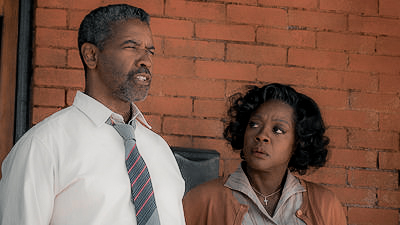
Cinematic Adaptation: From Stage to Screen
Denzel Washington’s direction is intentionally restrained. Rather than "opening up" the play with many locations, he keeps the action primarily confined to the Maxson house and backyard.
The Power of the Close-Up: Washington uses tight shots to emphasize the claustrophobia of the Maxson home. This allows the audience to see the micro-expressions in Viola Davis’s performance that would be lost on a stage.
Rhythmic Dialogue: The film preserves August Wilson’s specific "jazz-like" cadence. The dialogue is not just information; it is music, with repetitions and "solos" (monologues) that define the film's pacing.
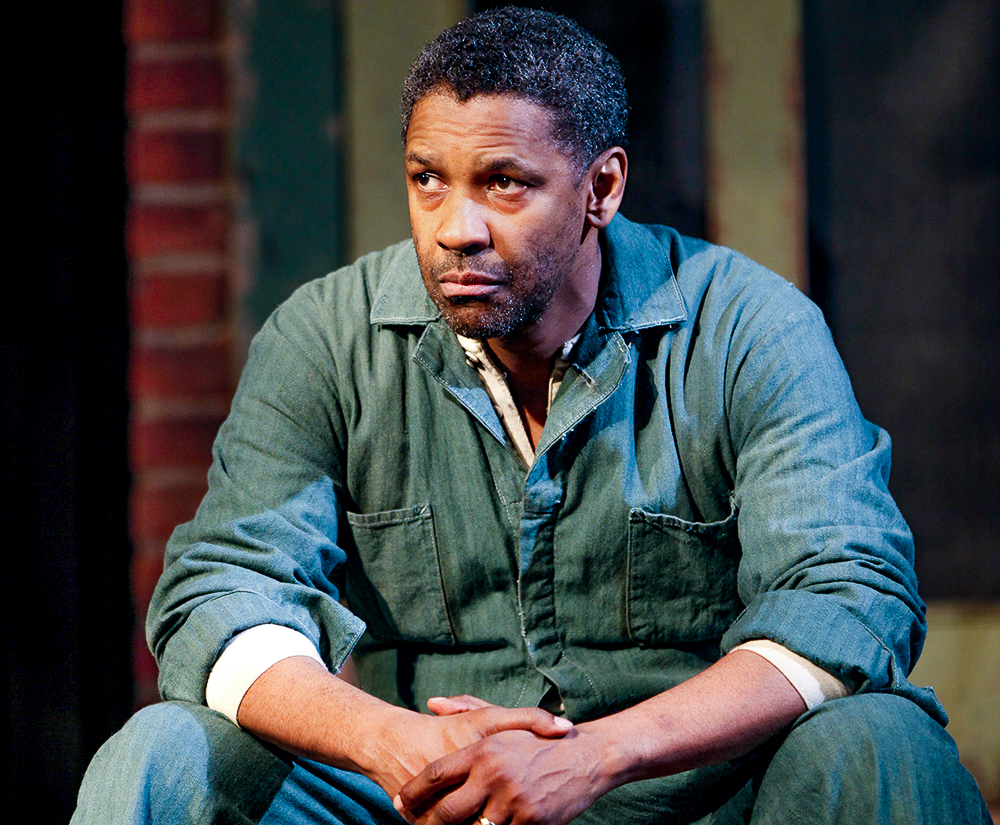

Viola Davis: Won the Academy Award for Best Supporting Actress. Her "snot-and-tears" monologue, in which she confronts Troy about her own sacrificed dreams, is considered one of the greatest acting moments of the decade.
Denzel Washington: Received an Oscar nomination for Best Actor. He captures Troy’s dual nature—his infectious charisma and storytelling vs. his overbearing, destructive pride.


.jpeg)




.jpg)