One of the best and most influential films of all time
When I first saw Pulp Fiction I did not think about anything else for the next 48 hours. That never happened before and probably will never happen again.
Gemini3
The Cultural Logic of Cinematic Pastiche: A Comprehensive Critical and Industrial Analysis of Pulp Fiction (1994)
Narrative Disruption and the Postmodern Theoretical Horizon
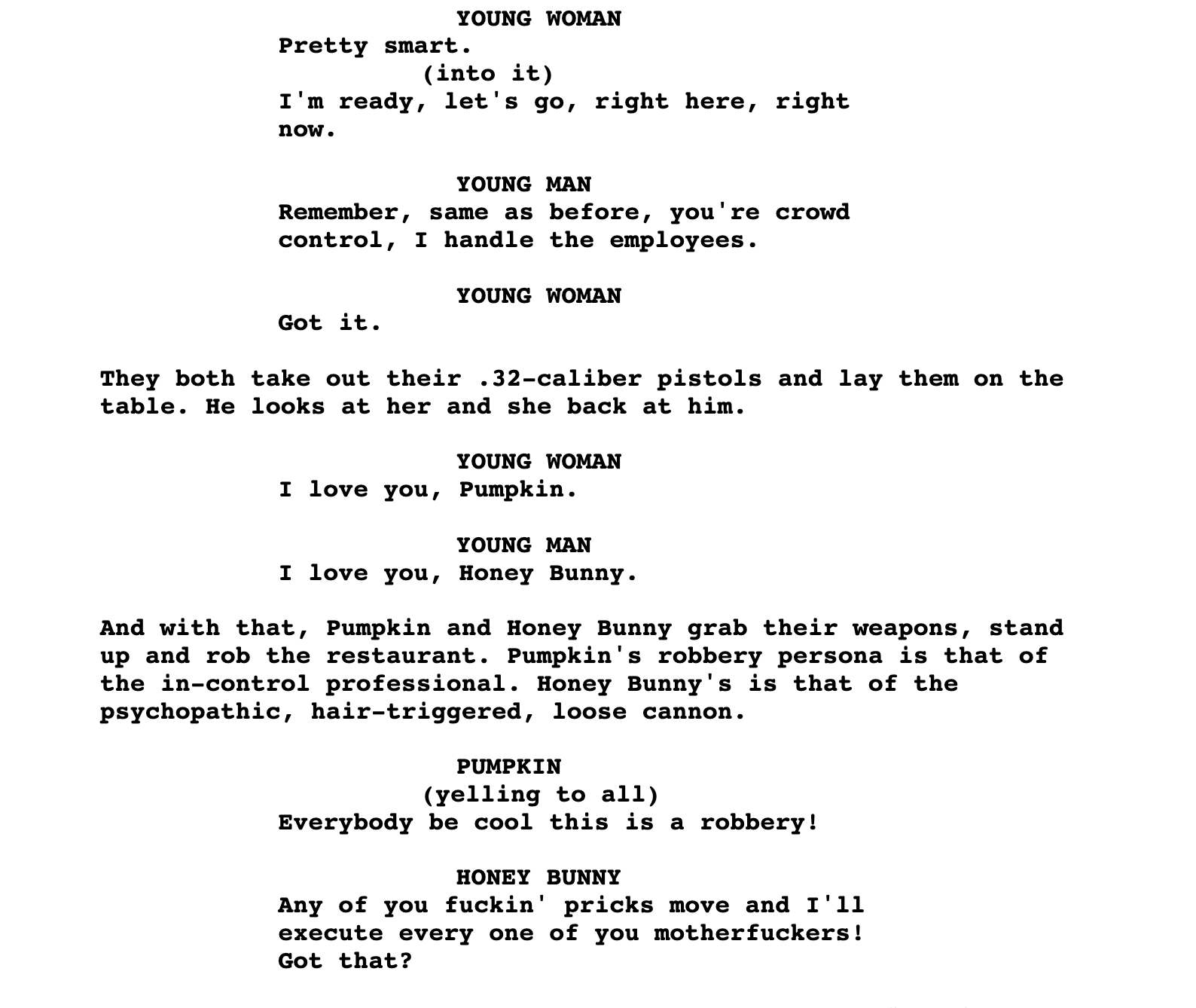
Quentin Tarantino’s Pulp Fiction (1994) represents a critical turning point in late-twentieth-century cinema, serving as both a commercial blockbuster and a primary text for postmodern film theory. The film’s title directly references the mid-twentieth-century pulp magazines and hardboiled detective novels that were celebrated for their graphic depiction of violence and stylized, fast-paced dialogue. Rather than adhering to the linear conventions of classical Hollywood cinema, the narrative is constructed out of three distinct yet intersecting crime stories—Vincent Vega and Marsellus Wallace's Wife, The Gold Watch, and The Bonnie Situation—structured around a non-chronological timeline. This temporal fragmentation functions as a deliberate aesthetic device, rejecting passive consumption and requiring an active audience to reconstruct the chronology and decipher the underlying thematic connections.
From an academic perspective, Pulp Fiction operates as an illustrative embodiment of postmodern theory, particularly when viewed through the critical frameworks of Fredric Jameson and Jean Baudrillard. Jameson defined postmodern culture as the "cultural logic of late capitalism," a period characterized by a distinct "depthlessness" that privileges surface appearance and stylistic allusion over historical authenticity. In Jameson’s view, contemporary art has lost its capacity for genuine stylistic innovation, leaving creators with no choice but to imitate dead styles and speak through the masks of the past—a practice he labeled as pastiche.
Pulp Fiction embraces pastiche by cannibalizing a wide array of cinematic and popular culture movements, ranging from fifties rock and roll and sixties surf music to seventies blaxploitation and French New Wave crime thrillers. Unlike parody, which ridicules a prevailing norm, pastiche functions as a "blank parody," a neutral imitation that pays homage to obsolete styles without a satirical impulse. This dynamic is further elaborated by literary theorist Linda Hutcheon, who argues that while parody remains transformational in its relationship to other texts, pastiche is inherently imitative. John Barth presents a more optimistic interpretation, viewing pastiche as a form of "revivification" that stitches together the "amputated limbs" of exhausted realism to create a new, vibrant aesthetic form.
Table 1: Postmodern Theoretical Frameworks Applied to Pulp Fiction
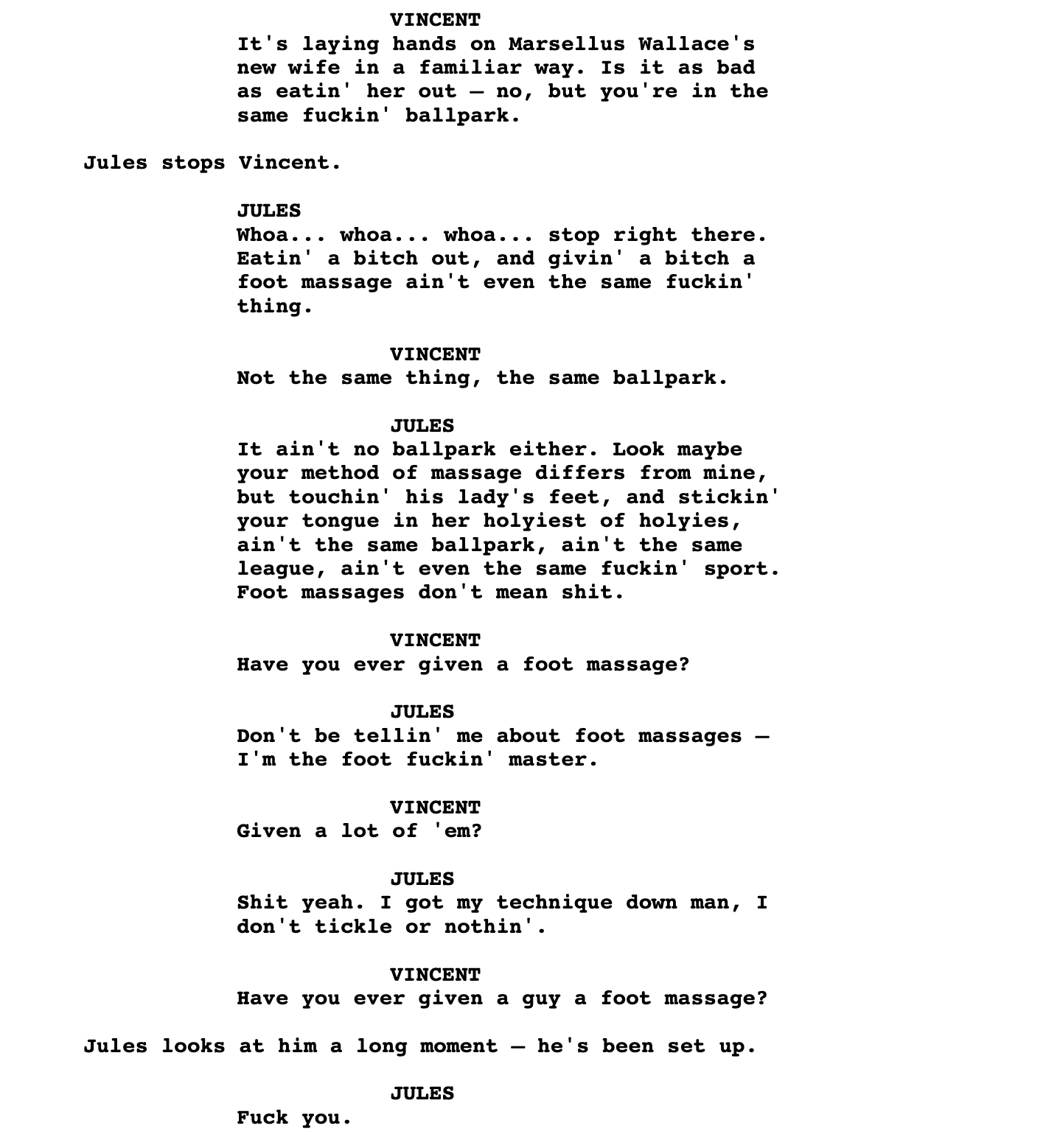
This theoretical landscape is further illuminated by Jean Baudrillard's concept of hyperreality, in which the "real" and the simulated implode into one another, leaving no discernible difference between them. Baudrillard argues that in the contemporary media age, simulations have completely replaced actual reality. The Jack Rabbit Slim's sequence serves as a primary example of this phenomenon. The diner is not a historical restoration but a hyperreal time machine where patrons eat inside vintage convertibles and are served by performers mimicking Marilyn Monroe, James Dean, and Buddy Holly. The scene is entirely self-reflexive; John Travolta’s character dances a twist that mimics his own real-world performance in Saturday Night Fever (1977), while Mia Wallace mimics a famous pose from The Seven Year Itch (1955). Through this strategy, real history is effaced by "historicism," leaving the viewer in a continuous, media-saturated present where the copy is experienced as more real than the original.
Collaborative Genesis, Script Development, and the Ethics of the Accidental Encounter
The screenplay of Pulp Fiction arose from a highly collaborative creative process between Quentin Tarantino and Roger Avary. The two writers originally met while working at Video Archives, a prominent California video rental store owned by Lance Lawson, which served as a popular gathering place for local movie enthusiasts. Obsessing over obscure genre cinema, Tarantino and Avary co-authored a database for the store before attempting to write a three-part crime film together. Although their initial attempt did not immediately materialize, Tarantino’s portion was eventually revised into Reservoir Dogs (1992), while Avary’s contributions were sidelined for a future project.
Following the critical success of Reservoir Dogs, the two filmmakers reunited in Amsterdam, where Tarantino was touring the European film circuit. Locking themselves in a hotel room, they developed the screenplay for Pulp Fiction, integrating several elements that Avary had originally written for Tarantino's True Romance (1993) script. Avary was the primary author of The Gold Watch storyline, and he conceived both the "miraculous" missed bullet shots in the apartment and the sudden, accidental shooting of Marvin in the car. Despite this shared creative labor, Tarantino convinced Avary prior to production to forfeit his co-writing credit in favor of a "story by" credit. This strategic decision allowed the film to be marketed under the singular billing "Written and Directed by Quentin Tarantino," establishing a unified auteur brand that solidified Tarantino's standing in Hollywood. Both writers eventually shared the Academy Award and the BAFTA Award for Best Original Screenplay.
This collaborative play with accidental violence and sudden narrative shifts invites deeper psychoanalytic and philosophical examination. Film theorists have aligned Tarantino's narratives with Jacques Lacan's Ethics of Psychoanalysis and Emmanuel Levinas's ethical concepts. Levinas proposes that ethical thinking is initiated by an unpredictable, accidental encounter with "the Other," which demands a profound personal response. Tarantino's narratives are structured around these accidental expenditures—such as a shooter's gun missing its targets or a firearm discharging in a moving vehicle—which introduce sudden trauma. Within this trauma, what Lacan calls the "Thing" (das ding) emerges, disrupting the ordinary circulation of social goods and forcing the characters into a space of radical ethical questioning. This disruption mirrors Michel de Certeau’s theories on the tactics used by ordinary individuals to reclaim autonomy from the all-pervasive forces of commerce and social order, transforming sudden, chaotic accidents into opportunities for personal transformation.

Structural Soteriology: Redemption, Choice, and Narrative Fate
Beneath the film's stylized violence and dark humor lies a deeply moral exploration of soteriology—the theology of salvation—manifested through the themes of existential uncertainty, the illusion of control, and personal transformation. The non-linear structure brings the story back to the Hawthorne Grill diner, framing these thematic threads. The characters are repeatedly presented with critical moral crossroads that offer them the opportunity to break out of their destructive cycles of violence :
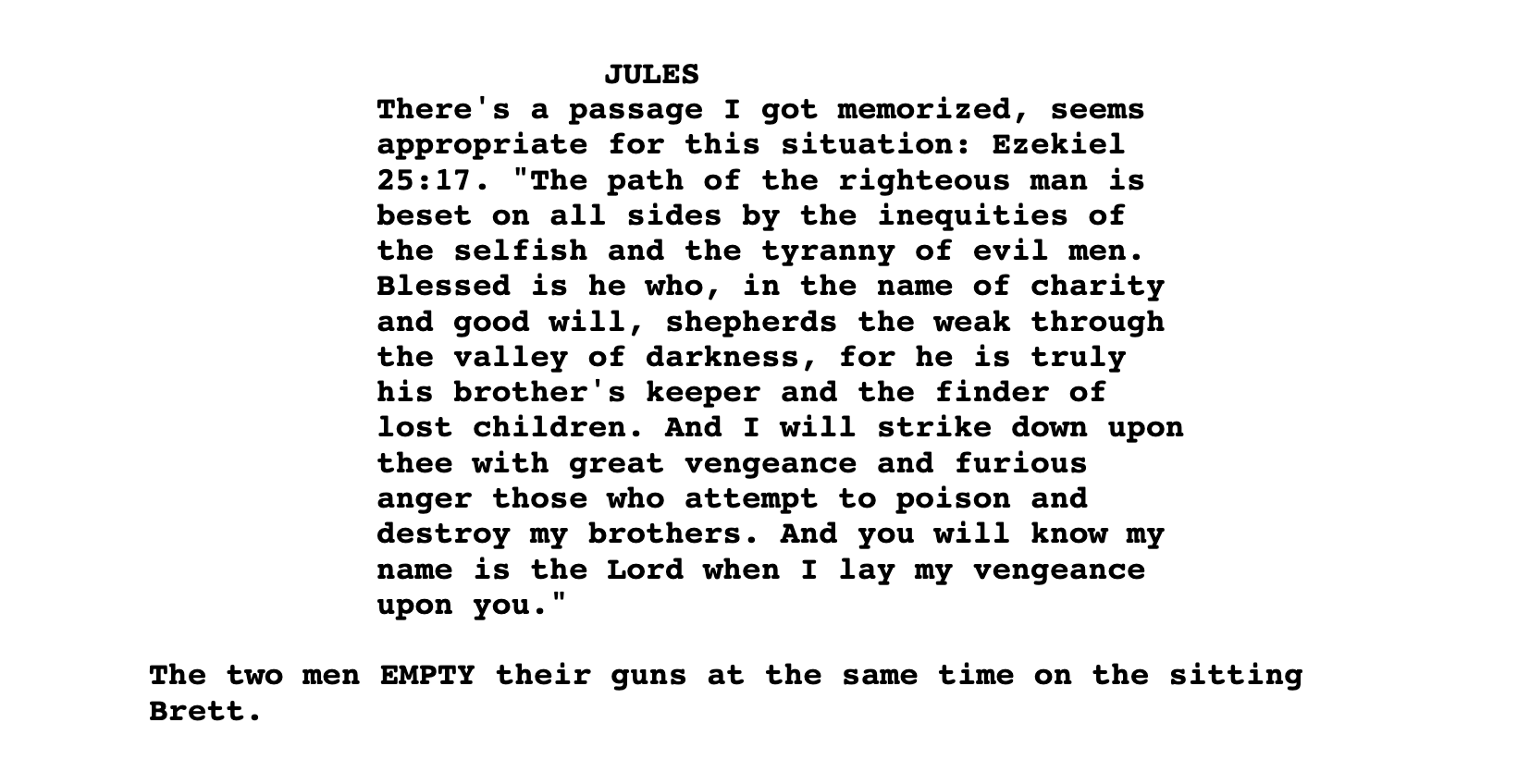
Jules Winnfield's Transformation: Jules’ evolution is the focal point of the film's message of redemption. Following a confrontation where a hidden shooter unloads a revolver at him and Vincent from point-blank range and misses every shot, Jules undergoes an immediate existential crisis. Rather than dismissing the event as luck, Jules interprets it as a "miracle" and a moment of divine grace. This experience alters his relationship with his signature monologue, Ezekiel 25:17. Once used purely as a cold-blooded tool of intimidation before executing a target, the verse becomes a medium for self-reflection. During the diner robbery, Jules chooses a non-violent resolution, sparing the lives of the robbers Ringo and Yolanda, and declaring his intention to "walk the earth" as a shepherd rather than acting as the tyranny of evil men.
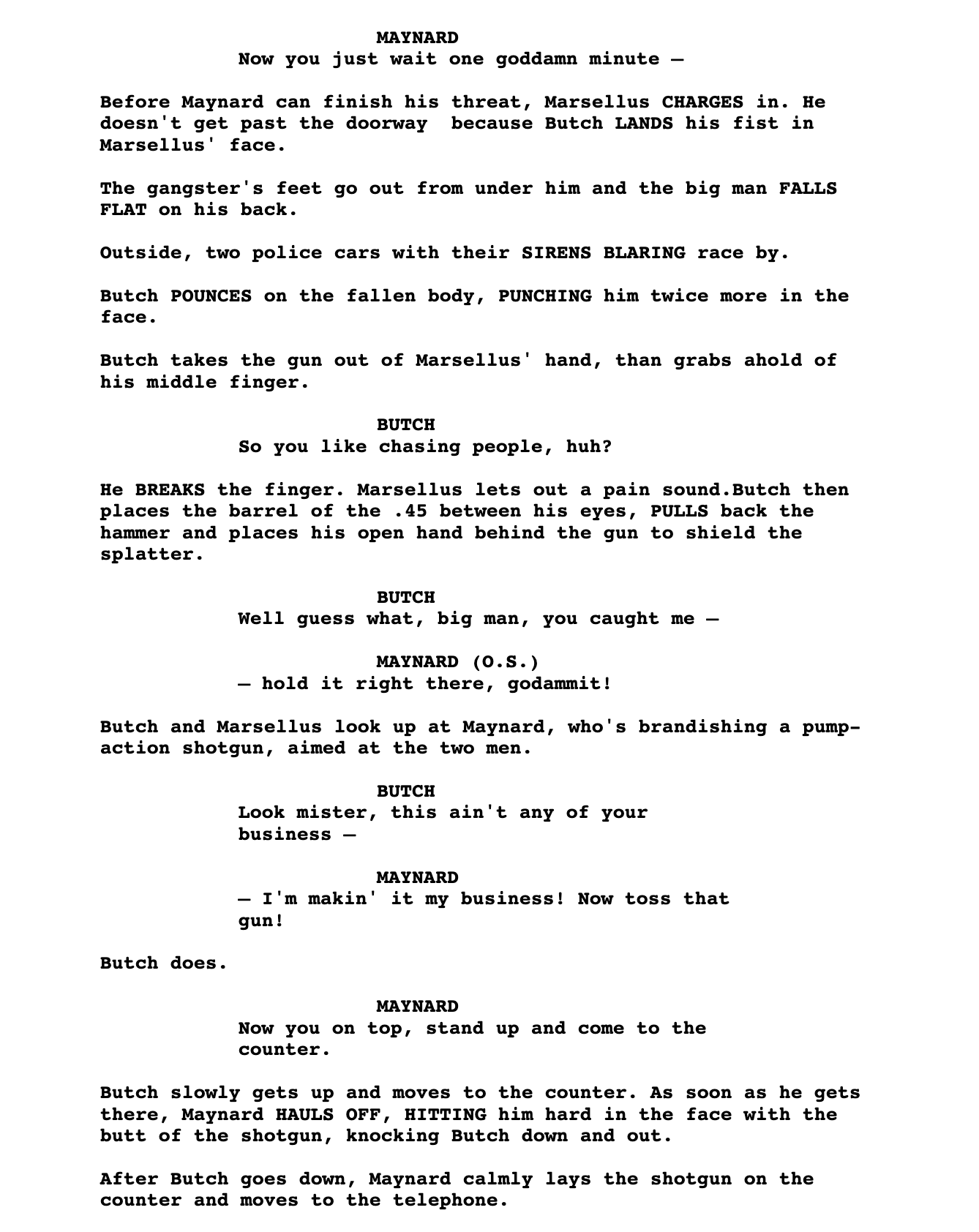
Vincent Vega's Spiritual Stagnation: Vincent serves as a stark contrast to Jules, maintaining his casual, unreflective demeanor in the face of the miraculous. Vincent dismisses their survival as a mere statistical anomaly, remaining firmly committed to his life as a hitman. His refusal to recognize the moment of grace leads to his undignified demise. He is shot and killed by Butch Coolidge while stepping out of a bathroom—a space associated with vulnerability throughout the film, where every time Vincent uses the restroom, a catastrophic event occurs. The non-linear structure "reinvents" the timeline, hiding Vincent's death in the middle of the film to maintain the comedic flow of the narrative, while delivering a clear moral judgment on his refusal to evolve.
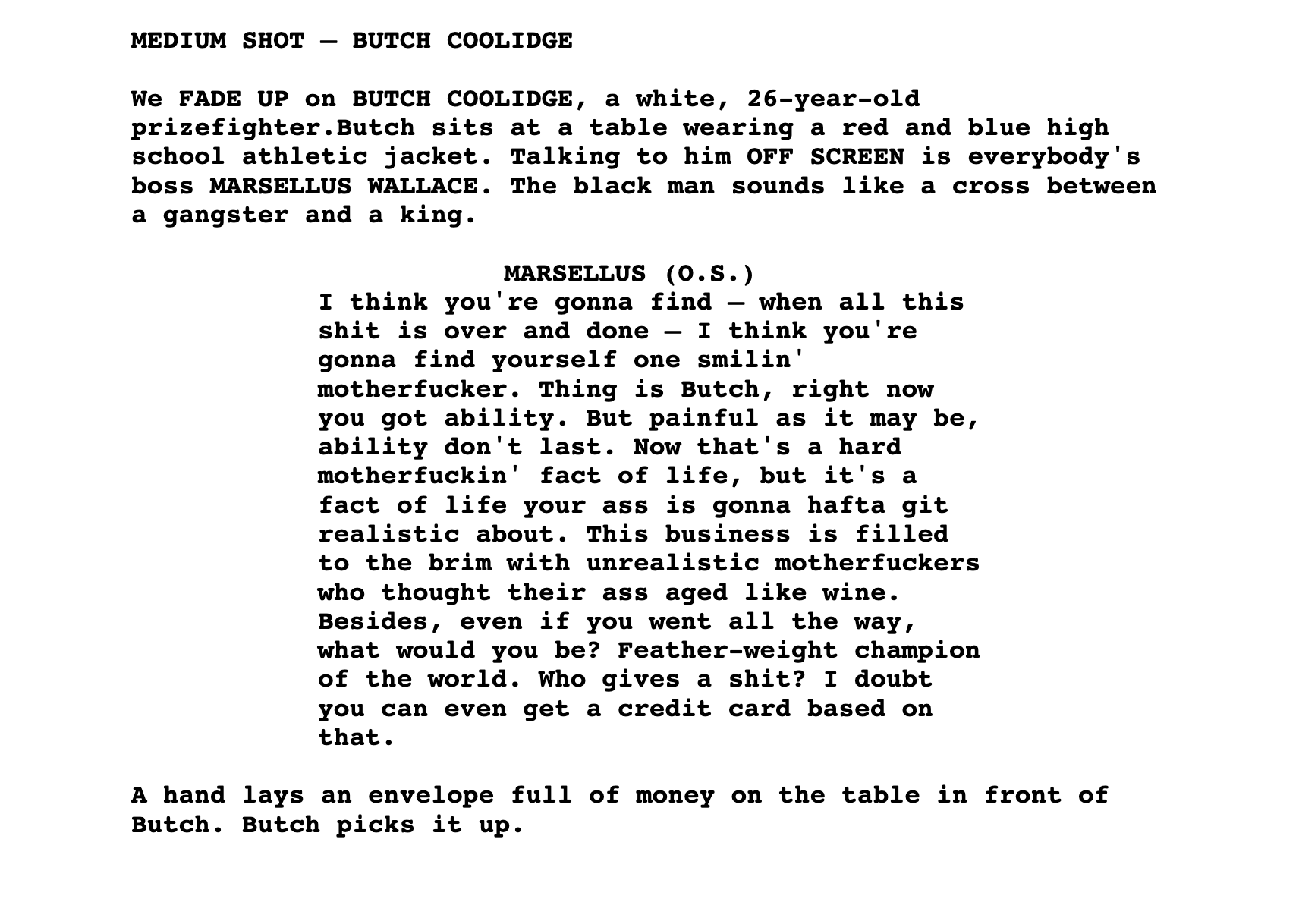
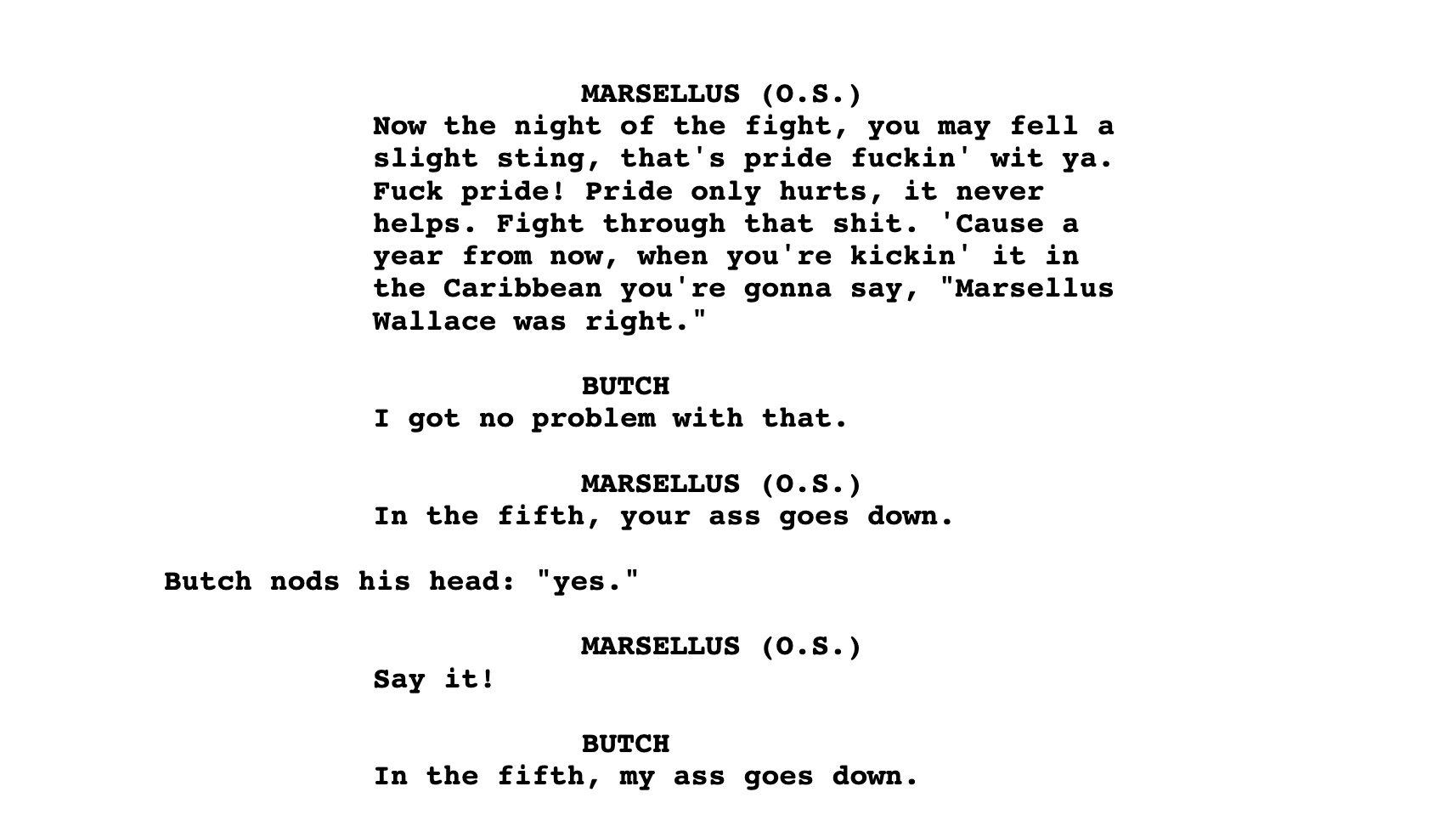
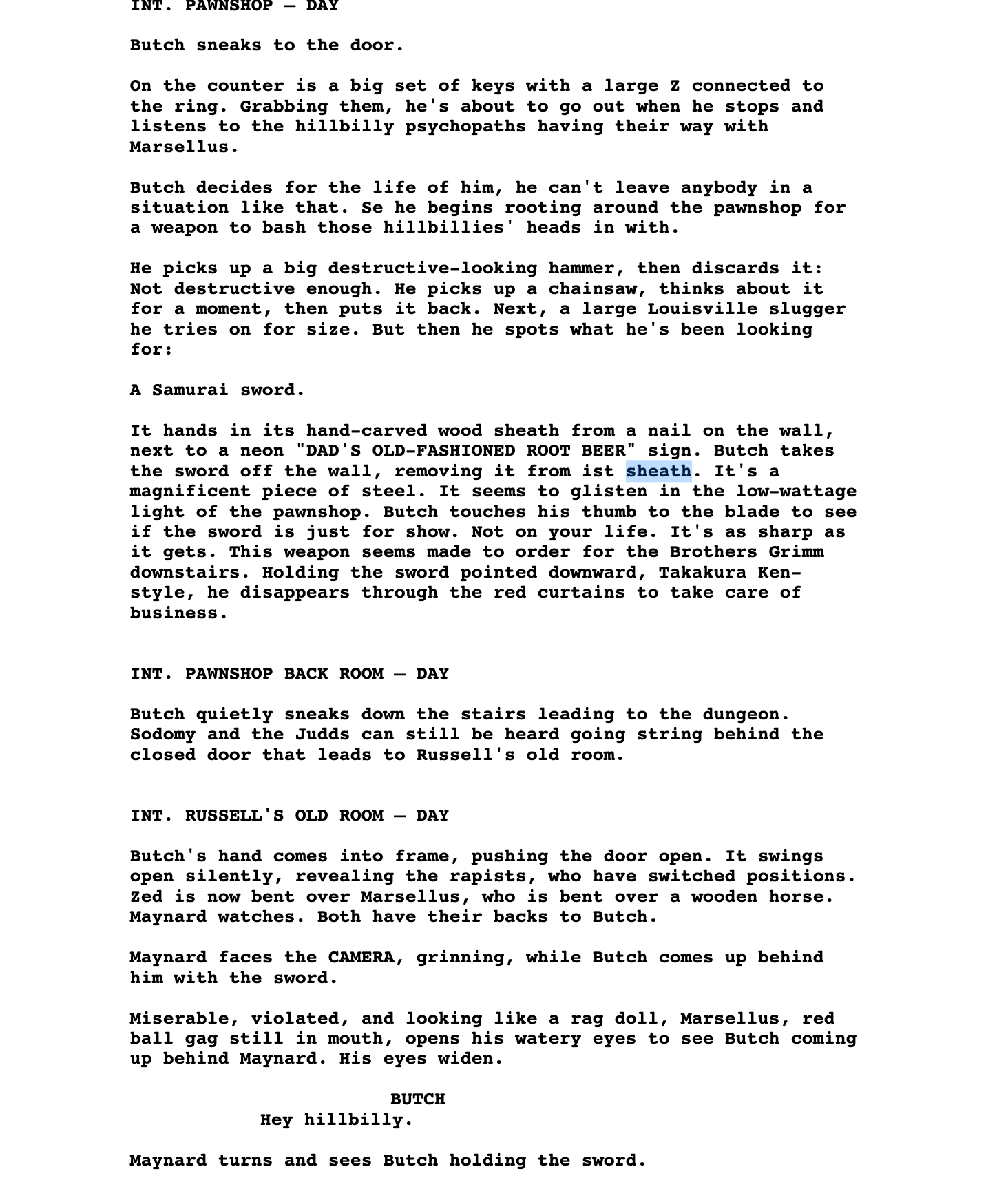
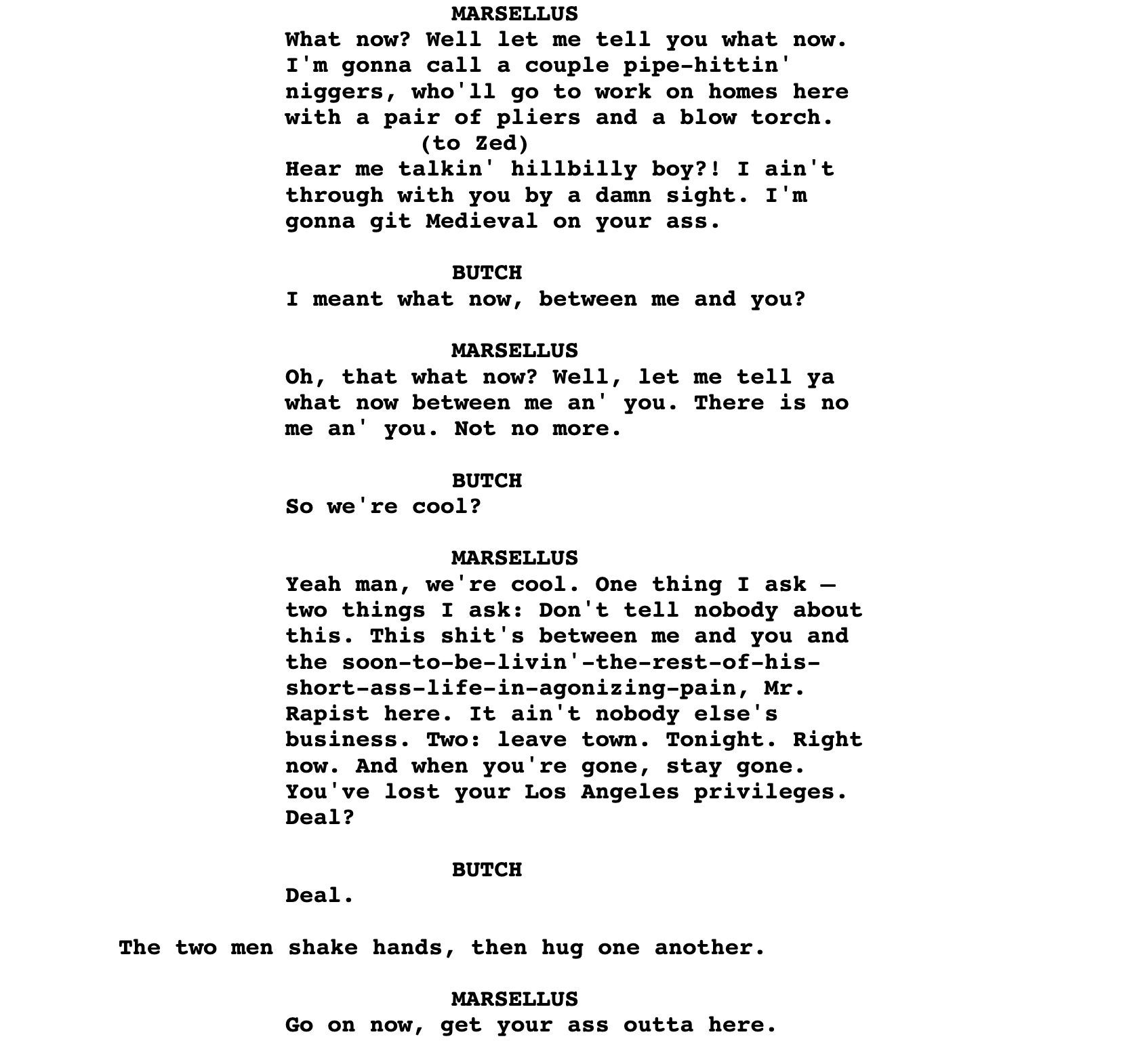
Butch Coolidge's Honor-Bound Path: Butch’s journey closely mirrors Jules’ transformation. Initially portrayed as a boxer who betrays his boss, Marsellus Wallace, by winning a fixed fight, Butch is driven by a deep sense of honor symbolized by his father’s gold watch. When he and Marsellus accidentally stumble into a sadomasochistic pawnshop basement, Butch manages to escape. Rather than fleeing, he chooses to return and rescue his mortal enemy. He cycles through several weapons—including a hammer, a baseball bat, and a chainsaw (referencing classic exploitation films like the Toolbox Murders)—before selecting a traditional Japanese samurai sword, a weapon rich with associations of honor and duty. This act of mercy breaks his cycle of violence, earning him his freedom and a truce with Marsellus.
The mysterious, glowing briefcase retrieved by Vincent and Jules acts as a central metaphor for this existential journey. Because its contents are never revealed, the briefcase functions as a classic Hitchcockian MacGuffin. The golden glow reflecting on the characters' faces has been interpreted by audiences and scholars as anything from a collection of stolen diamonds to Marsellus Wallace’s soul, symbolizing human greed, ambition, and the search for ultimate value in a chaotic, unpredictable universe.
Casting Dialectics: Subverting the Mainstream and Reinvigorating the Forgotten
The casting of Pulp Fiction is a study in subverting mainstream expectations, blending faded cinematic icons with rising independent stars and established mainstream figures. Tarantino was forced to fight for his casting choices against Miramax co-chairman Harvey Weinstein, who originally pushed for prestigious, award-winning actors like Daniel Day-Lewis for the lead role of Vincent Vega. Tarantino held his ground, selecting John Travolta, whose career had experienced a severe, multi-year decline.
Travolta was cast as Vincent Vega after Michael Madsen—who played Vic Vega, Vincent's brother, in Reservoir Dogs—opted to appear in Kevin Costner’s Wyatt Earp (1994) instead. Accepting a reduced salary of between $100,000 and $140,000, Travolta’s performance revitalized his career and earned him an Academy Award nomination for Best Actor. Vincent’s characterization also contains subtle details; despite being Vic's brother, Vincent shows no Chicago accent until he pronounces "Lava soap," revealing his Midwestern upbringing. This casting also laid the groundwork for Double V Vega (or The Vega Brothers), an unproduced prequel project that was eventually abandoned as both Madsen and Travolta aged out of the roles.
Table 2: Subversive Casting Contrasts and Role Inversions
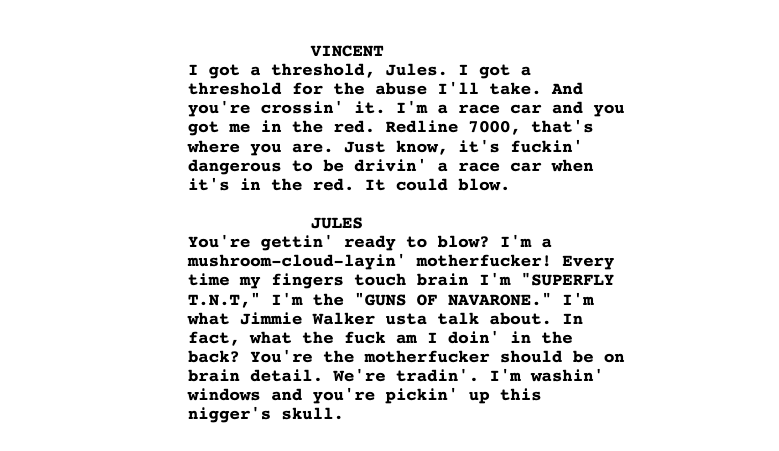
For the role of Jules Winnfield, Tarantino originally wrote the part for Laurence Fishburne, who turned it down because his representatives did not view it as a leading role, and Fishburne himself felt the narrative glamorized heroin use. While Eddie Murphy was briefly considered, Samuel L. Jackson secured the role after a grueling second audition, following an initial reading where he felt overshadowed by actor Paul Calderón (who was subsequently cast in the smaller role of Paul, Marsellus’s bartender). A key detail of Jackson's look arose from a production error: Tarantino's personal assistant mistakenly purchased a Jheri-curled wig instead of the giant Afro specified in the script. Jackson persuaded an enraged Tarantino to keep the wig, noting that it echoed the hairstyles popularized by contemporary rap groups like N.W.A, adding a layer of street-level realism to Jules’ presence.
For the role of Mia Wallace, Miramax favored mainstream stars like Holly Hunter or Meg Ryan, while other prominent actresses like Robin Wright, Marisa Tomei, and Debra Winger were also considered. Tarantino, however, was determined to cast Uma Thurman after their very first meeting. Thurman’s performance as the enigmatic mob wife became the centerpiece of the film's promotional campaign, immortalized on the iconic movie poster showing her smoking on a bed with a pulp novel.
Similarly, the casting of Bruce Willis as Butch Coolidge was a critical coup. Originally written for Matt Dillon (who turned it down) and offered to Mickey Rourke, the role was secured by Willis, who was then facing a string of critical and commercial flops. By agreeing to lower his standard salary and take a risk on a low-budget independent feature, Willis lent massive star power to the project, helping secure its commercial viability while regaining critical respect. Tarantino modeled Butch's physical look on fifties actors like Aldo Ray in Nightfall (1957) and Ralph Meeker in Kiss Me Deadly (1955), utilizing Willis's retro, hard-boiled physicality.
Architectural Spatiality, Cinematographic Texture, and Technical Execution
The visual identity of Pulp Fiction is defined by a deliberate tension between independent budget constraints and high-gloss mainstream aesthetics. Working with cinematographer Andrzej Sekuła, Tarantino sought to make an $8 million film look like a $20 to $25 million production. To achieve this, Sekuła shot the film on Kodak 50 ASA film stock—the slowest film stock available at the time. This technical choice resulted in a virtually grainless, high-contrast, and deeply saturated image that mirrored fifties Technicolor, reinforcing the film’s postmodern nostalgia.
This visual depth was enhanced by dynamic lighting setups. Sekuła utilized soft, warm, naturalistic lighting to construct intimate, romantic spaces, such as the booths inside Jack Rabbit Slim's, contrasting it with harsh, bright artificial lights during moments of sudden violence, such as the apartment confrontation with Brett.
The physical geography of Los Angeles is crucial to the film's identity, mapping out a suburban criminal underworld far removed from standard Hollywood landmarks. Production designer David Wasco worked closely with Tarantino to identify locations that captured this local color. The Hawthorne Grill, located south of Los Angeles International Airport, offered a perfect example of mid-century Googie architecture, capturing the film's retro-futuristic aesthetic.
For the interior of Jack Rabbit Slim's, the production constructed a massive, highly detailed set inside a Culver City warehouse. At a cost of $150,000, this set was the single most expensive line item in the entire budget. The space was designed to reflect the architectural philosophies of John Lautner, combining sixties pop culture with vintage fifties Americana. Meanwhile, the exterior of the diner was filmed at a shuttered Glendale bowling alley owned by the Walt Disney Company, which was later integrated into the Walt Disney Imagineering campus.
Table 3: Spatial Cartography and Filming Locations of Los Angeles
The physical geography of the film is packed with subtle references and production details. For example, when Butch spots Marsellus crossing Fletcher Drive, the shot serves as a direct homage to Alfred Hitchcock's Psycho (1960), echoing the moment Marion Crane glimpses her boss from her car. This intersection is located just blocks away from the Atwater Village home used for Lance and Jody's house, where the challenging adrenaline injection sequence was filmed.
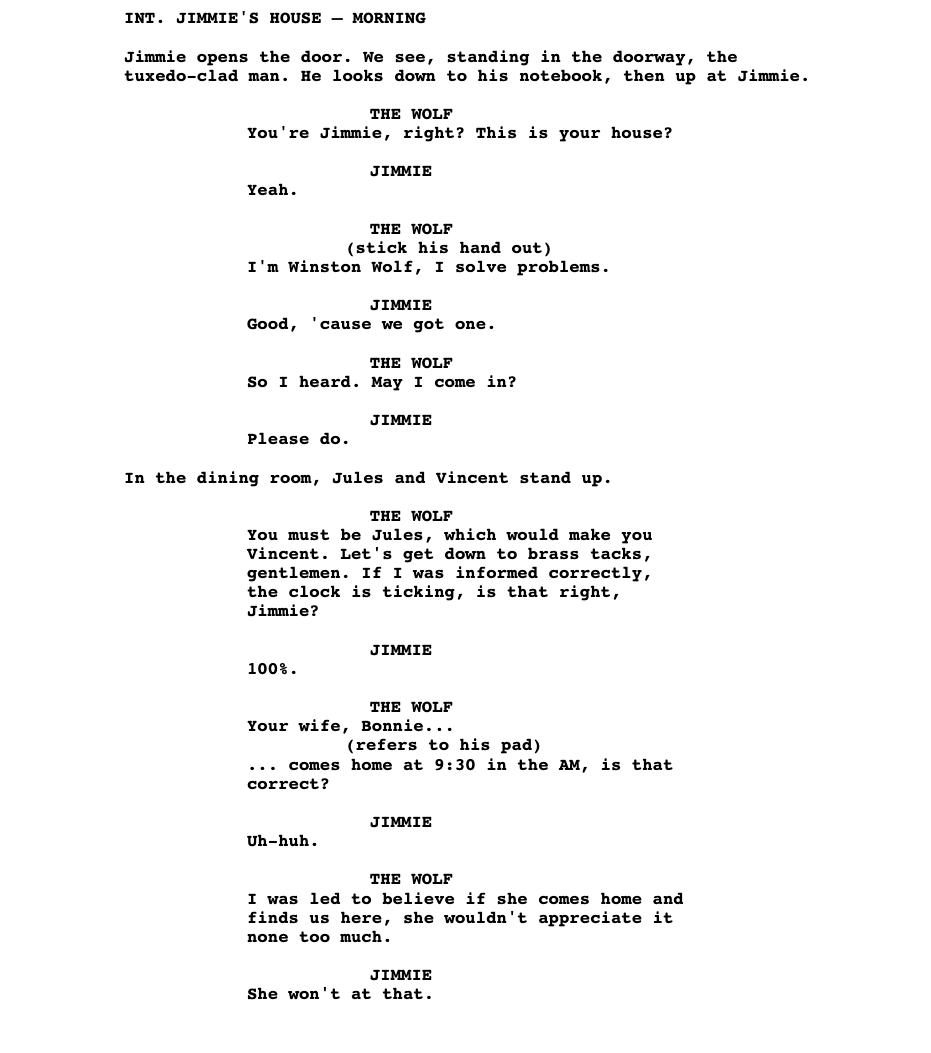
To execute this sequence, Tarantino chose to shoot the scene in reverse, with John Travolta physically pulling the needle out of Uma Thurman's chest, which was later reversed in editing to create the illusion of a forceful strike. Tarantino cast himself as Jimmie Dimmick instead of Lance (played by Eric Stoltz) so he could remain behind the camera to supervise this complex shot, leaving director Robert Rodriguez to handle the camera work for the scenes where Tarantino was on screen. Additionally, the production featured several recurring elements, such as Fruit Brute—a discontinued General Mills monster cereal that previously appeared in Reservoir Dogs—making a return on Jimmie’s kitchen counter.
Sonic Curation: Surf Rock, Obscurity, and Audio-Visual Symbiosis
The soundtrack of Pulp Fiction is widely regarded as one of the most influential in modern cinema, establishing a new model for how pop music can serve as a substitute for a traditional orchestral score. Tarantino writes his screenplays directly to tracks from his personal vinyl collection, utilizing music to capture the core spirit and personality of each scene. To bring this vision to life, Tarantino collaborated with music supervisor Karyn Rachtman, who had earned his trust by successfully securing the rights to "Stuck in the Middle with You" for Reservoir Dogs on a highly restricted budget. Tracking down the music for Pulp Fiction was a challenge, as Tarantino’s initial drafts were riddled with spelling errors and non-existent song titles.
Rachtman and Tarantino sought to avoid the conventional "cheap hit" strategy of contemporary blockbusters—such as Forrest Gump (1994)—which spent massive budgets on iconic historical tracks to artificially signal a time period. Instead, they focused on obscure, off-the-beaten-path tracks. Tarantino wanted to avoid a soundtrack that felt like "listening to the radio and watching a movie at the same time," aiming instead for a unified, atmospheric soundscape.
Many of the tracks were suggested to Tarantino by musician Boyd Rice through their mutual friend Allison Anders, including Dick Dale's "Misirlou". Other tracks were recommended by his friends Chuck Kelley and Laura Lovelace, who were credited as music consultants.
The core of the soundtrack is built around American surf music, which Tarantino described as "rock & roll spaghetti western music". This surf aesthetic, exemplified by Dick Dale’s "Misirlou," serves as the film's musical spine, lending an energetic, hard-boiled rhythm to the urban crime narrative.
Table 4: Narrative Integration of the Pulp Fiction Soundtrack
This musical curation relies heavily on American surf music, which Tarantino described as "rock & roll spaghetti western music". This surf aesthetic, exemplified by Dick Dale’s "Misirlou," serves as the film's musical spine, lending an energetic, hard-boiled rhythm to the urban crime narrative.
The soundtrack also highlights Urge Overkill’s cover of Neil Diamond’s "Girl, You'll Be a Woman Soon," which became the album’s breakout commercial hit. The band had originally recorded the track as a throwaway cover to fulfill a contract, but Tarantino personally discovered the record in a discount bin in Europe. He presented it to Uma Thurman alongside three other options, and she chose it to score her character's tragic, drug-fueled dance sequence.
Another critical musical decision occurred during the pawnshop basement scene. Tarantino originally wrote the sequence to "My Sharona" by The Knack, noting its strong rhythm. While most of the band agreed, one member who was a Born-Again Christian refused, forcing the production to swap the track for "Comanche" by The Revels. Additionally, Carole King’s "Locomotion" was written into the script but refused by the rights holders, while obscure tracks like Woody Thorne's "Teenagers in Love" remained exclusive to the film's audio mix.
Industrial Mechanics: Miramax, Marketing Economics, and Cultural Reception
The commercial success of Pulp Fiction was shaped by the distribution and marketing strategies of Miramax Films, which had been acquired by the Walt Disney Company in 1993 for $80 million. After TriStar Pictures turned down Tarantino's screenplay as "too demented," Miramax co-chairman Harvey Weinstein stepped in, making it the very first film that Miramax fully financed. Weinstein recognized the film's potential but understood it required an unconventional distribution model to break out of the arthouse ghetto.
To build anticipation, Miramax deployed what became known as the "Iron Curtain" marketing strategy. Following the film's Palme d'Or victory at the Cannes Film Festival in May 1994, Weinstein withheld the film from public view for nearly four months, blocking all screenings until its premiere at the New York Film Festival in September, just weeks before its wide release on October 14. This deliberate restriction of access created intense curiosity and word-of-mouth buzz, transforming Pulp Fiction into a highly anticipated cultural event.
This marketing campaign was paired with financial planning. Before production even began, Miramax sold the film's foreign distribution rights for $11 million, completely covering the production budget and ensuring immediate profitability.
Once the film was in theaters, Miramax launched a targeted Oscar campaign that permanently altered the landscape of awards season lobbying. Utilizing Disney’s deep pockets, Miramax waged a relentless, "scorched-earth" marketing blitz that went far beyond standard trade advertisements. The studio organized exhaustive screenings for Academy members, coordinated mailings, and conducted direct telephone campaigns targeting voters who were seen as "out of the loop". This aggressive lobbying campaign brought Pulp Fiction seven Academy Award nominations and consolidated Miramax's position as a major player in Hollywood.
This aggressive posture generated critical division. While most critics adored the film—Janet Maslin of The New York Times hailed it as "a triumphant, cleverly disorienting journey" and Richard Corliss of Time declared that it "towers over the year's other movies as majestically and menacingly as a gang lord at a preschool"—others were highly skeptical. Screenwriting guru Syd Field criticized the script as too talky and superficial, while French New Wave pioneer Jean-Luc Godard, once one of Tarantino’s primary idols, publicly dismissed the work.
Despite these criticisms, Pulp Fiction became a massive box office success, grossing $213.9 million worldwide from its modest $8 million budget. It was preserved in the National Film Registry by the Library of Congress in 2013, solidifying its historical and aesthetic significance.
Conclusions: The Postmodern Paradigm and Enduring Cinematographic Legacy
Three decades after its premiere, Pulp Fiction remains a defining achievement of modern independent cinema, illustrating how a highly stylized, non-linear narrative can achieve both commercial success and critical acclaim. The film’s success triggered an indie boom in the 1990s, with Hollywood studios rushing to produce low-budget, self-reflexive crime thrillers. Its influence was so pervasive that the term "Tarantinoesque" was officially added to the Oxford English Dictionary to describe works featuring stylized violence, sharp dialogue, non-linear structures, and pop-culture references.
Beyond its stylistic innovations, Pulp Fiction captured the cultural zeitgeist of Generation X. Coming of age during a recession, this audience connected with the film’s self-conscious irony and retro-cool aesthetic. Yet, unlike the pure nihilism that characterized earlier crime dramas, Pulp Fiction offered its characters a path toward spiritual awakening and redemption, suggesting that even in a chaotic, unpredictable world, personal choices can pave the way for transformation. By blending high-art narrative structures with the energy of low-culture B-movies, Tarantino created a lasting masterpiece that continues to influence filmmakers and shape popular culture.