_

Notes from Underground

  And, indeed, I will ask on my own account here, an idle question: which is better—cheap happiness or exalted sufferings? Well, which is better?---Fyodor Dostoevsky ---Notes from Underground Fyodor Dostoevsky ---Notes from Underground Even now, so many years later, all this is somehow a very evil memory. I have many evil memories now, but ... hadn’t I better end my “Notes” here? I believe I made a mistake in beginning to write them, anyway I have felt ashamed all the time I’ve been writing this story; so it’s hardly literature so much as a corrective punishment.  Why, to tell long stories, showing how I have spoiled my life through morally rotting in my corner, through lack of fitting environment, through divorce from real life, and rankling spite in my underground world, would certainly not be interesting; a novel needs a hero, and all the traits for an anti-hero are expressly gathered together here, and what matters most, it all produces an unpleasant impression, for we are...

Hope

To be human is to be a miracle of evolution conscious of its own miraculousness — a consciousness beautiful and bittersweet, for we have paid for it with a parallel awareness not only of our fundamental improbability but of our staggering fragility, of how physiologically precarious our survival is and how psychologically vulnerable our sanity. To make that awareness bearable, we have evolved a singular faculty that might just be the crowning miracle of our consciousness: hope.-- Erich Fromm


ITALIAN NEO-REALISM CINEMA-MAJOR DIRECTORS


VIOTORIO DE SICA

Vitorio de Sica (1901-1974)


The seminal figure of the neorealism movement, Vittorio De Sica was born in Sora, Italy, on July 7, 1901. Raised in Naples, he began working as an office clerk at a young age in order to help support his impoverished family. He became fascinated by acting while still a youth, and made his screen debut in 1917's The Clemenceau Affair at the age of just 16. In 1923, De Sica joined Tatiana Pavlova's famed stage company, and by the end of the decade his dashing good looks had made him one of the Italian theater's most prominent matinee idols. With 1932's La Vecchia Signora, he made his sound-era film debut and went on to become an even bigger star in the cinema, appearing primarily in light romantic comedies throughout the decade.

In 1939, De Sica graduated to the director's chair with Rose Scarlatte. Over the next two years he helmed three more features (1940's Maddalena... zero in condotta along with 1941's Teresa Venerdi and Un garibaldino al convento, respectively), but his work lacked distinction until he, along with fellow Italian filmmakers Roberto Rossellini and Luchino Visconti, began exploring the possibilities of making more humanistic movies documenting the harsh realities facing their countrymen as a result of World War II. With 1942's I bambini ci guardano, De Sica revolutionized the Italian film industry, crafting a poignant, heartfelt portrait of a downtrodden culture free of the conventions of Hollywood production. Working with screenwriter Cesare Zavattini, who remained a central figure in the majority of his greatest work, De Sica employed non-professional actors and filmed not in studios but on the streets of Rome, all to flesh out the working-class drama of Zavattini's script.

The war prevented De Sica from directing another film for four years, but finally in 1946 he resurfaced with the brilliant Sciuscià. His greatest film, Ladri di biciclette, followed in 1948; a virtual textbook of neorealism in action, it featured all of the aesthetic's key tenets — gritty production, almost improvisational acting, and a lean emotional compression — and it even added authentic documentary footage into the narrative to establish a greater sense of truth. (Like SciusciaLadri di biciclette won a special Academy Award; not until several years later was the Oscar category for Best Foreign Language Film officially established.) Three years later, De Sica returned with Miracolo a Milano. Its follow-up, 1952's Umberto D., clearly ranked among his finest work, but when it proved to be a box-office disaster, he returned to the lighter material of his formative years with Villa Borghese (1953).


The 1956 Il tetto marked something of a return to neorealist form, but when it too failed commercially, De Sica's career as a filmmaker was critically damaged. Unable to secure financing for subsequent projects, he turned his full focus to acting, starring in a string of pictures including 1957's A Farewell to Arms (for which he earned an Oscar nomination for Best Supporting Actor) and 1957's Souvenir d'Italie (It Happened in Rome). 

Over the course of his long career, he appeared in over 150 features. Finally, in 1960, De Sica returned to directing with La Ciociara, leading his star Sophia Loren to an Academy Award. The 1963 Ieri, oggi, domani also won an Oscar for Best Foreign Language Film, but in many regards De Sica's reign as one of the world's great directors was over. Features like 1966's Caccia alla volpe, 1967's Sette volte donna, and 1970'sGirasoli were lightweight at best, and although 1971's Il giardino dei Finzi-Contini won yet another Academy Award, it bore little relation to his neorealist classics. De Sica died in Paris on November 13, 1974, following complications from surgery.

The French film critic Andre Bazin wrote of Vittorio De Sica, "Toexplain De Sica, we must go back to the source of his art, namely, histenderness, his love. The quality shared in common by Miracle in Milan andThe Bicycle Thief...is the author's inexhaustible affection for hischaracters."


ROBERTO ROSSELLINI


Roberto Rossellini (1906-1977)


The son of a wealthy Roman architect, writer/director Roberto Rossellini was more technically than artistically inclined when he began making amateur films as a teenager. From his first project in 1934, Rossellini was far more fascinated with the mechanical intricacies of dubbing, editing, and photography than with such things as plots and performers. His 1938 short subject Prelude a l'apres-midi d'une faune, was considered worthwhile enough by some film-industry insiders to warrant a theatrical release; unfortunately, it was banned by Italy's censorship bureau on the grounds of indecency. Even so, when Vittorio Mussolini - the dictator's movie-executive son (and a family friend) - invited young Rossellini to become a professional filmmaker, the 22-year-old dilettante jumped at the chance. Assigned to direct a documentary about an Italian hospital ship, he expanded the project into a fictional feature, La nave bianca, completed in 1940 and released the following year.

During the war, Rossellini found himself in the delicate position of acting as technical director for fascist-commissioned films, all the while secretly shooting documentary footage of anti-Mussolini resistance fighters. In 1943, he began work on what many consider the first neorealist film, 
Desiderio, in which, utilizing a hand-held camera, Rossellini attempted to approach his subject matter as a spectator rather than director. Unfortunately, he was forced to drop the project, which would be completed by other, more conventional hands three years later. Nonetheless, his brush with cinematic naturalism had left an impression, and, in 1945, he gained international fame with his stark, neorealist feature Roma, città aperta (Roma, Open City). 

This film so impressed Hollywood producer David O. Selznick that he invited Rossellini to come to America to direct Selznick's next Ingrid Bergman vehicle. Bergman, herself, wrote an affectionate fan letter to the director, never dreaming what effect this simple gesture of courtesy would have on her life. Resisting the temptation to pack up for America, Rossellini remained in Italy to co-write and direct Paisà (1946) and Germania anno zero (1947), two of the most influential works of their time. He then switched focus from the devastations of the postwar era to the earthy charms of his lover Anna Magnani in L'amore (1948). He finally met Bergman the following year, and their mutual admiration quickly deepened into love. Leaving their respective spouses, Rossellini and Bergman married in 1950, sparking an international scandal that resulted in fervent condemnations from politicians and clergymen alike. From 1949 through 1953, Bergman worked for no other director but Rossellini; the collaboration yielded one truly worthwhile film, Stromboli (1950), and a series of self-indulgent, critical, and financial disasters.


Although the Bergman-Rossellini liaison produced three children (including current film star Isabella Rossellini), their relationship quickly soured. While preparing a multi-part TV documentary on India in 1957, Rossellini became involved with Indian screenwriter Somali Das Gupta, whose subsequent pregnancy effectively ended his marriage to Bergman and nearly destroyed his film career. (Rossellini's later marriage to Gupta would also end in divorce.) In 1959, Rossellini restored his tattered reputation with his best film in years, Il generale Della Rovere, which starred fellow director Vittorio de Sica. After completing Vanina Vanini in 1960, Rossellini devoted his energies almost exclusively to TV films, turning out several respectful but non-reverential biographies of such historical figures as Socrates, St. Augustine, and King Louis XIV; three of these films would be afforded theatrical release. In his last movie, Il messia (1978), the director once more stirred up controversy, though '70s filmgoers of were less-easily outraged than those of 1950. Rossellini died in 1977. His autobiography, My Method: Writings and Interviews, was published posthumously in 1993.

Roberto RosselliniFilmography >


LUCHINO VISCONTI


Luchino Visconti (1906-1976)


One of seven children, Visconti was born in Milan into a noble and wealthy family, one of the region's richest. His father Giuseppe Visconti di Modrone was the Duke of Grazzano. In his early years he was exposed to art, music and theatre, and met the composer Giacomo Puccini, the conductor Arturo Toscanini, and the writer Gabriele d'Annunzio. During World War II Visconti joined the Italian Communist Party.
Visconti made no secret of his homosexuality. His last partner was the Austrian actor Helmut Berger, who played Martin in Visconti's film La caduta degli dei (The Damned). Berger also appeared in Visconti's Ludwig in 1972 and Gruppo di famiglia in un interno (Conversation Piece) in 1974 along with Burt Lancaster. Other lovers included Franco Zeffirelli, who also worked as part of the crew (i.e. production design, assistant director, etc.) in a number of Visconti's films and theatrical productions.

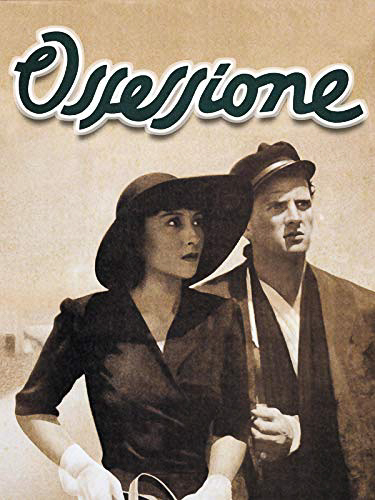
He began his filmmaking career as an assistant director on Jean Renoir's Toni (1935) and Une partie de campagne (1936), thanks to the intercession of their common friend, Coco Chanel. After a short tour of the United States, where he visited Hollywood, he returned to Italy to be Renoir's assistant again, this time for La Tosca (1941), a production that was interrupted and later completed by German director Karl Koch because of World War II. Together with Roberto Rossellini, Visconti joined the salotto of Vittorio Mussolini (the son of Benito, who was then the national arbitrator for cinema and other arts. Here he presumably also met Federico Fellini. With Gianni Puccini, Antonio Pietrangeli and Giuseppe De Santis, he wrote the screenplay for his first film as director: Ossessione (Obsession, 1943), the first neorealist movie and an unofficial adaptation of the novel The Postman Always Rings Twice.
In 1948, he wrote and directed La terra trema (The Earth Trembles), based on the novel I Malavoglia by Giovanni Verga. In the book by Silvia Iannello Le immagini e le parole dei Malavoglia, the author selects some passages of the Verga novel, adds original comments and Acitrezza's photographic images, and devotes a chapter to the origins, remarks and frames taken from the movie.

Visconti continued working throughout the 1950s, although he veered away from the neorealist path with his 1954 film, Senso, shot in color. Based on the novella by Camillo Boito, it is set in Austrian-occupied Venice in 1866. In this film, Visconti combines realism and romanticism as a way to break away from neorealism. However, as one biographer notes, "Visconti without neorealism is like Lang without expressionism and Eisenstein without formalism." He describes the film as the 'most Viscontian' of all Visconti's films. Visconti returned to neorealism once more with Rocco e i suoi fratelli (Rocco and His Brothers, 1960), the story of southern Italians who migrate to Milan hoping to find financial stability.
Throughout the 1960s, Visconti's films became more personal. Il gattopardo (The Leopard, 1963), based on Lampedusa's novel of the same name about the decline of the Sicilian aristocracy at the time of the Risorgimento. It starred American actor Burt Lancaster in the role of Prince Don Fabrizio. This film was distributed in America and England by Twentieth-Century Fox, which deleted important scenes. Visconti repudiated the Twentieth-Century Fox version.


It was not until La caduta degli dei that Visconti received a nomination for an Academy Award, for Best Screenplay. The film, one of Visconti's best-known works, concerns a German industrialist's family which slowly begins to disintegrate during World War II. Its decadence and lavish beauty are characteristic of Visconti's aesthetic. Visconti's final film was L'innocente (The Innocent, 1976), in which he returns to his recurring interest in infidelity and betrayal.

Visconti was also a celebrated theatre and opera director. During the years 1946-1960 he directed many performances of the Rina Morelli-Paolo Stoppa Company with actor Vittorio Gassman as well as many celebrated productions of operas. Visconti's love of opera is evident in the 1954Senso, where the beginning of the film shows scenes from the fourth act of Il trovatore, which were filmed at the Teatro La Fenice in Venice. Beginning when he directed a production at Milan's Teatro alla Scala of La vestale in December 1954, his career included a famous revival of La traviata at La Scala in 1955 with Maria Callas and an equally famous Anna Bolena (also at La Scala) in 1957 with Callas. A significant 1958 Royal Opera House (London) production of Verdi's five-act Italian version of Don Carlos (with Jon Vickers) followed, along with a Macbeth in Spoleto in 1958 and a famous black-and-white Il trovatore with scenery and costumes by Filippo Sanjust at Covent Garden in 1964. In 1966 Visconti's lusciousFalstaff for the Vienna State Opera conducted by Leonard Bernstein was critically acclaimed. On the other hand, his austere 1969 Simon Boccanegra with the singers clothed in geometrical costumes provoked controversy.

Luchino Visconti Filmography >


CESARE ZAVATTINI


Cesare Zavattini (1902-1989)

Italian journalist and writer of screenplays for Italian neorealist cinema, Cesare Zavattini is known especially for his collaborations with director Vittorio De Sica. After completing a law degree at the University of Parma, Zavattini wrote two successful novels - Parliamo tanto di me (Let’s Talk A Lot About Me, 1931) and Il poveri sono matti (The Poor Are Crazy, 1937) - before writing the script for Mario Camerini’s classic social satire, Darò un milione (I’ll Give a Million, 1937), starring Vittorio De Sica. In his lifetime, Zavattini completed 126 screenplays, 26 of which were for De Sica as director or actor. He also provided screenplays for such figures as Alessandro Blasetti, Giuseppe De Santis, Luchino Visconti, and Alberto Lattuada, but his work with De Sica established Zavattini as the leading exponent of Italian neorealism in the decade immediately following the end of World War II.

But it was the four neorealist classics created by the two friends that made film history:Sciuscià (Shoeshine, 1946), an account of the American occupation that earned the first award for foreign films bestowed by the American Academy of Motion Picture Arts and Sciences; Ladri di biciclette (The Bicycle Thieves, 1948), a tale of postwar unemployment that received an Oscar for Best Foreign Film; Miracolo a Milano (Miracle in Milan, 1951), a fantastic parable about the class struggle in a fairy-tale Milan; and Umberto D. (1952), a heart-rending tragedy about a lonely pensioner and his dog. Zavattini became the outstanding spokesman for neorealism, advocating the use of nonprofessional actors, a documentary style, authentic locations as opposed to studio shooting, and a rejection of Hollywood studio conventions, including the use of dramatic or intrusive editing. 

He wrote contemporary, simple stories about common people. In particular, he felt that everyday events provided as much drama as any Hollywood script could produce by rhetorical means or that any special effects and dramatic editing might create. Nevertheless, after neorealist cinema evolved in the late 1950s, Zavattini wrote screenplays for De Sica that enjoyed great commercial success: Ieri, oggi, domani (Yesterday, Today, and Tomorrow. 1963), a social satire that garnered an Oscar for Best Foreign Film and featured a legendary striptease for Marcello Mastroianni by Sophia Loren; La Ciociara (Two Women, 1960), an adaptation of an Alberto Moravia novel about the horrible effects of war, which won Loren an Oscar for Best Actress; and Il giardino dei Finzi-Contini (The Garden of the Finzi-Continis, 1970), the narration of the destruction of the Jewish community in Ferrara before World War II, which won De Sica his fourth Oscar for Best Foreign Film.

Cesare Zavattini Filmography >


FEDEDERICO FELLINI


Federico Fellini (1920-1993)

One of the most visionary figures to emerge from the fertile motion picture community of postwar-era Italy, Federico Fellini brought a new level of autobiographical intensity to his craft; more than any other filmmaker of his era, he transformed the realities of his life into the surrealism of his art. Though originally a product of the neorealist school, the eccentricity of Fellini's characterizations and his absurdist sense of comedy set him squarely apart from contemporaries like Vittorio De Sica or Roberto Rossellini, and at the peak of his career his work adopted a distinctively poetic, flamboyant, and influential style so unique that only the term 'Felliniesque' could accurately describe it.


Born in Rimini, Italy, on January 20, 1920, Fellini's first passion was the theater, and at the age of 12 he briefly ran away from home to join the circus, later entering college solely to avoid being drafted. Prior to the outbreak of World War II, he wrote and acted with his friend Aldo Fabrizi, and during wartime he composed radio sketches for the program Cico e Pallina, meeting his future wife, actress Giulietta Masina. Additionally, Fellini worked as an artist on fumetti (Italy's illustrated magazines), and occasionally even made his living as a caricaturist at Roman restaurants. He only entered film with the aid of Fabrizi, who recruited Fellini to continue supplying stories and ideas for his performances; between 1939 and 1944, the two men worked in tandem on a number of largely forgotten comedies, among them Quarta pagina, and Campo de' fiori.

The pivotal moment in Fellini's early career came in the days following the Allied Forces' 1945 liberation of Italy, when he and Fabrizi both began working with Roberto Rossellini, a young, largely unknown filmmaker with only a handful of directorial credits under his belt. Rossellini's initial plan was to film a fictionalized account of the Germans' shooting of a local priest. With Fellini on board as a screenwriter, however, the film eventually grew to become Roma, Città aperta, a landmark of Italian neorealism and one of the most widely acclaimed pictures of its era. For the follow-up, 1946's Paisà, Fellini graduated to the position of assistant director, later collaborating on films by Pietro Germi (including In nome della legge and Il cammino della speranza) and Alberto Lattuda (Il delitto di Giovanni Episcopo and Il mulino del Po), among others.


In 1948, Fellini completed the screenplay for Il miracolo, the second and longer section of Rossellini's two-part effort L'amore. Here Fellini's utterly original worldview first began to truly take shape in the form of archetypal characters (a simple-minded peasant girl and her male counterpart, a kind of holy simpleton), recurring motifs (show business, parties, the sea), and an ambiguous relationship with religion and spirituality, a relationship further explored in his script for Rossellini's 1949 Francesco, giullare di Dio, adapted from The Little Flowers of St. Francis of Assisi. In 1950, Fellini made his first attempt at directing one of his own screenplays (albeit with the technical guidance of Alberto Lattuda); the result wasLuci del varietà, which further developed his fusion of neorealism with the atmosphere of surrealism.

After two more screenplays — 1951's La città si difende and 1952's Il brigante di Tacca del Lupo, both directed by Pietro Germi - Fellini again took over the directorial reins for the romantic satire Lo sceicco bianco . The film marked his first work with composer Nino Rota, who emerged among the key contributors to his work throughout the remainder of his career. Fellini's initial masterpiece, I vitteloni, followed in 1953. The first of his features to receive international distribution, it later won the Silver Lion at the Venice Film Festival, the first of so many similar honors that eventually an entire room in his house was devoted solely to housing his awards. The brilliant La strada followed in 1954, also garnering the Silver Lion as well as the Academy Award for Best Foreign Language Picture and some 50 other worldwide prizes and citations. The picture's success brought his singular combination of the sublime and the grotesque to international fame, launching wife and star Masina to global stardom as well.


After helming 1955's Il bidone, Fellini and a group of screenwriters (including a young Pier Paolo Pasolini) began work on 1956's Le notti di Cabiria; the completed film won a second Academy Award. Upon writing the screenplay for Viaggio con Anita, a tale based on the death of his father which remained unfilmed before Mario Monicelli agreed to direct it in 1979, Fellini mounted 1959's La dolce vita, perhaps his most well-known film. The first of his pictures to star actor Marcello Mastroianni, who would become Fellini's cinematic alter ego over the course of several subsequent collaborations, its portrait of sex and death in Rome's high society created a tremendous scandal at its Milan premiere, where the audience booed, insulted, and spat on the director. Regardless, La dolce vita won the Palm d'Or at the annual Cannes Film Festival, and remains a landmark in cinematic history.

The success afforded to the film left Fellini in a state of confusion as he considered his next project. Ultimately, his writer's block became the subject of perhaps his greatest film, 1962's 8 1/2, the story of a filmmaker (Mastroianni) attempting to mount a movie which remains unmade. Again, the international acclaim was virtually unanimous, with yet another Oscar forthcoming, and after winning the Great Prize at the Moscow Film Festival, he never again entered festival competition. With 1965's Giulietta degli spiriti, Fellini worked for the first time in color. After experimenting with LSD under the supervision of doctors, he began scripting Il Viaggio di G. Mastorna, inspired by the death of his friend Ernest Bernhard. Over a year of pre-production followed, hampered by difficulties with producers, actors, and even a jury trial. Finally on April 10th, 1967, Fellini suffered a nervous breakdown, resulting in a month-long nursing home stay. Ultimately, he gave up on ever bringing Il Viaggio di G. Mastorna to the screen, and his new producer, Alberto Grimaldi, was forced to buy out former producer Dino De Laurentis for close to half a billion liras.

As the decade drew to a close, Fellini returned to work with a vengeance, first resurfacing with Toby Dammitt, a short feature for the collaborative film Tre passi nel delirio. Turning to television, he helmed Fellini: A Director's Notebook, a one-hour special for the NBC network, followed by the feature effort Fellini - Satyricon, an erotic adaptation of Petronius' text. I clowns, directed for RAI (an Italian state-TV broadcasting company), followed in 1970, with Roma bowing in 1972. Amarcord, a childhood reminiscence, won a fourth Academy Award in 1974, but as criticism that his work was becoming far too eccentric and self-indulgent continued to mount, it proved to be his final international success. After acting in Paul Mazursky's Alex in Wonderland and Ettore Scola's C'eravamo Tanto Amati, he shot 1976's Il Casanova di Federico Fellini, which found favor only in Japan.

After both 1979's Prova d'orchestra and 1980's La città delle donne also proved unsuccessful, Fellini turned to publishing with Fare un Film, an anthology of notes about his life and work. E la nave va and Ginger e Fred followed in 1983 and 1986 respectively, but by the time of 1987's L'Intervista, he was facing considerable difficulty finding financing for his projects; consequently, 1989's La voce della luna was his last completed film. In the early years of the 1990s, Fellini helmed a handful of television commercials, and in 1993 he won his fifth Academy Award for a lifetime of service to the film industry. On the day after his fiftieth wedding anniversary, Federico Fellini suffered a massive stroke and lapsed into a coma; he never recovered, and died on October 31, 1993. He was 73 years old.

Federico Fellini Filmography >


GREAT FILM DIRECTORS : Federico Fellini >>>


LUIGI ZAMPA


Luigi Zampa (1905-1991)

Italian screenwriter/director Luigi Zampa began as a student of architecture and engineering, but opted instead for a theatrical career as a playwright. At 31, Zampa became one of the first students to enroll at the pioneering Italian film school 

Centro Sperimante di Cinematografia
. From 1938 to 1941, he served his apprenticeship as an assistant director and script collaborator. He directed his first feature in 1941, then spent the next few years specializing in the frivolous 'white telephone' romantic comedies so beloved of filmgoers of the period. From 1944 to 1945, he was assigned to the film unit of the Italian army.

Apparently profoundly affected by this experience, he forsook escapism after the war and became one of the vanguards of the neorealist movement. Zampa was instrumental in building Anna Magnani into stardom, and later performed the same magic for Gina Lollobrigida. A trenchant satirist, Zampa thrived on sticking it to government bureaucracy and bourgeois pretentiousness: Many of his most successful films inside to Commedia all'italiana genre, featured Alberto Sordi as a mildly corrupt government official or blue-collar laborer. For reasons unknown, Luigi Zampa seemed to lose his touch in the late '50s; his final film efforts were still entertaining, but far more conformist and conventional than such vintage Zampa efforts as Vivere in pace (To Live in Peace, 1946) and Processo alla città (City on Trial, 1952).


Luigi Zampa Filmography >


MICHELANGELO ANTONIONI


Michelangelo Antonioni (1912-2007)

Italian filmmaker Michelangelo Antonioni redefined the concept of narrative cinema, challenging the accepted notions at the heart of storytelling, realism, drama, and the world at large; his films — a seminal body of enigmatic and intricate mood pieces — rejected action in favor of contemplation, championing image and design over character and story. Haunted by a sense of instability and impermanence, his work defined a cinema of possibilities, a shifting landscape of thoughts and ideas devoid of resolution; in Antonioni's world, riddles were not answered, but simply evaporated into other riddles.

Antonioni was born on September 29, 1912, in Ferrara, Italy; as a child, his interests included painting and building architectural models (an interest which continued in the design and decor of his films). After graduating from high school, he attended the University of Bologna, where he initially studied classics but later emerged with a degree in economics. While he was at college, his interest in the theater blossomed, and he also began writing short fiction and film reviews for a local newspaper, 
Il Corriere Padano, often running afoul of the motion-picture community for his savage attacks on the mainstream Italian comedies of the 1930s. Antonioni's initial attempt at filmmaking was a documentary profiling a nearby insane asylum; the project was aborted because the inmates would lapse into fits of panic each time the lights of the camera were turned on.

By 1939, Antonioni had chosen the cinema as his life's work, and he soon relocated to Rome, where he accepted a position at Cinema, the official Fascist film magazine edited by Mussolini's son, Vittorio. After being dismissed over a political disagreement, Antonioni enrolled at the Centre Sperimentale to study film technique. By age 30, he was working professionally in the film industry; his first screenplay went unproduced, but he was soon hired to co-write Roberto Rossellini's Un pilota ritorna, followed by a stint as the assistant director to Enrico Fulchignoni on I due Foscari. In 1942, Antonioni traveled to France to work with Marcel Carné on Les visiteurs du soir. Antonioni was soon called back to Italy for military service, where he managed to wrangle funding from the Luce Institute forGente del Po, a documentary portrait of the impoverished lives of the fishermen along the Po river.


The Allied invasion of Italy brought film production there to an end for some time, forcing Antonioni to earn his living as a book translator; he also wrote prolifically for a number of magazines, including Film Rivista and Film d'Oggi. Additionally, he was commissioned by Luchino Visconti to write a pair of screenplays, Furore and The Trial of Maria Tarnowska, neither of which was ever produced. Finally, in 1948, Antonioni was able to return behind the camera, and over the course of the next two years he directed no less than six documentary shorts; among them,Nettezza urbanaL'amorosa menzogna, and Superstizione hinted most strongly at the work still to come, their style of photography Spartan and unadorned, forgoing strong contrasts to focus on the middle range of gray tones.

After completing the short subject La villa dei mostri, Antonioni was able to secure financing for his 1950 feature debut, Cronaca di un amore. Here he turned away from the neorealism so much in vogue, employing professional actors and focusing on interpersonal relationships instead of social criticism. More importantly, the film further developed his increasingly unique visual aesthetic, honing a rigorously disciplined brand of 'anti-cinema,' favoring long, deep-focus shots in opposition not only to the gritty, newsreel-like feel of the neorealists but even the montage dynamic perfected by Sergei Eisenstein. With Cronaca di un amore, Antonioni first moved into a realm of film previously explored only by the likes of Carl Dreyer and Robert Bresson, a form of interior cinema concerned far less with the body than with the soul, and less by the actual arc of his plot than by the characters' reactions to it. Rather inexplicably, Cronaca di un amore made next to no impact upon its original release, and Antonioni spent the remainder of the decade in relative obscurity.


In 1952, he collaborated with Federico Fellini on the script to Lo sceicco bianco, followed by a directing assignment helming an episode of the triptych I vinti. Antonioni did not mount another feature-length project until 1953 with La signora senza camelie, an essay on the world of show business which further developed the formula of internalized action. Yet again, the film received virtually no notice, and was barely even screened outside of Italy; Antonioni spent the next several years in relative seclusion, directing only a segment of L'amore in città as well as Uomini in piú, a documentary commissioned by an international committee studying overpopulation.

Finally, in 1955 he was able to mount his third feature, Le amiche. Though beset by troubles from the outset — financing even ran out halfway through the production, suspending the shooting schedule for several months — the completed film was Antonioni's most mature to date. Based loosely on the Cesare Pavese novella Tra donne sole, it further rejected all notions of traditional narrative and literary value, even garnering some degree of attention from the international cinema community. Il grido followed in 1957, and in 1958 Antonioni resurfaced with a pair of films, La tempesta and Nel segno di Roma. The period was one largely defined by artistic and commercial disappointment, and of the three films, the director allowed his name to remain on Il grido alone.

In 1960, Antonioni's masterpiece L'avventura premiered at the Cannes Film Festival. His most extreme work to date, as a study of alienation among the bourgeoisie, it progressed at a snail's pace, its long, beautiful shots telling virtually no story whatsoever. Even the basic plot — the search for a missing woman — willfully disintegrated at the end, prompting a near-riot among Cannes viewers. Ultimately, L'avventura won the festival's Grand Jury Prize, becoming a phenomenal success across the globe. Antonioni became a major figure in international cinema virtually overnight, and his lead actress, Monica Vitti — a luminous cipher perfectly suited to her director's austere formalism — emerged as a huge star.


La notte — the second film in the trilogy begun with L'avventura — appeared in 1961, exploring the existential ground of alienation, non-communication, and meaninglessness. A transitional work also starring Vitti as well as Marcello Mastroianni and Jeanne Moreau, La notteexperimented more freely with editing techniques, relying less on the long, expansive takes which defined Antonioni's earlier work. The 1962 release L'eclisse reduced its plot structure to the barest minimum, replacing narrative with an acute psychological portrait of a woman (Vitti) who drifts from one romantic liaison into another. Il deserto rosso, his fourth and final film starring Vitti — as well as his first color feature — followed in 1964.

In 1966, Antonioni went to England to shoot Blow-Up, his most commercially successful effort. Set in the 'Swinging London' scene of the mid-'60s, it starred David Hemmings as a fashion photographer who accidentally photographs a murder. The wide popularity of Blow-Up brought Antonioni to America, where in 1970 he made his lone U.S. feature, Zabriskie PointChung Kuo/Cina, a four-hour television documentary filmed in China and subsequently denounced by the nation's government, followed in 1972. Professione: reporter (The Passenger), a thriller shot in North Africa starring Jack Nicholson, appeared three years later, while Il mistero di Oberwald did not bow until 1980.

With 1982's Identificazione di una donna, Antonioni's career largely ground to a halt; a savage early review by New York Times critic Vincent Canby prompted the film's U.S. distributor to drop the film, and due to the loss of potential revenue, Antonioni was unable to realize several planned projects. A 1985 stroke left him partially paralyzed and unable to speak, but a decade later Antonioni returned to filmmaking with PAl di là delle nuvole (Beyond the Clouds), a feature co-directed by Wim Wenders.
It would be nearly another ten years before Antonioni stepped behind the camera again, but in 2004, at the age of 91, he involved himself with two new projects. The first film, Lo sguardo di Michelangelo was a 35-minute documentary, while Eros featured multiple segments directed by such auteurs as Antonioni, Steven Soderbergh, and Wong Kar-Wai. In 1995, Antonioni received an honorary Lifetime Achievement Academy Award. He passed away at the age of 94 on July 30, 2007, in Rome.


Michelangelo Antonioni Filmography >


‘Blow-Up’: The Importance and Influence of Michelangelo Antonioni’s Stylish, Thought-Provoking Mystery >>>

‘L’Avventura’: Michelangelo Antonioni’s Visual Poetry and Its Impact on the World of Film >>>


Top 26 Best Italian Neorealism Films IMDB>>>


ITALIAN NEOREALISM CINEMA >>>

ITALIAN NEOREALISM CINEMA-MAJOR WORK >>>


The Aesthetics of Ruin: A Historical, Theoretical, and Directorial Analysis of Italian Neorealism (1943–1952)


The Pre-War Landscape and the Rupture of Fascism


The emergence of Italian neorealism cannot be understood in isolation from the historical trajectory of Italian cinema, which began in the late 1890s. By the early twentieth century, Italy had established itself as a global pioneer of grand, historical epics. Landmark productions such as The Fall of Troy (1911), widely recognized as one of the first cinematic epics, and The Last Days of Pompeii (1913), celebrated as the first special-effects-driven disaster film, demonstrated the industry's early capacity for grand scale and technical innovation. However, the devastation of World War I severely crippled domestic production, leaving a vacuum that was eventually filled and restructured under the fascist dictatorship of Benito Mussolini between 1922 and 1943.

The fascist regime recognized the potent socio-political utility of mass media, co-opting cinema and radio to project officially sanctioned conceptions of national identity. Rather than producing overt state propaganda, the regime established a complex protectionist and bureaucratic infrastructure to subsidize and regulate commercial cinema. In 1934, the state established both the Direzione Generale della Cinematografica to review and censor film scripts, and the Centro Cattolico Cinematografico to police the religious and moral boundaries of films. By 1935, the founding of the Ente Nazionale Industrie Cinematografiche gave the state near-complete control over film distribution and exhibition. This institutionalization culminated in 1937 with the construction of Cinecittà, the largest and most advanced movie studio in Europe, designed to produce lavish films that emulated the grand style of Hollywood.

The films produced under this fascist-controlled apparatus were characterized by a complete separation from the socio-economic realities of everyday Italian life. The industry relied on "filmed operas," extravagant Roman historical spectacles such as Alessandro Blasetti's La Corona di ferro (1941), and the ubiquitous telefoni bianchi ("white telephone") comedies of manners, exemplified by Max Neufeld's Mille lire al mese (1939). These comedies depicted a glossy, bourgeois world of wealth and marital stability, completely ignoring the structural poverty, unemployment, and systemic inequalities affecting the working class.

Despite strict regime surveillance, a critical, progressive counter-culture began to brew within the Centro Sperimentale della Cinematografia, the central film school founded in 1935 by the anti-fascist theorist Luigi Chiarini. This institution trained a new generation of filmmakers and launched two highly influential journals: Bianco e nero (established in 1937) and Cinema (established in 1938). Ironically, Cinema operated under the editorship of Vittorio Mussolini—the dictator's own son—which provided a unique, semi-protected space where young critics could debate the future of Italian film. These critics rejected the artificiality of the telefoni bianchi and argued that Italian cinema must turn to the realist writers of the turn of the twentieth century, particularly the Sicilian verismo literary tradition.

At the same time, "Calligraphist" directors like Renato Castellani, Mario Soldati, and Alberto Lattuada, operating under strict regime surveillance, avoided dangerous contemporary subject matter by focusing on highly stylized historical dramas. However, their creative use of location shooting in regional films like Piccolo mondo antico (1941) and La Donna della montagna (1944) provided an aesthetic and technical template that postwar neorealist directors would soon inherit.


Film TitleDirectorRelease YearRealist and Neorealist Characteristics Demonstrated
Lost in DarknessNino Martoglio1912

Early depiction of urban poverty and realistic Sicilian environments.

What Scoundrels Men Are!Mario Camerini1932

The first Italian film shot entirely on location, bypassing studio artifice.

1860Alessandro Blasetti1934

Utilized local non-professional actors and location shooting in Sicily.

ToniJean Renoir1935

Documentarian focus on migrant workers with non-professional casting.

Men on the Sea FloorFrancesco De Robertis1941

Blended documentary-style filming with actual naval personnel.

Piccolo mondo anticoRenato Castellani1941

Creative use of raw location shooting despite strict fascist censorship.

People of the Po ValleyMichelangelo Antonioni1947

Captured raw documentarian footage of agrarian poverty in 1943.

The ultimate catalyst for the neorealist movement was the devastation of World War II and the subsequent liberation of Italy in the spring of 1945—a period of profound cultural renewal known as the "Italian Spring". The Allied invasion of Italy in July 1943 led to the overthrow of Mussolini and a brutal German occupation of the northern and central regions. To disrupt fascist propaganda, Allied bombing severely damaged the Cinecittà studios, rendering them completely unusable.

This physical destruction of the industrial studio system, combined with a severe lack of financial resources and filming equipment, forced Italian directors to abandon the traditional studio model. Taking to the streets with minimal equipment, non-professional actors, and a collective commitment to anti-fascist reconstruction, these filmmakers sought to document the raw moral and physical ruins of their war-torn nation.


The Intellectual Foundations and Theoretical Framework


The aesthetic and ethical guidelines of Italian neorealism were primarily defined by two highly influential theorists: the Italian screenwriter Cesare Zavattini and the French film critic André Bazin. While both championed the movement's departure from Hollywood-style escapism, they conceptualized the relationship between cinema and reality from distinct philosophical perspectives.

Cesare Zavattini formulated the moral and political manifesto of neorealism, arguing that cinema should be the direct antithesis of classical Hollywood movie-making principles. In his seminal theoretical writings, Zavattini argued that traditional narrative films used constructed plots and "fables" to disguise an inability to confront real human and social conditions. He asserted that neorealism’s primary innovation was "to have realized that the necessity of the 'story' was only an unconscious way of disguising a human defeat, and that the kind of imagination it involved was simply a technique of superimposing dead formulas over living social facts". For Zavattini, reality was inherently rich enough to be directly portrayed without the intervention of narrative fantasy.

Zavattini rejected the concept of extraordinary heroes and neatly structured narrative arcs in favor of a "free narration of discontinuous fragments" that focused on the "dailiness" of human life—the unexceptional, undramatic routines of ordinary people. He argued that the camera possessed a "maieutic" capacity, functioning as an active tool of social discovery to make the "invisible visible". By documenting the daily struggles of the underprivileged, cinema could bridge the divide between social classes, fostering a collective moral responsibility to build a more equitable society. To maintain this authenticity, Zavattini advocated for an "estranged eye"—a concept inspired by Viktor Shklovsky’s theory of defamiliarization—that disrupted standardized habits of seeing to illuminate the concrete truth of things. He also viewed cinema as an "art of presence," which, unlike the linguistic abstractions of literature, allowed for direct, unmediated contact with the immediate reality of actual life.

André Bazin offered a highly sophisticated, ontological perspective on neorealism. Rather than viewing neorealism purely as a tool for socio-political mobilization, Bazin analyzed it as a revolutionary breakthrough in cinematic aesthetics. Inspired by semiological concepts, Bazin proposed that the photographic image possessed an "indexical quality" that formed an "ontological bond with reality". Because a film camera physically records the light reflecting off real objects, there is an organic, physical connection between the recorded image and actual life.

Bazin disagreed with Zavattini’s belief that cinema could capture the "entirety" of reality, arguing instead that neorealism succeeded through the "mummification of time"—the preservation of a specific duration and the events unfolding within it. He celebrated neorealism as a "cinema of fact" and "reconstituted reportage," highlighting how directors respected the spatial and temporal integrity of the scenes they filmed. By avoiding manipulative editing, excessive cutting, and artificial lighting, neorealist filmmakers preserved the natural ambiguity of the real world, allowing the audience to observe, analyze, and interpret the events on screen without a heavy-handed, pre-determined narrative resolution.


Theoretical DimensionCesare Zavattini's ParadigmAndré Bazin's Paradigm
Primary Cinematic Goal

Socio-political mobilization, making the struggles of the underprivileged visible.

Ontological preservation of physical reality and temporal duration.

Narrative Structure

Rejection of Hollywood "fables" in favor of episodic "dailiness".

Spatial and temporal continuity that respects the natural ambiguity of reality.

Philosophical Mechanism

The camera's "maieutic" capacity to uncover social truth.

The "ontological bond" and indexical quality of photographic signs.

Temporality

Turning immediate reality into an active, unfolding story.

The "mummification of time"—preserving a specific duration.

The Triumvirate: Comparative Aesthetics of the Major Directors


The aesthetic execution of Italian neorealism was primarily driven by three monumental directors: Roberto Rossellini, Vittorio De Sica, and Luchino Visconti. While they shared a commitment to social realism and the post-war working class, their specific directorial styles, thematic preoccupations, and technical approaches diverged significantly.


DirectorSignature AestheticKey Thematic FocusPrimary Technical MethodsSeminal Neorealist WorksPrimary Departure
Luchino Visconti

Stylized historical realism ("Marxist verismo").

Class exploitation, decaying cultural hierarchies, regional and agrarian struggles.

Elegant long takes, deep-focus cinematography, regional dialects, operatic scale.

Ossessione (1943), La terra trema (1948), Bellissima (1951).

Senso (1954).

Roberto Rossellini

Spiritual, documentary-like "chronicle" of immediate history.

Collective resistance, historical trauma, moral crisis of post-war Europe.

Handheld camera work, rapid improvisation, integration of stock footage.

Rome, Open City (1945), Paisan (1946), Germany Year Zero (1947).

Viaggio in Italia (1954).

Vittorio De Sica

Humanist poetry capturing the dignity of the marginalized.

Generational struggle, systemic poverty, social alienation, and indifference.

Controlled compositions, "wandering camera" techniques, child-centered low angles.

Shoeshine (1946), Bicycle Thieves (1948), Umberto D. (1952).

Stazione Termini (1953).

Luchino Visconti: Operatic Realism and Historical Materialism


Luchino Visconti brought a highly stylized, operatic, and deeply structural Marxist perspective to the neorealist movement. The birth of the term "neorealism" itself is historically tied to Visconti’s debut feature, Ossessione (1943), first applied by the Italian critic Antonio Pietrangeli to describe the film's gritty, unvarnished depiction of the Po Valley. Ossessione bypassed the conventional beauty and grandeur of fascist-era cinema, presenting instead a windswept, unromanticized landscape that reinforced the sense of doom surrounding its working-class characters.

While the film utilized melodramatic plot elements, its raw depiction of passion, economic confinement, and moral desperation established the primary themes that would define neorealism. Visconti’s early masterpiece, La terra trema (1948), represents the peak of his neorealist aesthetic. Based on Giovanni Verga’s verist novel The House by the Medlar Tree, the film was shot entirely on location in a Sicilian fishing village, utilizing the genuine regional dialect of the local fishermen.

Stylistically, Visconti was the most visually sophisticated of the three directors, known for his elegant use of long takes and deep-focus cinematography. This approach integrated the characters into their physical environment, creating a visual rhythm that combined the aesthetic realism of Orson Welles’s Citizen Kane with the documentary realism of Georges Rouquier’s Farrebique. Unlike Rossellini's spontaneous chronicles, Visconti's realism was deeply analytical, examining how historical and economic class structures determined individual destiny.


Roberto Rossellini: The Chronicle of Spiritual and Historical Truth


Roberto Rossellini's approach to neorealism was defined by an urgent, documentary-like immediacy that prioritized historical truth over formal or aestheticizing effects. His landmark film Rome, Open City (1945), shot in the immediate aftermath of the German occupation of Rome, won the Grand Prize at the 1946 Cannes Film Festival, introducing the neorealist aesthetic to global audiences.

The film functioned as a "chronicle," blending fictional narrative with a semi-documentary depiction of collective anti-fascist resistance. Rossellini’s camera operated as an outside observer, frequently ignoring traditional continuity editing and contiguity to capture unchoreographed, raw moments of everyday life.

Rossellini's focus was driven by a deeply humanistic and spiritual concept of reality. This is illustrated in the famous closing shot of Rome, Open City, where a group of children walk away from the camera toward the Rome skyline, with St. Paul’s Basilica illuminated in the background. This composition used the next generation to project a sense of comradery, hope, and moral recovery for post-war Italy.

Rossellini continued this historical chronicle in Paisan (1946) and Germany Year Zero (1947), using grainy newsreel-style photography to capture the moral and physical ruins of post-war Europe. His reliance on black-and-white film was born of absolute necessity, as he had lost his studio and financial resources during the war. This rough visual style became a defining characteristic of the neorealist aesthetic.


Vittorio De Sica: The Poetry of Humanist Observation


Vittorio De Sica, working in close collaboration with screenwriter Cesare Zavattini, developed a highly refined, compassionate, and poetic style of neorealism. De Sica famously declared that "neorealism is poetry, the poetry of life," focusing his films on the emotional and moral struggles of ordinary people facing systemic poverty and institutional indifference.

De Sica's Bicycle Thieves (1948) stands as a masterpiece of the genre, detailing the devastating hardships of working-class life after the war through the story of a father, Antonio Ricci, searching for a stolen bicycle essential for his employment. To achieve this authenticity, De Sica bypassed professional actors, viewing non-professionals as "raw material that can be molded at will" to capture spontaneity.

Technically, De Sica bridged the gap between natural environments and highly controlled cinematic composition. Unlike Rossellini's rougher style, De Sica utilized a "wandering camera" that would tilt or pan to capture the scale of a social problem.

In the pawnshop scene of Bicycle Thieves, De Sica tilts the camera to show shelves piled high with bedding, illustrating the widespread desperation of Rome's working class. He also used low angles to match the perspective of the child, Bruno, inviting the audience to share his fear and vulnerability.

While Rossellini shot in black-and-white due to financial limitations, De Sica chose the medium as an aesthetic decision, which director Andrei Tarkovsky noted "allowed the viewer to focus on the film's true essence". De Sica's Umberto D. (1952) pushed this humanist aesthetic to its logical extreme, presenting a pure, uneventful depiction of real-time duration that perfectly realized the neorealist ideal.


The Paradoxes of Stardom and the Hybridization of Giuseppe De Santis


As the neorealist movement progressed into the late 1940s, its aesthetic boundaries became increasingly fluid, giving rise to unique hybridizations between high-art realism and commercial genre cinema. While early theorists advocated for a complete rejection of Hollywood conventions, the reality of the post-war Italian film industry required a delicate negotiation between artistic integrity and commercial viability. Neorealist films frequently incorporated narrative devices from Westerns and melodramas, while commercial films adopted neorealist techniques, such as location shooting and the casting of untrained actors, to establish authenticity. Both forms worked together to redefine Italy's national identity, presenting characters of great moral strength to help redeem the country's fascist past for international audiences.

This intersection introduced unique paradoxes to the Italian star system. Established stars whose public images had been carefully managed by fascist cultural policies had to redefine their personas for the democratic, neorealist-influenced post-war era. At the same time, the transition of non-professional actors into traditional stardom proved difficult, as seen in the struggles of figures like Lamberto Maggiorani to maintain sustainable acting careers.

Some established stars used neorealist aesthetics to critique the star system itself. In Luchino Visconti’s Bellissima (1951), Anna Magnani's decision to work alongside non-professional actors served as a satire of the industry's mechanical star-making apparatus.

By the mid-1950s, the arrival of Hollywood stars in post-war Italy prompted domestic producers to pair American stars with emergent Italian talent. This is illustrated by Kirk Douglas casting opposite Silvana Mangano in Ulisse (1954), which helped transition local Italian performers into global markets.


Analytical DimensionPure Neorealist Paradigm (Bicycle Thieves, 1948)Hybrid Commercial Paradigm (Bitter Rice, 1949)
Narrative Framework

Episodic, organic, and minimalist daily struggle.

Melodramatic heist thriller incorporating Hollywood conventions.

Casting Strategy

Strictly non-professional actors playing ordinary citizens.

Mixture of professional stars and non-professional agricultural workers.

Visual Stylization

Simple, "styleless" documentary-like framing.

Elaborately choreographed crane and kinetic tracking shots.

Commercial Intent

Anti-spectacular, aiming for deep emotional and social critique.

Seductive, pulpy, and highly profitable commercial execution.

The most successful example of this aesthetic hybridization was Giuseppe De Santis’s Bitter Rice (Riso amaro, 1949). Produced by Dino De Laurentiis, the film was co-written by De Santis alongside Corrado Alvaro, Carlo Lizzani, Carlo Musso, Ivo Perilli, and Gianni Puccini.

The narrative focuses on a pair of small-time thieves, Francesca (Doris Dowling) and Walter (Vittorio Gassman), who hide among the crowds of seasonal female workers (mondine) in the rice paddies of the Po Valley, where they interact with the worker Silvana (Silvana Mangano) and a soldier named Marco (Raf Vallone).

The film's Italian title is a clever pun; because the word riso can mean either "rice" or "laughter," Riso amaro translates to both "bitter rice" and "bitter laughter," reflecting the tragic irony of the narrative.

Bitter Rice successfully combined a socially conscious look at class struggle, female labor, and economic hardship with a sensationalist melodrama of sex, crime, and violence. De Santis used Otello Martelli’s elaborately choreographed tracking shots to capture both the communal labor of the mondine and the physical beauty of Silvana Mangano.

This combination of social commentary with pulp elements sparked intense debate. Dogmatic left-wing critics criticized the film's sexualized imagery as a trivialization of its serious social themes, while the Catholic Right condemned its moral degradation and melodrama.

Despite these criticisms, Bitter Rice was a major commercial success in Europe and the United States, earning an Academy Award nomination for Best Story and demonstrating that neorealism’s stylistic innovations could successfully merge with popular entertainment.


The Post-1948 Transition, Censorship, and Institutional Decline


The rapid decline of Italian neorealism in the early 1950s was driven by political opposition, economic changes, and shifting audience preferences. Following the liberation of Italy, the humanistic orientation of neorealism was supported by a broad political consensus under the anti-fascist Popular Front. This collective spirit dissolved after the conservative Christian Democratic election victories of 1948, which occurred alongside the rise of the Cold War.

The center-right government viewed neorealist films as negative depictions of Italian society that hindered tourism and foreign investment. At the same time, the communist left, following the Soviet Union's transition to strict class-against-class politics, criticized neorealist films for lacking idealized "positive heroes" and exhibiting decadent, Hollywood-style sensuality.

The primary mechanism of state control was the "Andreotti Law" of 1949, introduced by Giulio Andreotti, then a vice-minister in the De Gasperi cabinet. The law established protectionist quotas and subsidies for domestic films, but gave the state the authority to deny funding and distribution licenses to productions that "slandered Italy".

Andreotti famously characterized neorealism as "dirty laundry that shouldn't be washed and hung to dry in the open," leading to the direct censorship of critical films, such as Vittorio De Sica’s Umberto D..

Simultaneously, the economic boom of the Italian economic miracle in the early 1950s led to gradual rises in domestic income levels. As the nation embraced prosperity, audiences grew weary of neorealism’s bleak depictions of poverty and post-war devastation.

Most Italians favored the optimism of imported American films and domestic Commedia all'italiana (Comedy, Italian Style), which utilized working-class characters but placed them within populist comedies.

This institutional shift forced the major directors of the movement to explore new aesthetic directions 

:

  • Luchino Visconti transitioned from pure neorealism to historical spectacles, directing the lavish romantic melodrama Senso (1954).

  • Roberto Rossellini shifted from historical chronicles to spiritual, existential dramas, collaborating with Ingrid Bergman on Stromboli (1950), Europa '51 (1952), and Viaggio in Italia (1954).

  • Vittorio De Sica explored allegorical fantasy with Miracle in Milan (1951) and commercial Hollywood co-productions like Stazione Termini (1953), before finding major commercial success with mainstream dramas like Two Women (1960), for which Sophia Loren won the Academy Award for Best Actress.


This transitional period also shaped the careers of emerging directors. Federico Fellini’s early films, such as La Strada (1954) and Il bidone (1955), served as transitional works that shifted the cinematic focus from collective social struggles to individual existential alienation.

Michelangelo Antonioni, who had captured documentary footage of agrarian poverty in People of the Po Valley (filmed in 1943), developed a highly individualized style in films like Red Desert (1964) and Blow-up (1966). These works internalized neorealist themes of alienation into an exploration of post-war identity and the search for knowledge.

Even as the original movement dissolved, its critical spirit persisted in the works of later directors, such as Pier Paolo Pasolini, whose debut film Accattone (1961) demonstrated a powerful neorealist influence.


Transnational Aftershocks and Contemporary Manifestations


While Italian neorealism declined as a national movement in the early 1950s, its aesthetic and production innovations exerted an immeasurable influence on global cinema. The movement demonstrated that high-quality, politically urgent, and deeply humanistic art could be produced without massive industrial capital or studio structures, establishing a model for independent film movements worldwide.

The most immediate heir to this tradition was the French New Wave (La Nouvelle Vague) of the late 1950s and early 1960s. The legendary film theorist André Bazin served as the intellectual bridge, championing neorealism's production model to young French critics at Cahiers du Cinéma. New Wave directors like François Truffaut and Jean-Luc Godard adopted neorealism’s signature techniques: location shooting, handheld cameras, small crews, and loose, episodic narratives.

However, they shifted these techniques away from neorealism's working-class focus to explore personal, existential themes. This connection is illustrated by comparing Vittorio De Sica’s Bicycle Thieves (1948) with Jean-Luc Godard’s Breathless (1960). While Bicycle Thieves uses location shooting to critique the systemic poverty of post-war Italy, Breathless uses similar techniques to pay homage to Hollywood genre conventions while breaking traditional rules of editing and narrative continuity.

This stylistic lineage also contributed to the development of Cinéma Vérité, a documentary style that focused on capturing reality as it unfolded directly in front of the lens.

Across the developing world, neorealism's stripped-down production model was embraced as a tool to build national, politically conscious cinemas. In India, Satyajit Ray was inspired by a screening of Bicycle Thieves to adopt realist techniques for his debut feature, Pather Panchali (1955), launching the Indian Parallel Cinema movement. This movement rejected the formulaic spectacles of mainstream Bollywood in favor of naturalistic acting, location shooting, and sensitive, humanistic portrayals of rural poverty.

Similarly, the Brazilian Cinema Novo movement of the 1960s synthesized neorealist aesthetics with Marxist politics, taking cameras directly into the impoverished countryside to document class exploitation and landlessness.

In the late twentieth century, the Iranian New Wave utilized minimalist storytelling, non-professional actors, and a unique blending of documentary and fiction to bypass severe state censorship, focusing on the quiet, profound moments of everyday life.

The neorealist tradition continues to influence contemporary filmmakers. This enduring legacy is demonstrated by Arindam Barooah’s film Panisokori (2022), shot in rural Assam. Barooah incorporates signature neorealist techniques, utilizing non-professional actors who were actual residents of the village, natural lighting, and location sound to capture the unadorned daily life of a lower-middle-class family.

The narrative centers on a daily wage worker named Ratiram and his ancestral bicycle, which is essential to his survival. The film explicitly references Vittorio De Sica’s Bicycle Thieves, using a slow narrative pace to explore how poverty and unforeseen monetary demands force individuals into difficult moral dilemmas.

This contemporary manifestation demonstrates that the principles of neorealism—authenticity, emotional depth, and acute social commentary—remain a powerful counterpoint to mainstream cinema, proving the movement's enduring capacity to reflect and critique the human condition.

Popular Posts