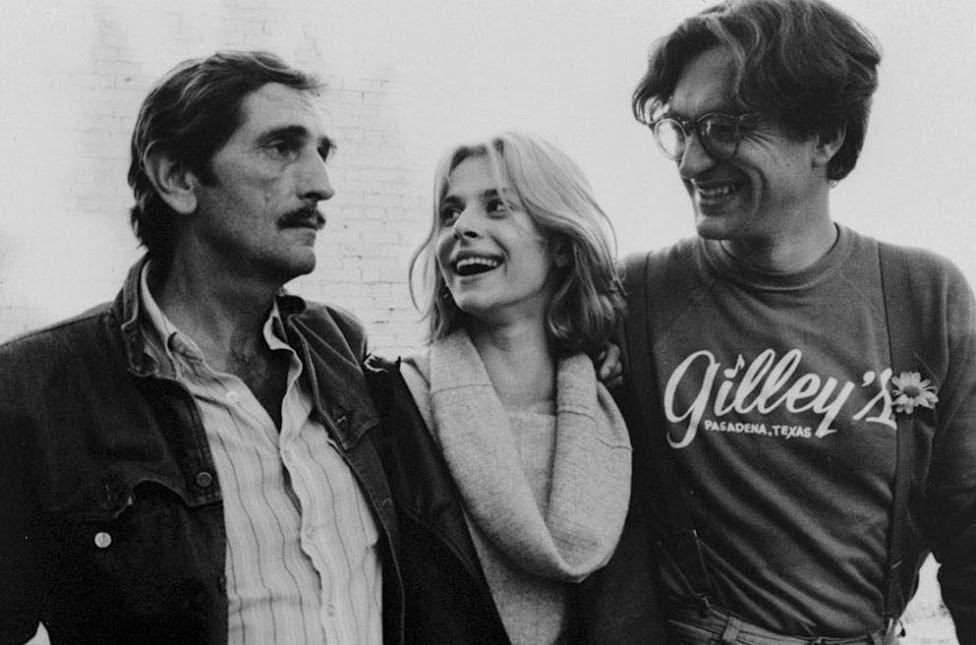
PARIS, TEXAS
The narrative of Paris, Texas is a spatial journey that mirrors a psychological reconstruction. It begins in the absolute silence of the desert and moves toward the density of human speech and memory.
"I knew these people," Travis begins, in one of the great monologues of movie history. "These two people. They were in love with each other. The girl was very young, about 17 or 18, I guess. And the guy was quite a bit older. He was kind of raggedy and wild. And she was very beautiful, you know?"
Paris, Texas (1984) among other things is a road movie, a modern Western, a story of the loss , film with stunning photography and incredible music by Ry Cooder (one of the best, if not the best music scored for the movie feature). It represents the peak of Wim Wenders’ career in the ’70s and early ’80s and film deservedly won the Palme d’Or 1984 at the Cannes Film Festival.
The film opens with stunning aerial footage of desert and mountains in West Texas.Emerging from the desert, Travis (Harry Dean Stanton), lost and severely hydrated, is rescued by a German doctor living in a remote village. Travis refuses to speak, but the doctor manages to track down and contact Travis’ younger brother, Walt Henderson (Dean Stockwell), the hardworking owner of a billboard company in Los Angeles.
Walt and his wife Anne (Aurore Clement) live in Los Angeles with Hunter (Hunter Carson), who is Travis' son. We gradually learn pieces of the story: Hunter was left with the Hendersons by Travis' wife Jane (Nastassja Kinski), who could no longer care for him, but who sends a check every month from a bank in Houston. The man comes walking out of the desert like a Biblical figure, a penitent who has renounced the world. He wears jeans and a baseball cap, the universal costume of America, but the scraggly beard, the deep eye sockets and the tireless lope of his walk tell a story of wandering in the wilderness. What is he looking for? Does he remember?
Wim Wenders' "Paris, Texas" (1984) is the story of loss upon loss. This man, whose name is Travis, was once married and had a little boy. Then that all went wrong, and he lost his wife and child, and for years he wandered. Now he will find his family and lose it again, this time not through madness but through sacrifice. He will give them up out of his love for them.
Travis is not insane, not acting out his alienation. He is simply lost in grief, despairing at the way his marriage was joyous for a brief time and then was destroyed by his own drinking and jealousy. He stays for a time with the Hendersons, slowly wins Hunter's trust, walks home with him from school in a sweet little scene where they copy each other's gaits. Then he has a serious conversation with Hunter that leads to them getting into Travis's old Ford pickup and driving to Houston to find Jane.


ROBBY MÜLLER CINEMATOGRAPHER >>>
Wenders and Robby Müller Collaboration
The focus on the collaboration between Wim Wenders and cinematographer Robby Müller hits at the absolute DNA of why Paris, Texas works. They didn't just make films together; they invented a distinct visual grammar across a multi-decade partnership (including Alice in the Cities, The American Friend, and Wings of Desire).
Many directors and cinematographers rely on meticulous storyboards. Wenders and Müller famously did the opposite. Their collaboration was built on an almost telepathic trust and a willingness to react to the environment in real time.
Responding to Space: Müller, often called the "Master of Light," preferred to arrive on location and see how the natural light fell before deciding where to put the camera. In the West Texas desert, this meant capturing the immense, indifferent scale of the landscape that Ebert described. Travis isn't just walking through the desert; Müller's wide lenses frame him as if he is being swallowed by it.
The "Available Light" Philosophy: Müller despised over-lit, artificial Hollywood sets. He pioneered the use of uncorrected fluorescent lights and real neon tubes. In the 1980s, film stock usually turned a sickly green under fluorescent lighting, which most filmmakers avoided. Müller embraced it, using that green tint to signify the psychological rot, isolation, and alienation of modern American spaces (like the motels and suburbs Travis traverses).

Ray Cooder Music
Born Ryland Peter Cooder on March 15, 1947, in Santa Monica, California, Ry Cooder is more than just a guitarist; he is a curator of forgotten sounds. After losing an eye at age four, he retreated into a world of music, mastering the guitar by age eight.
From his early days with the Rising Sons (alongside Taj Mahal) and the erratic Captain Beefheart, to his legendary session work with The Rolling Stones (that's his slide on "Sister Morphine"), Cooder has always been the "musician's musician."
"He is the most talented person I've ever known... not simply a singer or a guitarist... but a very great artist who uses all these things to make the material of his own music."
— Walter Hill (Director)
Harry Dean Stanton's Performance
Wim Wenders' Paris, Texas (1984) proved that Harry Dean Stanton didn't need grand speeches to dominate a film—he just needed to exist in front of a camera. By placing a 58-year-old character actor at the center of a sprawling American road movie, Wenders and screenwriter Sam Shepard created one of the most haunting portrayals of grief, guilt, and emotional isolation in cinema history.
Performance Breakdown: The Art of Unraveling
1. Silence as Narrative Force
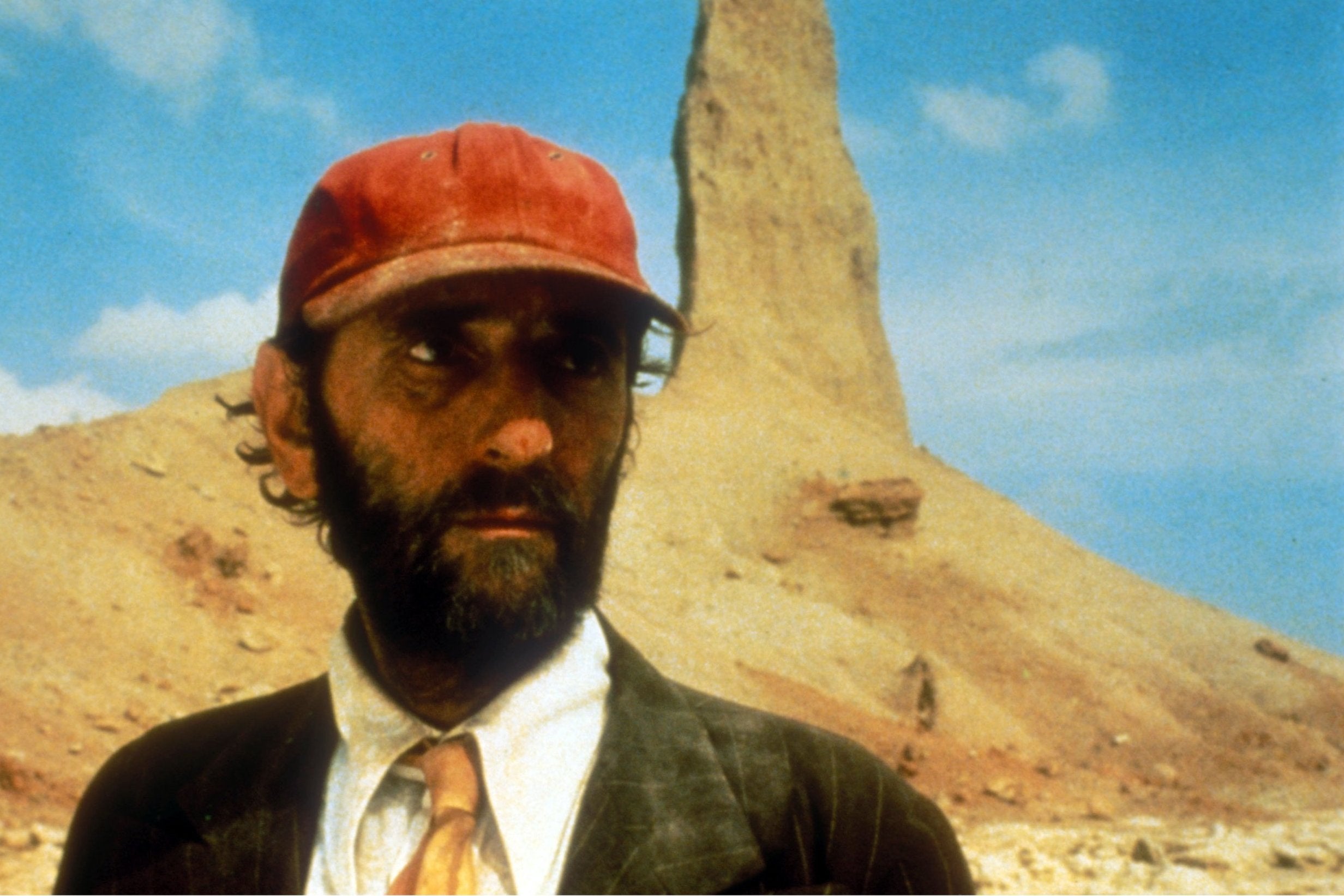
For the first 25 minutes of the film, Travis Henderson wanders out of the scorching West Texas desert wearing a worn suit and a red baseball cap, completely mute. Stanton gives a masterclass in physical acting: his hollowed cheeks, vacant stare, and compulsive thirst tell you everything about a man who has deliberately tried to erase himself from the world. His silence isn't a gimmick—it's the physical weight of total emotional shutdown.
2. Re-learning Human Connection
When Travis is re-anchored by his brother Walt (Dean Stockwell) and reintroduced to his young son Hunter (Hunter Carson), Stanton handles his character's return to language with delicate fragility. He doesn't suddenly revert to normal speech; he stumbles through phrases like a child waking up from a deep coma. His attempts to learn how to "look like a father"—including foolishly copying a butler's posture—are equal parts heartbreaking and gently humorous.
3. The Peep-Show Confessional
The film's emotional peak occurs in a dimly lit Houston peep-show booth, where Travis speaks to his estranged wife Jane (Nastassja Kinski) through a two-way mirror.
Turning his back to the glass so she cannot see him, Stanton delivers Shepard's long, poetic monologue about their destructive past in a quiet, cracking voice. By removing physical touch and face-to-face eye contact, Stanton turns a sordid, transactional booth into a sacred confessional. His delivery shifts from detached third-person narration to raw, tearful remorse without ever boiling over into melodrama.
Cinematic Impact
Deconstructing the Western Myth: Paris, Texas subverts the classic archetype of the stoic, wandering cowboy (John Wayne, Clint Eastwood). Instead of finding triumph or justice in the desert, Travis finds only his own failures. Stanton's vulnerability radically reframed what an American "outlaw wanderer" could look like on screen.
Elevating the Character Actor: Prior to 1984, studios rarely trusted weathered, non-traditional character actors to carry a major award-winning drama. Stanton's performance opened doors for directors to cast untraditional leads in American independent cinema throughout the 90s and beyond.
The Müller-Shepard Synergy: Cinematographer Robby Müller used Stanton's expressive, lined face as a canvas that matched the neon-lit diners, dusty highways, and vacant billboards of Americana. Stanton served as the ideal human grounding for Müller's lush visual framing and Shepard's literary rhythm.
"He's one of those actors who knows his face is doing the work for him. He doesn't have to act; he just has to be." — Wim Wenders

Deconstructing the Myth of the Western Frontier
The "Road Movie" is arguably the cinematic descendant of the classic American Western. In traditional American mythos, driving or riding into the sunset represents freedom, manifest destiny, and individual reinvention. Wenders takes these exact tropes and subverts them through a lens of post-war European skepticism.
The Anti-Cowboy: Travis emerges from the desert wearing a red baseball cap and a dusty suit rather than a Stetson and boots. He is a broken cowboy who is not conquering the frontier; he is being hollowed out by it.
The Destinationless Road: In American cinema (like Easy Rider), the road is a space of radical liberation. For Wenders, the road is a purgatory of alienation. Travis walks aimlessly because he is fleeing trauma, not chasing a dream. By making the ultimate goal of this grand American journey a tiny, pathetic, empty plot of dirt called "Paris, Texas," Wenders exposes the hollowness of the American promise of "starting over."

She was born in Berlin in 1960, the daughter of infamous cinematic wild man Klaus Kinski, and, at the age of 12, so the story goes, she was discovered while dancing with friends in a club and cast in her first film, "Wrong Move" (1975), an early work from up-and-coming German director Wim Wenders.
Directed by Wim Wenders and written by Sam Shepard, Paris, Texas is a haunting, visually sublime exploration of the American landscape and the fractured nature of the human heart. Winning the Palme d'Or at the 1984 Cannes Film Festival, it remains one of the most celebrated examples of "New German Cinema" finding its soul in the American West

Visual Design and Cinematography
The film’s emotional weight is deeply tied to Robby Müller’s legendary use of color and space. Rather than relying on standard Hollywood lighting, Müller utilized the ambient, neon glow of real locations, creating a distinct visual contrast between cold fluorescent green tones and warm, saturated reds or amber sunsets.
Müller’s compositions constantly emphasize the vastness of the Texas desert against the claustrophobic, synthetic environments of modern infrastructure. The frame frequently separates characters with architectural lines, glass reflections, and physical barriers, mirroring their internal detachment long before they vocalize their grief

The Narrative: From Silence to Confession
The film follows Travis Henderson (Harry Dean Stanton), a man who emerges from the South Texas desert after being missing for four years.
The Reconnection: Travis is found by his brother, Walt (Dean Stockwell), who brings him back to Los Angeles. There, Travis must navigate a delicate reunion with his seven-year-old son, Hunter, who has been raised by Walt and his wife, Anne.
The Road Trip: The middle act shifts into a classic road movie. Travis and Hunter travel back to Texas to find Jane (Nastassja Kinski), the wife/mother who vanished years prior.
The Peep Show Climax: The film culminates in two extended dialogue sequences at a Houston peep-show club. Communicating through a one-way mirror and a telephone, Travis tells Jane a "story" that reveals the dark, jealous history of their relationship, leading to a bittersweet resolution of forgiveness without reconciliation.


Visual and Auditory Identity
The film’s power is inseparable from its aesthetic choices:
Robby Müller’s Cinematography: Müller captured the American Southwest not as a dusty wasteland, but as a vibrant, neon-soaked dreamscape. His use of primary colors—particularly the saturated reds (Travis’s cap, Jane’s sweater) and cool blues—creates a psychological map of the characters' emotions.
Ry Cooder’s Score: The minimalist, echoing slide guitar score is iconic. Based on Blind Willie Johnson’s "Dark Was the Night, Cold Was the Ground," the music provides a sonic representation of the vast, lonely Texas horizons.
The Concept of "Paris, Texas": The title refers to a vacant lot Travis bought in Paris, Texas, based on a joke his father used to tell. It represents a "promised land" or a fixed point of origin that doesn't exist, symbolizing the characters' search for a home that has already been destroyed.

The Double-Edged Sword of "Americana"
Ultimately, Wenders’ perspective as a German director results in a film that is simultaneously an elegy for and a critique of the American Dream. He deeply loves the textures of America—Ry Cooder's slide guitar, the neon glows, the open highways—but he diagnoses the profound spiritual isolation that lives underneath them. Paris, Texas could only have been made by someone who spent their youth dreaming of America from across an ocean, only to arrive and find a beautiful, heartbreaking desert.

Production History & Trivia
The Script: Sam Shepard wrote the script as the film was being shot. He would often send pages to Wenders via mail. Because Shepard had to leave to act in another film, L.M. Kit Carson (father of Hunter Carson, who played Hunter) helped finalize the dialogue for the third act.
The "Peep Show" Set: The iconic booth was a practical set. To get the lighting right, Müller had to balance the reflection of the glass so Kinski could not see Stanton, while the audience could see both.
Harry Dean Stanton's Breakthrough: Despite a long career as a character actor, this was Stanton’s first leading role. He famously asked Wenders, "How do I play this?" Wenders replied, "Just play yourself."

Memory Mediated by Super 8
One of the film's most critical tonal shifts happens when Travis reunites with his brother Walt (Dean Stockwell) and his son Hunter. For years, Hunter has been raised by Walt and his French wife, Anne. The ice between Travis and his estranged son is finally broken not by words, but by a home movie.
The screening of the silent, warm-toned Super 8 film captures a time when the family was whole. In this sequence:
The Contrast of Reality: The vibrant, shaky home footage provides a stark counterpoint to Robby Müller's highly composed, sterile 35mm present-day cinematography.
Relearning Love: Hunter watches the screen and sees proof that Travis once loved him, and that Travis was once capable of joy. The home movie acts as a technological bridge, allowing a traumatized father and a forgotten son to find a shared vocabulary without forcing premature spoken intimacy.

The American Friend (1977): Cold Neo-Noir and Urban Rot
In this psychological thriller based on Patricia Highsmith's Ripley novels, Müller captures a gritty, post-WWII European landscape (primarily Hamburg, alongside Paris and New York) fractured by industrial modernization and existential dread.
The Fluorescent Palette of Paranoia: The American Friend is famous for its aggressive use of sickly, uncorrected fluorescent greens, pale ambers, and cold industrial blues. Long before the green tint became a staple of modern digital color grading (like in The Matrix), Müller deliberately used film stocks that reacted poorly to the fluorescent lighting found in Hamburg subways, train stations, and framing shops. This choice created an unsettling, chemically altered atmosphere that perfectly mirrored Jonathan Zimmermann's (Bruno Ganz) leukemia diagnosis and descending paranoia.
Shadows, Contours, and Claustrophobia: True to its neo-noir lineage, the camera work here emphasizes frames within frames, narrow corridors, and deep, encroaching shadows. Characters are routinely trapped by architectural lines, escalators, and low ceilings. The light doesn't feel natural; it feels synthetic, oppressive, and transactional—capturing a world of low-level criminals, art forgers, and hitmen.
Paris, Texas (1984): The Vibrant, Hyper-Real Landscape of Grief
Seven years later, Müller took many of the same color theories he developed in Germany and transposed them onto the sweeping vistas of the American Southwest. The result is a shift from the suffocating shadows of noir to a hyper-saturated, poetic realism.
From Industrial Green to Emotional Green: The uncorrected fluorescent green that signified disease and urban alienation in The American Friend takes on a different life in Paris, Texas. In the 1984 film, green becomes the color of the synthetic, commodified modern world. It dominates the cold, neon-lit twilight of Houston, the highway overpasses, and the automated corridors of the peep show. It stands in direct contrast to Travis's internal world.
The Triad of Primary Colors: While The American Friend relies on a murky, mixed palette of chemical hues, Paris, Texas operates on a bold, painterly framework of primary colors—reds, blues, and whites—heavily influenced by the photography of William Eggleston. Red, in particular, is used as a beacon of memory and obsession. Instead of hiding characters in the shadows as he did in 1977, Müller exposes them to an unforgiving, blinding sunlight or floods them in vibrant, saturated neon.
The Scale of Space: The most dramatic shift is the relationship with space. In The American Friend, the environment presses inward on the characters. In Paris, Texas, the characters are swallowed by the vastness of the horizon. Müller uses wide lenses to emphasize a crushing, geographic loneliness, illustrating that emptiness in a landscape can be just as claustrophobic as a narrow alleyway.

Legacy
Paris, Texas is often cited as a major influence on directors like Wes Anderson and Quentin Tarantino, and musicians like Kurt Cobain and Elliott Smith. It serves as the ultimate "outsider's" look at America—a European director capturing the mythic beauty and inherent sadness of the American Dream through the lens of a broken family. It remains a definitive work on the impossibility of truly "returning home."

The Phantom of the "Origin"
The title of the film refers to a vacant, dusty plot of land that Travis bought sight unseen. He carries a faded photograph of it in his wallet like a holy relic.
The Myth of Conception: Travis's mother told him he was conceived in Paris, Texas. To his fractured mind, this empty plot represents a clean slate—a return to a time before his identity unraveled, before his intense jealousy destroyed his marriage, and before he abandoned his son.
The Cruel Irony: The location serves as a bitter punchline. It pairs the ultimate symbol of European cultural romance (Paris) with the rugged, unforgiving reality of the American West (Texas). It is a geographic paradox that mirrors Travis’s impossible desire to reconcile his idealized fantasy of family life with his destructive reality.

The Peep Show Monologue and Acoustic Identity
The narrative reaches its devastating peak during the extended monologue at a Houston peep-show booth. Travis and his estranged wife, Jane (Nastassja Kinski), are separated by a one-way mirror. The visual framing encapsulates the film's core themes: intimacy reduced to a commercial transaction, and communication mediated through technology.
This sequence relies heavily on the sonic identity established by Ry Cooder’s haunting, minimalist slide guitar score. The music acts as an extension of the desert wind—sparse, lingering, and deeply melancholic—underlining Travis’s painful attempt to articulate a past he spent years trying to walk away from. By turning his back to the glass and speaking through a telephone receiver, Travis converts a voyeuristic space into a confessional booth, seeking a path toward familial reconciliation even if personal redemption remains out of reach.


-3.jpg)