Biutiful is impressive film-making. Whether or not we want to receive it, the Mexican director Alejandro González Iñárritu offers his audience an entire created world, personal and distinctive, and Biutiful is his most accomplished picture so far.
Biutiful brings together for the first time the brilliant Mexican director of Amores Perros and the greatest Spanish actor of his generation, Javier Bardem.
If the film has a model, it's Akira Kurosawa's masterly Ikiru (aka Living), which took a hackneyed subject – the way a middle-aged Japanese civil servant reacts to the news that he has terminal cancer – and transformed it into a profound statement about the human condition. The protagonist of Biutiful is Uxbal, a man from southern Spain, who at fortysomething looks in poor physical shape and first reveals his true condition to us when he passes blood.
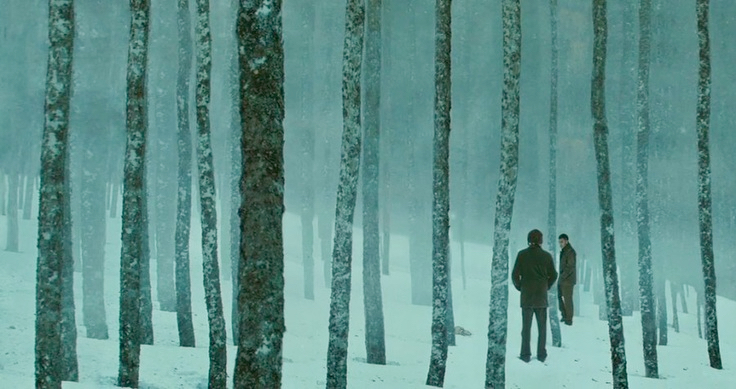
The movie has a circular motion, beginning and ending with Uxbal handing his mother's ring to his young daughter and recalling a dream-like encounter in a snow-covered forest. This sets the mood for a harsh, unsentimental narrative of redemption and putting one's life in order as a prelude to death.
Uxbal is too poor, hard-pressed and desperate for that, which is not to say that he isn't a man of sensibility and moral intelligence beneath his tough peasant exterior. In league with his brother, Tito, he's up to his neck in petty criminality while exploiting and helping Chinese and African immigrants who make a living on the streets of Barcelona. He's divorced from his wife, the good-looking, chain-smoking, hard-drinking Marambra, and he's raising his two small children Ana and Mateo on a small income. Moreover, his apparent psychic gifts allow him to earn a bit of dubious extra cash.
Iñárritu's previous films have been multilayered narratives. Here, he sticks to a single, admittedly richly vibrant milieu and a central character who appears in virtually every frame. He's brilliantly served by the handsome, imposing Bardem, whose expressive face and large battered nose resembles a deposed Roman emperor who's spent a lifetime in fairground boxing booths. This is a further contribution to an astonishing gallery of characters Bardem's created these past few years, ranging from a troubled intellectual and a police chief to a romantic artist and a sadistic killer.
Javier Bardem gives an overpowering and now Oscar-nominated performance as the anguished street hustler Uxbal, who finds himself bowed down by troubles. It is his presence, and that great face of his, looming hugely and handsomely into the camera, that carries the movie – that, and some inspired flashes of visual poetry, chiefly a brilliantly conceived meeting between Uxbal and his late father.
https://www.theguardian.com/film/2011/jan/30/biutiful-review-philip-french-bardem
The film follows the tormented life of Uxbal, a man living in the slums of a bleak and industrial Barcelona, far from the typical tourist circuits. Uxbal is a single father struggling to balance his love for his two children, Ana and Mateo, with his illegal work: acting as a middleman between corrupt authorities and human traffickers (primarily Chinese and African immigrants).
His life takes a dramatic turn when he discovers he has terminal prostate cancer. With only a few months left to live, Uxbal begins a desperate journey to seek redemption, secure a future for his children, and reconcile his spirit before it is too late.
The Invisible Barcelona
Unlike most films set in Barcelona, Iñárritu chooses to showcase the outskirts, multi-ethnic neighborhoods, and extreme poverty. The film serves as a critique of modern exploitation and the precariousness of immigrant life, transforming the city into a hostile, breathing character.
The Ending: A Full Circle
The ending of Biutiful is a masterpiece of circular storytelling. As Uxbal passes away, he enters the snowy forest seen at the start of the film. He meets his own father—a man who died before Uxbal was born. This suggests that death is not an end, but a reconciliation, allowing Uxbal to finally become the son he never was while leaving his own children with the love he fought so hard to provide.


-2.jpg)



.jpg)