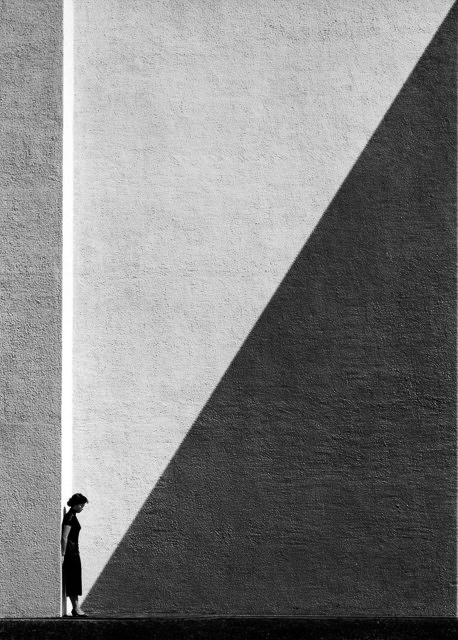
Fan Ho was a Chinese photographer, film director, and actor. From 1956, he won over 280 awards from international exhibitions and competitions worldwide for his photography. Wikipedia
Fan Ho (1931–2016) was a renowned photographer, actor, and film director, widely celebrated for his evocative black-and-white images of mid-20th-century Hong Kong. Often referred to as the "Cartier-Bresson of the East," he was a master of capturing the "decisive moment" through a unique lens of light, shadow, and geometry.
Photographic Style and Technique
The "Decisive Moment": Inspired by Henri Cartier-Bresson, Ho was known for his patience, waiting for the perfect, fleeting collision of subjects and environment.
Mastery of Light and Shadow: He famously described photography as the "art of light," frequently using backlighting, smoke, and silhouettes to create deep, cinematic drama and atmosphere.
Subject Matter: His work captured the soul of Hong Kong during the 1950s and 60s. Rather than documenting architecture, he focused on the human element—street vendors, hawkers, children at play, and the resilience of ordinary citizens.
Gear: He famously utilized a twin-lens Rolleiflex camera throughout his career, which he acquired at age 18.
Artistic Process: Ho viewed photography as a subjective, creative process rather than a purely objective record. He often cropped his negatives to enhance the composition and emphasized that "a camera is just a tool; the photographer's mind and heart are what create the image."
Biography
Early Life: Born in Shanghai in 1931, he began taking photographs at age 14 with a Kodak Brownie. He moved to Hong Kong in 1949, where he began his most significant work.
Awards: He was highly prolific in his teens and 20s, winning nearly 300 local and international awards and being named one of the "Top Ten Photographers of the World" by the Photographic Society of America between 1958 and 1965.
Career Transition: In 1961, he joined the Shaw Brothers studio, transitioning from photography to a successful career in the film industry as an actor and director, where he worked on dramas and erotic features.
Later Years: After retiring from cinema in 1995, he moved to San Jose, California. In his later years, he returned to his photography, revisiting and re-editing his extensive collection of old Hong Kong negatives.
Legacy
His work is held in numerous prestigious collections worldwide, including the M+ Museum in Hong Kong, the Bibliothèque Nationale de France, and the San Francisco Museum of Modern Art. Notable photo books featuring his work include Hong Kong Yesterday, The Living Theatre, and Portrait of Hong Kong.
Fan Ho Photography