_
And, indeed, I will ask on my own account here, an idle question: which is better—cheap happiness or exalted sufferings? Well, which is better?---Fyodor Dostoevsky ---Notes from Underground Fyodor Dostoevsky ---Notes from Underground Even now, so many years later, all this is somehow a very evil memory. I have many evil memories now, but ... hadn’t I better end my “Notes” here? I believe I made a mistake in beginning to write them, anyway I have felt ashamed all the time I’ve been writing this story; so it’s hardly literature so much as a corrective punishment. Why, to tell long stories, showing how I have spoiled my life through morally rotting in my corner, through lack of fitting environment, through divorce from real life, and rankling spite in my underground world, would certainly not be interesting; a novel needs a hero, and all the traits for an anti-hero are expressly gathered together here, and what matters most, it all produces an unpleasant impression, for we are...
Hope
To be human is to be a miracle of evolution conscious of its own miraculousness — a consciousness beautiful and bittersweet, for we have paid for it with a parallel awareness not only of our fundamental improbability but of our staggering fragility, of how physiologically precarious our survival is and how psychologically vulnerable our sanity. To make that awareness bearable, we have evolved a singular faculty that might just be the crowning miracle of our consciousness: hope.--
Erich Fromm
Man on wire (2008)
The Artistic Crime of the Century
In 1974, Philippe Petit walked a wire between the Twin Towers. Film explores the meticulous planning, the physical heights, and the cinematic legacy of James Marsh's 2008 masterpiece.
"Man on wire" is one of the best documentary films of all time
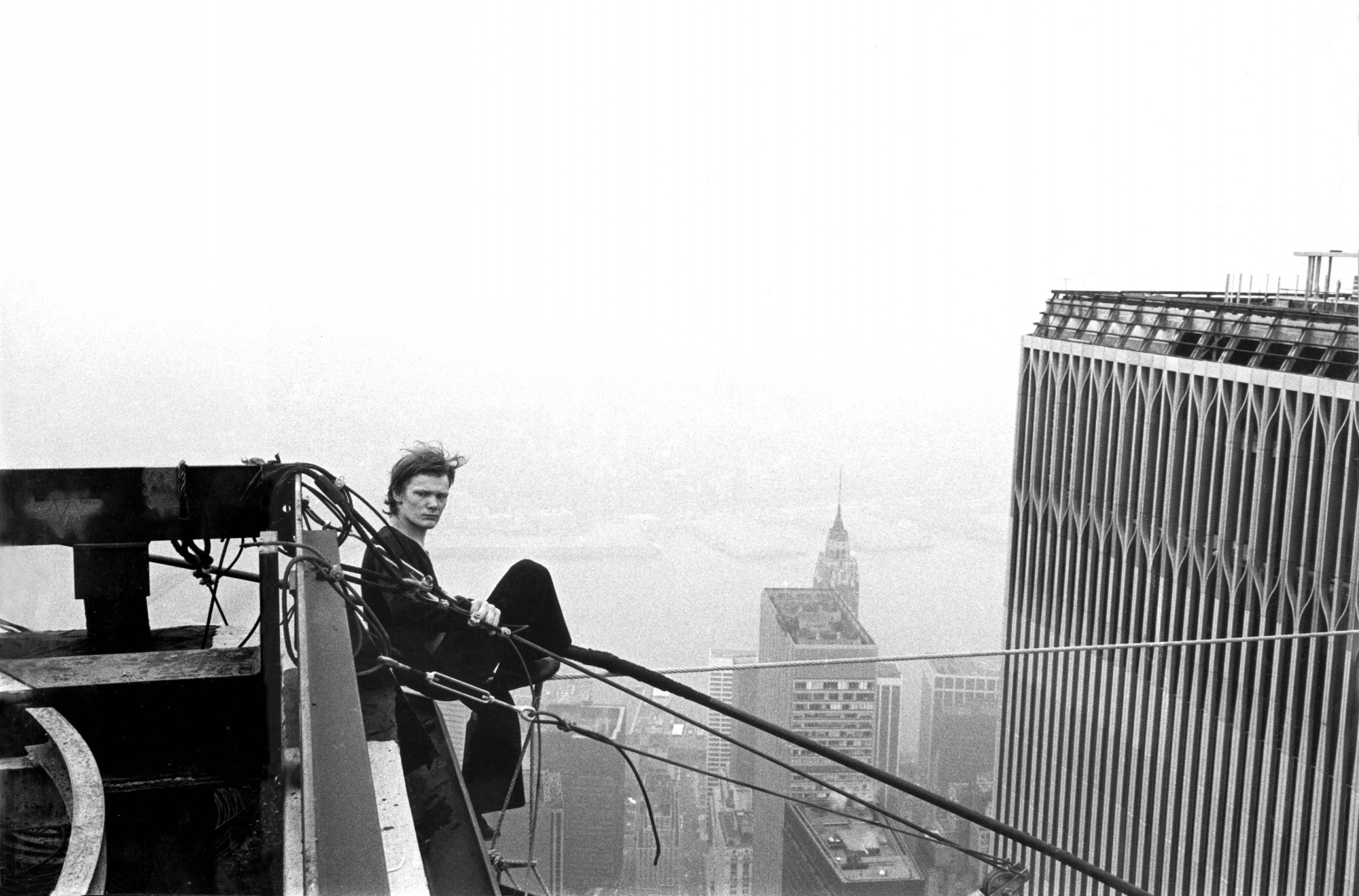
On the morning of Aug. 7, 1974, after months of preparation and years of dreaming, a French Philippe Petit stepped into the sky above Lower Manhattan. For almost 45 minutes he ambled back and forth on a metal cable strung between the towers of the World Trade Center.(In the wake of 9/11, studios edited or digitally removed the World Trade Center from shots of the New York skyline in their new releases). In this exhilarating, breathtaking documentary by British filmmaker James Marsh , the twin towers are back to celebrate one of their finest moments: the breathtaking, palm-moistening 1974 tightrope walk between their summits by French high wire artist Philippe Petit.
At dawn on August 7th, the young Frenchman shifted his weight from the foot planted on the still-under-construction South Tower, and placed it on the other foot, on a cable he and his confederates had strung across the 200 feet to the North Tower above 1,350 feet of empty vertical space. "This was probably the end of my life," he remembers thinking, "and yet something I could not resist." The film won 2008 Academy Award for Best Documentary Feature.
He never just "walked" on a wire. He lay down, knelt, juggled, ran. Every wire presented its own problems, and in rehearsing for the WTC, he built a wire the same distance in France. To simulate the winds, the movements of the buildings and the torsion of the wire, he had friends jiggle his wire, trying to toss him off. His balance was flawless. He explains how a wire can move: Up and down, sideways, laterally, and it also can sometimes twist.
https://www.rogerebert.com/reviews/man-on-wire-2008

Directed by James Marsh, Man on Wire is a critically acclaimed documentary that chronicles Philippe Petit's 1974 illegal high-wire walk between the Twin Towers of the World Trade Center. Often described as the "artistic crime of the century," the film is celebrated for its unique structure, which plays more like a high-stakes heist thriller than a traditional documentary.
The Subject: Philippe Petit
The film focuses on the charismatic French high-wire artist Philippe Petit. His obsession with the World Trade Center began in 1968 when he saw a drawing of the proposed Twin Towers in a magazine while sitting in a dentist's waiting room.
Before his New York "coup," Petit performed other legendary illegal walks:
The Walk
At 7:15 AM on August 7, 1974, Petit stepped onto the wire. He spent 45 minutes on the cable (1,350 feet above the ground), making eight passes between the towers. He didn't just walk; he danced, knelt, and even lay down on the wire while Port Authority police waited on the roofs to arrest him.
Reception and Legacy
Man on Wire holds a rare 100% rating on Rotten Tomatoes. Critics praised the film for being a "love letter" to the Twin Towers that focused on a moment of beauty and human achievement rather than the tragedy of their eventual destruction.
Major Awards
The film dominated the 2008–2009 awards season:
Academy Award (Oscar): Best Documentary Feature.
BAFTA Award: Outstanding British Film.
Sundance Film Festival: Grand Jury Prize and Audience Award (World Cinema Documentary).
Independent Spirit Award: Best Documentary.
The Twin Towers Walk (August 7, 1974)
Known as the "artistic crime of the century," Petit and a small group of collaborators spent months planning the "coup."
The Logistics
Height: 1,350 feet (411 meters) above the ground.
Method: They used a bow and arrow to shoot a fishing line between the towers, eventually pulling across a 450-pound steel cable.
The Walk: Petit spent 45 minutes on the wire, making eight passes between the towers. He didn't just walk; he knelt, danced, and even lay down on the wire to look at the sky.
The Aftermath
Upon stepping off the wire, Petit was arrested. However, because of the public's fascination and the sheer beauty of the act, all formal charges were dropped on the condition that he perform a free high-wire act for children in Central Park. He was also given a lifetime pass to the Twin Towers' observation deck.
Other Notable Feats
While the World Trade Center walk is his most famous, Petit has performed dozens of other high-wire walks across the globe, including:
Notre Dame Cathedral (1971): His first major "coup" in Paris.
Sydney Harbour Bridge (1973): A walk in Australia that further refined his clandestine methods.
Eiffel Tower (1989): An authorized walk to celebrate the bicentennial of the French Revolution.
Creative Philosophy
Petit is a self-taught polymath. Beyond the wire, he is a magician, street performer, carpenter, and author. His philosophy is centered on:
Preparation: He believes that meticulous planning is what separates a "daredevil" from an "artist."
The "Coup": He views his walks as theatrical performances rather than stunts.
Defiance: Much of his work involves reclaiming public space and challenging the "limits" set by authority.
Media and Legacy
His life and the 1974 walk have been immortalized in several works:
"To Reach the Clouds": Petit's own memoir about the event.
"Man on Wire" (2008): An Academy Award-winning documentary directed by James Marsh.
"The Walk" (2015): A biographical drama directed by Robert Zemeckis, starring Joseph Gordon-Levitt as Petit.
"To me, it's really simple. Life should be lived on the edge. You have to exercise rebellion: to refuse to tape yourself to rules, to refuse your own success, to refuse to repeat yourself, to see every day, every year, every idea as a true challenge — and then you are going to live your life on a tightrope." — Philippe Petit