And, indeed, I will ask on my own account here, an idle question: which is better—cheap happiness or exalted sufferings? Well, which is better?---Fyodor Dostoevsky ---Notes from Underground Fyodor Dostoevsky ---Notes from Underground Even now, so many years later, all this is somehow a very evil memory. I have many evil memories now, but ... hadn’t I better end my “Notes” here? I believe I made a mistake in beginning to write them, anyway I have felt ashamed all the time I’ve been writing this story; so it’s hardly literature so much as a corrective punishment. Why, to tell long stories, showing how I have spoiled my life through morally rotting in my corner, through lack of fitting environment, through divorce from real life, and rankling spite in my underground world, would certainly not be interesting; a novel needs a hero, and all the traits for an anti-hero are expressly gathered together here, and what matters most, it all produces an unpleasant impression, for we are...
Hope
To be human is to be a miracle of evolution conscious of its own miraculousness — a consciousness beautiful and bittersweet, for we have paid for it with a parallel awareness not only of our fundamental improbability but of our staggering fragility, of how physiologically precarious our survival is and how psychologically vulnerable our sanity. To make that awareness bearable, we have evolved a singular faculty that might just be the crowning miracle of our consciousness: hope.--
Erich Fromm
Born in 1942, Herzog grew up amid post-World War II destruction in the
small Bavarian village of Sachrang. He saw his first movies at age 11
and quickly discovered film technique by taking heed of continuity
errors and generic conventions in cheap B-movies . At age 14, he began a short period of intense Catholic devotion, around
the same time that he discovered the virtues of traveling on foot and
became determined to make films .
As a teenager, Herzog learned about film making from an encyclopaedia
entry on the subject, but because of his youth and lack of formal
training, he was unable to find producers for his early screenplays. Consequently, he founded Werner Herzog Filmproduktion and began
producing his own films .
He has written, produced, directed and often narrated virtually all of
his own films since then, becoming an auteur in the proper sense.
-
According to IMDb, Werner Herzog has 71 directorial credits to his name with an additional three films currently in the pipeline
After travelling Europe and North America for several years, Herzog
returned to Munich in 1968, where he met Volker Schlöndorff and Rainer
Werner Fassbinder, two other young directors who would emerge as guiding
lights of the New German Cinema. Set on Crete during the Nazi
occupation of Greece, his first fictional feature, Lebenszeichen (Signs of Life, 1968), follows the same theme as The Unprecedented Defense,
telling the story of a young German soldier named Stroszek who goes mad
while defending a useless ammunition dump from nonexistent enemies.
Aguirre, der Zorn Gottes (Aguirre, the Wrath of God, 1972)was his first international success and the first of five
collaborations with actor Klaus Kinski. Very loosely based upon Spanish
conquistador Lope de Aguirre’s doomed expedition to find El Dorado, the
film (perhaps Herzog’s best) details one man’s descent into madness as
he rebels against the Spanish crown and nature alike. Aguirre is a
quintessentially Herzogian (anti-)hero, encompassing both the
“over-reacher and prophet or underachiever and holy fool”, put in
bizarre locations and situations “often in order to let a strange and
touching humanity emerge from impossible odds” .
Werner Herzog’s “Aguirre, the Wrath of God” (1973) is one of the great haunting visions of the cinema. It tells the story of the doomed expedition of the conquistador Gonzalo Pizarro, who in 1560 and 1561 led a body of men into the Peruvian rain forest, lured by stories of the lost city. The opening shot is a striking image: A long line of men snakes its way down a steep path to a valley far below, while clouds of mist obscure the peaks. These men wear steel helmets and breastplates, and carry their women in enclosed sedan-chairs. They are dressed for a court pageant, not for the jungle.
AGUIRRE, THE WRATH OF GOD (AGUIRRE, DER ZORN GOTTES , 1972) >>>
His next feature,Jeder für sich und Gott gegen alle (The Enigma of Kaspar Hauser),
1974 – its German title means, appropriately enough, “Every Man For
Himself and God Against All”) would bring Herzog’s interest in language
to the fore again, this time based on the true story of a young man who
was imprisoned for his first 16 years and then turned loose into an
early 19th century German city without any conception of civilisation.
Unable to speak more than a few pre-rehearsed sentences, Kaspar is able
to see the world with completely fresh eyes (much like the aliens in the
original concept for Fata Morgana) and must quickly learn to communicate with his surroundings. "The Enigma of Kaspar Hauser" is a lyrical film about the least lyrical of men. Bruno S. has the solidity of the horses and cows he is often among, and as he confronts the world I was reminded of W. G. Sebold's remark that men and animals regard each other across a gulf of mutual incomprehension. The film's landscapes, its details from nature, its music, all embody the dream world Kaspar entered when he escaped the unchanging reality of his cellar. He never dreamed in the cellar, he explains. I think it was because he knew of nothing else than the cellar to dream about. MORE ABOUT FILM
After the critical success of Kaspar Hauser, Herzog followed with another period film, Herz Aus Glas (Heart of Glass, 1976), about the fragility of civilisation in a pre-industrial Bavarian
village. The village is renowned for making a special red glass, but
when the master glass blower dies with the secret to make it, a
collective madness begins to take over as the town turns upon itself.
Meanwhile, a prophet on the outside of society makes ominous predictions
about the future of the town and the wider world.
Werner Herzog's "Heart of Glass" (1976) is a vision of man's future as desolation. In a film set entirely in a Bavarian village around 1800, it foresees the wars and calamities of the next two centuries and extends on into the 21st with humanity's nightfall. In the story of the failure of a small glassblowing factory, it sees the rise and collapse of the industrial revolution, the despair of communities depending on manufacture, the aimlessness of men and women without a sense of purpose.
This is one of the least seen and most famous of Herzog's films, known as the one where most of the actors were hypnotized in most of the scenes. It hasn't been much seen, perhaps because it isn't to the taste of most people, seeming too slow, dark and despairing. There's no proper story, no conclusion, and the final scene is a parable seemingly not connected to anything that has gone before. I think it should be approached like a piece of music, in which we comprehend everything in terms of mood and aura, and know how it makes us feel even if we can't say what it makes us think.
His next two features (both starring Kinski), filmed back-to-back in
1979, saw Herzog looking to earlier, “legitimate” German culture:Nosferatu the Vampyre (from Murnau’s 1922 film) and Woyzeck(from Georg Büchner’s dramatic fragment, posthumously published in
1879). Although many scenes and images (e.g. the vampire’s physical
appearance) are obvious adaptations from Murnau’s film, Herzog’s
retelling of the well-known Dracula story feels overall closer
to the revived Gothicism of Bram Stoker’s 1897 source novel than
Murnau’s Expressionism. The vampire is another of Herzog’s existential
heroes, an outsider who transcends the limits of human possibility
through his undead-ness, evoking the terrors of nature (i.e. the plague)
in his wake.
There is a quality to the color photography in Werner Herzog's "Nosferatu the Vampyre" that seeps into your bones. It would be inadequate to call it "saturated." It is rich, heavy, deep. The earth looks cold and dirty. There isn't a lot of green, and it looks wet. Mountains look craggy, gray, sharp-edged. Interiors are filmed in bold reds and browns and whites -- whites, especially, for the faces, and above all for Count Dracula's. It is a film of remarkable beauty, but makes no effort to attract or visually coddle us. The spectacular journey by foot and coach to Dracula's remote Transylvanian castle is deliberately not made to seem scenic.
Herzog’s films often focus upon faith, whether a faith in one’s own
ambitions, a Romantic faith in the shadow of all-powerful nature, or a
faith in religious or superstitious idea(l)s seemingly at odds with
society or conventional reason.
These forms of faith would converge in Fitzcarraldo (1982),
one of Herzog’s finest and most well known films., as much the product of
his faith in filmmaking as in the power of the cinematic
image. Described by Herzog as his best “documentary”, it is a fictional
feature that details a wealthy industrialist’s obsessive quest to bring
European opera to the Amazon. To finance his dream of building a new
opera house, this “Conquistador of the Useless” travels upriver and,
with the help of local indigenous peoples, literally pulls a huge
steamboat over a mountainside to access a fertile tributary. After the
boat reaches the other side of the mountain, the natives cut it loose,
sending it into violent rapids to appease the spirits residing there.
Fitzcarraldo ultimately fails in his mission, but limps back to port
with a compromised version of his dream – a dream that money alone
cannot buy – still intact. A chaotic four years in the making, the
film’s completion was as much a Sisyphean task as Fitzcarraldo’s own
quest to elevate his dreams over reality – especially because Herzog
used no miniatures or special effects in order to pull the full-sized
steamboat up and over the mountain, determined to give the film a wholly
natural sense of wonder and physical magic .
Despite many wild controversies surrounding the film’s making, it
earned Herzog a Best Director award at the 1982 Cannes Film Festival.
"Fitzcarraldo" is one of the great visions of the cinema, and one of the great follies. One would not have been possible without the other. This is a movie about an opera-loving madman who is determined to drag a boat overland from one river system to another. In making the film, Herzog was determined to actually do that, which is more than can be said for Brian Sweeney Fitzgerald, the Irishman whose story inspired him. "Fitzcarraldo" (1982) is one of those brave and epic films, like "Apocalypse Now" or "2001," where we are always aware both of the film, and of the making of the film. Herzog could have used special effects for his scenes of the 360-ton boat being hauled up a muddy 40-degree slope in the jungle, but he believed we could tell the difference: "This is not a plastic boat." Watching the film, watching Fitzcarraldo (Klaus Kinski) raving in the jungle in his white suit and floppy panama hat, watching Indians operating a block-and-tackle system to drag the boat out of the muck, we're struck by the fact that this is actually happening, that this huge boat is inching its way onto land -- as Fitzcarraldo (who got his name because the locals could not pronounce "Fitzgerald") serenades the jungle with his scratchy old Caruso recordings.
Fitzcarraldo (Werner Herzog, 1982): Waking Dreams and Casting Spells in the Jungle >>>
Werner Herzog Documentaries
The Minnesota Declaration
To understand Herzog is to understand his rejection of purely factual documentary filmmaking. He coined the term "Ecstatic Truth" to describe a deeper reality that can only be reached through stylization, fabrication, and poetry. Below are core tenets of his philosophy, synthesized for exploration.
Cinéma Vérité is a Lie
He vehemently opposes the 'fly-on-the-wall' documentary style, arguing that facts alone do not constitute truth. They merely create norms. Truth requires active construction.
The Physicality of Film
Filmmaking must be physical. He famously stated that filmmakers should walk everywhere, as "the world reveals itself to those who travel on foot."
The Stupidity of Nature
Unlike romanticists, Herzog views nature as chaotic, indifferent, and fundamentally murderous. He frequently focuses on the "overwhelming and collective murder" present in the jungle.
The Voice as Instrument
His own heavily accented, deadpan voice narration has become an iconic instrument of his films, lending a hypnotic, existential weight to everything from penguins to volcanoes.
"I am not a journalist; I am a poet. Fact creates norms, and truth illumination."
Little Dieter Needs to Fly (1997)
"Men are often haunted,'' Werner Herzog tells us at the beginning of "Little Dieter Needs to Fly.'' "They seem to be normal, but they are not.'' His documentary tells the story of such a haunted man, whose memories include being hung upside down with an ant nest over his head, and fighting a snake for a dead rat they both wanted to eat.
The man's name is Dieter Dengler. He was born in the Black Forest of Germany. As a child, he watched his village destroyed by American warplanes, and one flew so close to his attic window that for a split-second he made eye contact with the pilot flashing past. At that moment, Dieter Dengler knew that he needed to fly.
Within the canon of such awe-inspiring epics as Fitzcarraldo and Aguirre: Wrath of God, the wilfully whimsical Wild Blue Yonder may perhaps be seen as not a 'significant' Herzog movie. Made in 2005 (the same year as Grizzly Man) and billed as 'a science fiction fantasy', it is a deceptively slight affair which mischievously hijacks documentary footage of space travel and underwater exploration and reworks it into a fanciful tale of alien invasion.
Wild-haired, crazy-eyed, snaggle-toothed cult star Brad Dourif is our extraterrestrial host, his lilting lunatic tones (eerily reminiscent of his demonic Patient X in The Exorcist III) reciting a narrative of failed colonisation and doomed exploration. 'You see aliens as these technologically advanced superbeings who can destroy New York City in two minutes flat,' he rants, standing in front of the derelict buildings and trailer parks which his fellow doomed Andromedans intended as the centre of their earthbound civilisation. 'Well, I hate to tell you this, but we aliens all suck!'
“Werner Herzog’s 1985 television documentary [THE DARK GLOW OF THE MOUNTAINS] could well be an attempt to moderate the overweening mythology implicit in this symbolism of the mountain. Balancing the metaphysical and the humanistic, and eventually tipping in favour of the latter, Herzog’s 45-minute documentary demystifies – or, if you like, de-Aryanises – the German cult of alpinism. At the same time, the death-defying trials of his mountaineering heroes allow Herzog to indulge his characteristic themes: the madness of quixotic obsession, the limitations of man in the face of infinite Nature, and, most of all, the ephemerality of human ambition
Bells From the Deep: Faith and Superstition in Russia (1993)
In his highly experimental and lesser-known documentary “Bells from the Deep: Faith and Superstition in Russia,” Werner Herzog ventures into the border between Russia’s physical and spiritual realms. The documentary is filmed in a timeless, non-linear format and explores components of Russian mysticism. Herzog shows a range of practices, from Siberian nomadic shamanism, to Russian Orthodox baptisms, and to exorcisms for the desperate. Each ceremony is both highly idiosyncratic and surreal – featuring otherworldly experiences that carry significant weight and meaning for their participants. The characters and scenes are presented without context, and the lack of spatial and temporal parameters seamlessly mirror the subject matter of the film.
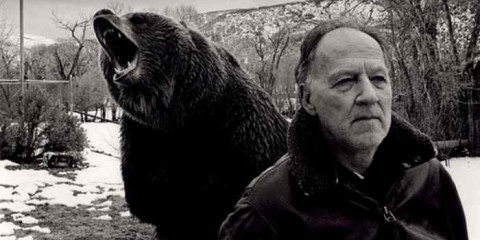
If I show weakness, I'm dead. They will take me out, they will decapitate me, they will chop me up into bits and pieces I'm dead. So far, I persevere. I persevere. So speaks Timothy Treadwell, balanced somewhere between the grandiose and the manic, in Werner Herzog's "Grizzly Man."He is talking about the wild bears he came to know and love during 13 summers spent living among them in Alaska's Katmai National Park and Reserve. In the early autumn of 2003, one of the bears took him out, decapitated him, chopped him up into bits and pieces, and he was dead. The bear also killed his girlfriend.
In Werner Herzog’s new documentary, “Into the Abyss,” sorrow spreads like an oil slick on water. The movie finds, in a relatively banal, thoroughly senseless American story of crime and punishment, enough darkness to make you wonder about the title. Is death, which unites murderers with their victims and executioners, and ultimately with everyone else, the abyss that Mr. Herzog wants us to contemplate? Or is he directing our attention toward a black hole that sits in the middle of life? The paradox of this film is that it is both unremittingly bleak and rigorously humane. Mr. Herzog, interviewing killers, survivors, witnesses and officials in law enforcement and corrections, is polite even when asking uncomfortable questions, and the seriousness of his intentions allows humor and absurdity to bubble up amid all the pain. He never appears on camera, but his unmistakable voice — dry, precise, carrying the accent of his native Bavaria — ties together this tapestry of conflicting testimony, inchoate emotion and unredeemed ugliness.
Werner Herzog made five films starring Klaus Kinski. No other director ever worked with him more than once. Midway in their first film, "Aguirre, the Wrath of God" (1973), Kinski threatened to walk off the set, deep in the Amazon rain forest, and Herzog said he would shoot him dead if he did. Kinski claims in his autobiography that he had the gun, not Herzog.
Herzog says that's a lie. Kinski describes Herzog in the book as a "nasty, sadistic, treacherous, cowardly creep." Herzog says in the film that Kinski knew his autobiography would not sell unless he said shocking things--so Herzog helped him look up vile words he could use in describing the director.
Perhaps the most volatile director-actor relationship in film history. Klaus Kinski starred in five of Herzog's most acclaimed feature films. Their collaboration produced masterpieces, but was plagued by death threats, physical altercations, and psychological warfare. This timeline tracks their five collaborations, showcasing the escalation of their terrifying synergy.
1972
Aguirre, the Wrath of God
Their breakthrough collaboration. Tensions ran so high that Herzog allegedly threatened to shoot Kinski and then himself if Kinski abandoned the production in the Peruvian jungle. Both men have given conflicting accounts of the incident.
1979
Nosferatu the Vampyre
A relatively calm production, though Kinski required four hours of makeup daily. Herzog purposefully infuriated Kinski before takes to extract the necessary exhaustion and misery required for the undead count.
1979
Woyzeck
Shot immediately after Nosferatu. Herzog intentionally used Kinski's physical and mental depletion from the previous film to perfectly capture the fractured, maddened state of the titular soldier.
1982
Fitzcarraldo
Kinski's screaming fits deeply offended the local Machiguenga extras. According to Herzog, the indigenous chief calmly offered to murder Kinski for the director. Herzog declined, needing him to finish the film.
1987
Cobra Verde
The final collapse. Kinski's erratic behavior reached its peak; he attacked the cinematographer, prompting the crew to nearly mutiny. The two men never worked together again before Kinski's death in 1991.
Nomad : In the Footsteps of Bruce Chatwin (2019)
“Nomad: In the Footsteps of Bruce Chatwin,” is one of the most deeply personal films of his long and brilliant career, I am not just indulging in a bit of critical hyperbole. Even though the film is ostensibly a tribute to a late friend, it almost off-handedly gives us a greater idea of what it is that makes someone like Herzog tick and drives him to the lengths that he has gone time and again throughout his career. Even if he one day set out to make an overt cinematic self-portrait of his life and work, it is hard to believe that it could be as penetrating and insightful as this film.
Chatwin was a British travel writer, journalist, and novelist who had a particular fascination with the theme of human restlessness. He believed that mankind was hardwired to be a migratory species and all of the troubles began when it abandoned that notion in order to begin settling down. He traveled the world, at a time when it was still possible to go to places that hadn’t been overrun with tourists, and wrote vividly about in such acclaimed books as In Patagonia (1977) and The Songlines (1987). It was during his time in the Australian Outback writing the latter title that he first met Herzog in 1983 and realized that they were kindred spirits whose journeys had taken them to a number of the same places, albeit at different times. This began a friendship that would last until Chatwin’s death in 1989 and included Herzog adapting Chawin’s The Viceroy of Ouidah into the hallucinatory 1987 adventure “Cobra Verde.” As a tribute to his friend, "Nomad" finds Herzog journeying to a number of the places that he and Chatwin encountered in the past in order to look at them anew and reflect on how the nomadic spirit that drove Chatwin and continues to drive him has largely become a thing of the past.
The Cinema of Ecstatic Truth: A Comprehensive Analysis of the Life and Work of Werner Herzog
The cinematic and philosophical trajectory of Werner Herzog represents one of the most significant and idiosyncratic contributions to global culture in the twentieth and twenty-first centuries. Born Werner H. Stipetić on September 5, 1942, in Munich, Herzog has spent over six decades operating at the perceived boundaries of human experience, both physically and psychologically. His work, which encompasses more than seventy feature films and documentaries, over two dozen opera productions, and a substantial body of prose, is unified by an unwavering commitment to a concept he defines as "ecstatic truth". This report examines the evolution of Herzog’s aesthetic, his theoretical challenges to traditional documentary ethics, his volatile but productive creative partnerships, and his continued relevance as an octogenarian filmmaker navigating the contemporary digital landscape of 2025 and 2026.
The Bavarian Genesis and the Silence of Cinema
The foundational elements of Herzog’s worldview were forged in an environment of extreme isolation and post-war scarcity. Following the Allied bombings of Munich, Herzog’s mother, Elisabeth Stipetić, fled with her infant son to the remote Bavarian village of Sachrang, situated near the Austrian border. This childhood was characterized by a lack of modern amenities, such as running water, but afforded a profound sense of physical freedom to roam the mountainous landscape. Herzog did not experience cinema until the age of eleven, a delayed introduction that allowed his imagination to develop independently of the standardized visual tropes of mid-century mass media.
The absence of film in his early years was replaced by an immersion in literature, music, and the physical world. Herzog has frequently asserted that real-life experience and the act of walking on foot are superior to formal education, a belief rooted in his own adolescence when he worked night shifts as a welder in a steel factory to finance his first film projects. This rejection of academic paradigms eventually led him to drop out of university, where he briefly studied history and literature, in favor of a "manual" approach to the cinematic craft.
Formative Travels and Early Production
Before establishing himself as a director, Herzog traveled extensively through Mexico, Sudan, and Greece, often enduring life-threatening conditions, such as his bout with bilharziosis in northern Africa. These journeys informed his perception of the world as a place of both immense beauty and "monstrous indifference". His first short film, Herakles (1962), and his debut feature, Lebenszeichen (Signs of Life, 1968), showcased his early interest in characters pushed to the edge of sanity by their environments.Signs of Life, shot on the island of Kos, won the Silver Bear at the Berlin International Film Festival, marking Herzog as a leading light of the emerging New German Cinema movement.
Early Narrative and Experimental Works
Year
Key Elements
Awards/Recognition
Herakles
1962
Experimental short; bodybuilding/mythology
Debut short film
Game in the Sand
1964
Short film; four children and a rooster
Early structural experiment
Signs of Life
1968
Feature; soldier isolated in Greece
Silver Bear, Berlin
Last Words
1968
Short; Cretan isolation
Experimental narrative
Even Dwarfs Started Small
1970
Feature; rebellion in a correctional institution
Cult status; surrealism
Theoretical Framework: The Minnesota Declaration
Central to the Herzogian ethos is a profound skepticism toward the traditional documentary format, particularly cinéma vérité. In 1999, during a retrospective at the Walker Art Center in Minneapolis, Herzog issued the "Minnesota Declaration," a twelve-point manifesto that outlines his rejection of "accountant’s truth"—the mere collection of empirical facts. Herzog argues that facts create only norms, while truth creates illumination. He posits that there are deeper strata of truth in cinema, which he terms "poetic, ecstatic truth," reachable only through fabrication, imagination, and stylization.
This theoretical stance allows Herzog to manipulate reality for artistic ends. He famously includes scripted dialogue in his documentaries, stages events to achieve a specific emotional resonance, and even creates fabricated quotes attributed to historical figures to "elevate" the audience into a state of sublimity. For instance, the opening quote of Lessons of Darkness (1992), attributed to Blaise Pascal, was entirely composed by Herzog to frame the film’s depiction of the burning Kuwaiti oil fields as a cosmic tragedy rather than a mere war report.
The Ethics of Fabricated Truth
Herzog’s approach challenges the ethical boundaries of documentary filmmaking. While critics often debate the legitimacy of his "ecstatic inventions," Herzog maintains that these deceits are faithful to the "inner chronicle" of his subjects. In his view, the filmmaker is not a tourist of facts but an explorer of the human condition. This philosophy is further explored in his 2025 book, The Future of Truth, where he addresses the implications of artificial intelligence and deepfakes, arguing that while technology enhances the capacity for falsehood, the search for ecstatic truth remains a vital human endeavor.
The Twelve Points of the Minnesota Declaration (1999)
Description of Principle
1. Rejection of Cinema Verité
Claims it is devoid of truth and superficial
2. The Night Watchman Fallacy
Critiques the idea that simple honesty equals truth
3. Fact vs. Truth
Distinguishes between empirical data and inherent meaning
4. Norms vs. Illumination
Facts establish standards; truth provides insight
5. Ecstatic Truth
Truth reached through fabrication and stylization
6. Tourists of Facts
Cinema Verité filmmakers are mere sightseers
7. Travel on Foot
Movement as a virtue and source of wisdom
8. Legislative Stupidity
Reference to the inability to regulate human nature
9. The Gauntlet
A formal challenge to conventional filmmaking
10. Indifferent Nature
Nature does not speak; it is silent and chaotic
11. Unsmiling Universe
Gratitude for the lack of a cosmic "smile"
12. Lessons of Darkness
Human history as a continuation of maritime hell
The Kinski Pentalogy and the Aesthetics of Obsession
The most celebrated phase of Herzog’s career is defined by his five-film collaboration with actor Klaus Kinski. This partnership was famously volatile, characterized by mutual admiration and violent conflict, which Herzog later chronicled in the documentary My Best Fiend (1999). Kinski’s "bug-eyed" intensity and erratic behavior provided the perfect vessel for Herzog’s exploration of megalomaniacal characters attempting to impose their will upon an indifferent world.
Aguirre, the Wrath of God (1972)
In Aguirre, Kinski portrays Don Lope de Aguirre, a Spanish conquistador who leads a mutinous expedition into the Amazon in search of El Dorado. The film’s production was a test of endurance, with the crew navigating real rainforest environments without the aid of modern effects. Herzog’s minimalist direction allowed the landscape to dominate the narrative, mirroring the protagonist's mental deterioration. The final image—Aguirre alone on a raft overrun by monkeys—stands as a definitive representation of the "conquistador of the useless".
Fitzcarraldo (1982)
Fitzcarraldo is perhaps the most extreme example of Herzog’s commitment to physical realism. The film follows Brian Sweeney Fitzgerald, an opera-loving rubber baron determined to transport a 320-ton steamship over a mountain to access isolated rubber trees and fund the construction of an opera house. Herzog insisted on hauling a real ship over the incline, eschewing special effects to achieve a state of "ecstatic" authenticity. The arduous production was documented in Les Blank’s Burden of Dreams (1982), which reveals the director’s own obsessive nature mirroring that of his character.
The Kinski-Herzog Collaborations
Year
Character Role
Primary Setting
Aguirre, the Wrath of God
1972
Don Lope de Aguirre
Peruvian Amazon
Nosferatu the Vampyre
1979
Count Dracula
Transylvania/The Netherlands
Woyzeck
1979
Franz Woyzeck
German military outpost
Fitzcarraldo
1982
Brian Sweeney Fitzgerald
Peruvian Amazon
Cobra Verde
1987
Francisco Manoel da Silva
West Africa/Brazil
The Landscape as the Soul: Documentary and Essay Films
Herzog’s documentary work is characterized by a "deep penetrating look" that goes beyond mere observation to create what he calls the "landscape of the soul". These films often focus on individuals who have "fallen off the edge" of conventional society—eccentrics, visionaries, and survivors.
Grizzly Man (2005)
In Grizzly Man, Herzog examines the life and death of Timothy Treadwell, an amateur naturalist who lived among grizzly bears in Alaska until he and his girlfriend were killed by one. Herzog uses Treadwell’s own extensive video footage to construct a dialogue between the director and his subject. While Treadwell believed in a sentimental, spiritual bond with nature, Herzog’s narration provides a harsh counterpoint, seeing only the "overwhelming indifference" and "blank stare" of a predator. This tension transforms the film from a nature documentary into a profound meditation on human delusion and the search for meaning.
Antarctic and Cave Explorations
In Encounters at the End of the World (2007), Herzog traveled to McMurdo Station in Antarctica to meet the scientists and support staff who choose to live in a environment that "might as well have been manufactured to kill us". The film is noted for its "sardonic humor" and its refusal to focus on standard "fluffy penguin" tropes, instead exploring the psychological motivations of those at the planet's edge. Similarly, in Cave of Forgotten Dreams (2010), Herzog used 3D technology to document the world's oldest cave paintings in the Chauvet Cave of southern France. He posits that these prehistoric artists were the first to understand the "movement" of the image, essentially creating the precursor to cinema.
Major Documentary Features
Year
Geographic Context
Core Inquiry
Fata Morgana
1971
Sahara Desert
The nature of mirage and illusion
Land of Silence and Darkness
1971
Germany
Communication in deaf-blindness
The Great Ecstasy of Woodcarver Steiner
1974
Planica, Yugoslavia
Flying and the fear of falling
Little Dieter Needs to Fly
1997
Vietnam/Laos
Survival and psychological resilience
My Best Fiend
1999
Various
The creative/destructive ego
Cave of Forgotten Dreams
2010
Chauvet Cave, France
The origins of human creativity
Into the Abyss
2011
Texas, USA
The ethics of the death penalty
Meeting Gorbachev
2018
Russia
Political history and legacy
Fireball: Visitors from Darker Worlds
2020
Global
Meteorites and cosmic myth
Theatre of Thought
2022
Global
Neuroscience and the inner self
Operatic Staging and Literary Contributions
Herzog’s engagement with high art extends beyond the screen into the opera house and the world of prose. He has directed over 25 operas globally, often bringing a cinematic sense of scale and visual depth to the stage. His first production, Busoni’s Doktor Faustus (1986), established a recurring collaboration with conductor Riccardo Muti and a focus on the grand traditions of German and Italian opera.
His literary output is equally substantial. Herzog considers his books to be of greater lasting value than his films, a sentiment reflected in his dense, poetic prose style.Of Walking in Ice (1978) remains a foundational text, documenting his 1974 walk from Munich to Paris to "save" film historian Lotte Eisner. His 2022 memoir, Every Man for Himself and God Against All, provides a comprehensive look at his life, from his childhood as a "welder" to his status as a "global cultural icon".
The Future of Truth (2025)
Released in late 2025, The Future of Truth represents Herzog’s philosophical summation of the digital age. The book uses anecdotal historical accounts and personal reflections to address the instability of truth in the era of artificial intelligence. One of the book’s most compelling sections is the "Palermo Pig" allegory—a story of a pig trapped in a sewer that mutates into a translucent, cubic form. Herzog utilizes this bizarre tale as a metaphor for the potential physical and psychological mutations humans might undergo during long-distance space travel.
Selected Opera Productions
Year
Venue
Composer
Doktor Faustus
1986
Teatro Comunale Bologna
Ferruccio Busoni
Lohengrin
1987
Bayreuth Festival
Richard Wagner
La Donna del Lago
1992
La Scala, Milan
Gioacchino Rossini
The Flying Dutchman
1993
Opera Bastille, Paris
Richard Wagner
Il Guarany
1994
Oper Bonn
Antonio Carlos Gomes
Chushingura
1997
Tokyo
Shigeaki Saegusa
Fidelio
1999
La Scala, Milan
Ludwig van Beethoven
Tannhäuser
1999
Teatro Real, Madrid
Richard Wagner
Parsifal
2008
Palau de les Arts Valencia
Richard Wagner
I Due Foscari
2013
Teatro dell'Opera di Roma
Giuseppe Verdi
Acting and the Construction of the Persona
In recent decades, Herzog has cultivated a parallel career as a character actor, often appearing as a fictionalized or exaggerated version of himself. His distinct voice—monotone, rhythmic, and philosophically heavy—has made him a favorite for directors seeking to instill a sense of gravitas or "unnerving" intensity.
Notable roles include the villainous Zek Chelovek in Jack Reacher (2012) and the "Client" in The Mandalorian (2019), where he famously demanded that the production keep the "animatronic" Grogu (Baby Yoda) rather than replacing it with digital effects, citing its "ecstatic" presence. He has also embraced the satirical nature of his own persona, guest-starring in The Simpsons, Rick and Morty, and Parks and Recreation. This transition from "radical" auteur to pop-culture figure has not diminished his creative output but has rather expanded his "Rogue Film School" philosophy to a broader audience.
Late-Career Resilience: 2024–2026
Herzog’s activity in his eighties is a testament to his self-description as a "Good Soldier of Cinema". Far from entering retirement, he has maintained a rigorous schedule of filming, writing, and acting.
Ghost Elephants (2025)
The 2025 documentary Ghost Elephants premiered out of competition at the Venice International Film Festival. In this film, Herzog follows a South African naturalist tracking a new species of giant elephant in Angola. True to his philosophy, Herzog describes the film not as a biological report but as a search for the "ghosts" and "spirits" of these creatures, utilizing the landscape to reflect on extinction and the persistence of memory.
Venice Golden Lion for Lifetime Achievement
On August 27, 2025, the 82nd Venice International Film Festival awarded Herzog the Career Golden Lion. The award was presented by Francis Ford Coppola, who praised Herzog’s "limitless creativity" and noted that his life and work send a challenge to all filmmakers to "copy, if you can". In his acceptance speech, Herzog emphasized that he is "not done yet," revealing several ongoing projects including an animated version of his novel The Twilight World and a voice role in a film by Bong Joon Ho.
The Bucking Fastard Controversy (2026)
In May 2026, Herzog’s new narrative feature, Bucking Fastard, became the center of a major film industry debate. The film, which stars Kate and Rooney Mara as twin sisters Jean and Joan Holbrooke, follows their attempt to dig a tunnel through a mountain in search of an "imaginary land where true love exists". The story is inspired by the real-life Freda and Greta Chaplin, twins known for their inseparable bond and synchronized speech.
Herzog made the decision to pull the film from the 2026 Cannes Film Festival after it was denied a competition slot and instead offered a position in the "Cannes Premiere" sidebar. Herzog reportedly rejected the invitation because he wanted the Mara sisters to be eligible for acting awards, which requires a competition berth. Following this decision, the film is expected to premiere at the Venice Film Festival in September 2026, where it will compete for the Golden Lion, mirroring the successful festival strategy used by Jim Jarmusch in 2025.
Feature Projects and Appearances (2024-2026)
Status/Year
Type
Role
Orion and the Dark
2024
Animated Film
Narrator
Every Man for Himself...
2024
Book (Paperback)
Memoir
The Future of Truth
2025
Book
Philosophy/Prose
Ghost Elephants
2025
Documentary
Director/Narrator
Career Golden Lion
2025
Award
Recipient (Venice)
Bucking Fastard
2026
Feature Film
Director/Writer
The Twilight World
TBA
Animated Film
Director (Based on novel)
Ally (Bong Joon Ho)
2027
Animated Film
Voice of a creature
Legacy and Influence on Contemporary Cinema
Werner Herzog’s influence extends far beyond his own filmography. He has motivated generations of filmmakers with his "bold vision" and "unyielding creative honesty". His distinctive visual style—characterized by breathtaking imagery of remote locations and intense, surreal symbolism—has become a recognizable signature in the global cinematic landscape.
Impact on the Documentary Form
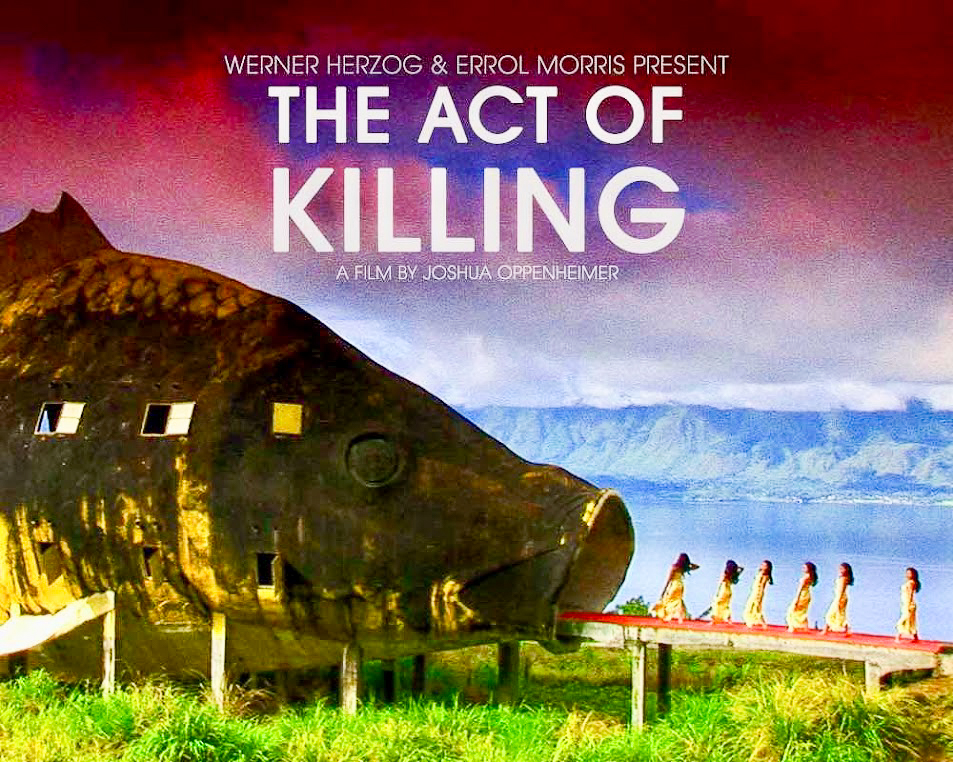
Herzog’s challenge to the boundaries between fiction and documentary has reshaped the genre. Filmmakers like Joshua Oppenheimer, whose works The Act of Killing (2012) and The Look of Silence (2014) were executive produced by Herzog, utilize "staged" reality to reach deeper historical and psychological truths, a direct application of the "ecstatic truth" principle. Herzog’s emphasis on emotional resonance over objective fact has emboldened filmmakers to explore the "darker, more unpredictable corners" of the human experience.
Academic and Critical Reception
In the twenty-first century, Herzog’s work has become a subject of rigorous philosophical analysis. Scholars have paired his films with Deleuzian theory, arguing that Herzog’s landscapes merge "outer" physical environments with the "inner" mental landscapes of his subjects, creating a correlative causality derived from empirical reality. His films are viewed not merely as representations of reality but as manifestations of its underlying image structure. This academic recognition is complemented by his continued commercial relevance, as seen in the high Rotten Tomatoes scores for films like Lessons of Darkness (100%) and Aguirre (96%).
Notable Honors and Career Milestones
Year
Organization
Award/Result
Silver Bear
1968
Berlin International Film Festival
Won (Signs of Life)
Grand Prize of the Jury
1975
Cannes Film Festival
Won (Enigma of Kaspar Hauser)
Best Director
1982
Cannes Film Festival
Won (Fitzcarraldo)
FIPRESCI Prize
2005
Venice Film Festival
Won (Wild Blue Yonder)
Oscar Nomination
2008
Academy of Motion Picture Arts/Sciences
Nominated (Encounters...)
Career Golden Lion
2025
Venice International Film Festival
Won (Lifetime Achievement)
The Rogue Film School and Practical Wisdom
A defining aspect of Herzog’s later years has been his effort to pass on his "practical" wisdom through the Rogue Film School. Unlike traditional institutions, Herzog’s school does not focus on technical equipment or academic theory. Instead, it emphasizes "real-life experience"—urging students to work as bouncers, travel on foot, and learn the "poetry of capitalism" from auctioneers. Herzog’s advice to aspiring directors is famously blunt: "Read, read, read, read, read" and "Carry bolt cutters everywhere you go".
This "rogue" approach is a rejection of the bureaucratic barriers that often stifle creativity. Herzog believes that if a story absolutely must be told, the filmmaker should not wait for the system to finance it, famously suggesting they "rob a bank" or "embezzle" if necessary to complete their vision. This uncompromising commitment to the act of creation, regardless of the obstacles, is what characterizes Herzog as a "physical filmmaker" who constantly crosses the Earth in search of "hitherto unseen images".
Conclusions on the Herzogian Worldview
The body of work produced by Werner Herzog over the past six decades constitutes a sustained meditation on the human condition pushed to its breaking point. From the mud of the Amazon to the ice of Antarctica, and from the prehistoric paintings of Chauvet to the neural pathways of modern neuroscience, Herzog has sought to articulate the "inner chronicle" of what it means to be human. His insistence on "ecstatic truth" provides a necessary corrective to a media landscape often obsessed with superficial data and "accountant's" facts.
As he continues to work into 2026, Herzog remains an essential figure in world cinema—a visionary humanist who investigates the "sublime force of nature" while simultaneously acknowledging its "monstrous indifference". Whether through his films, his operas, his prose, or his iconic acting roles, Herzog’s contribution is a "Landscape of the Soul" that invites the viewer to look beyond the appearance of reality and confront the existential abyss with "fearless direction" and "passionate idealism". In an era of increasing digital manipulation, his commitment to physical realism and the "poetry of the unrevealed truth" remains more vital than ever.
One day at the Cannes Film Festival, I was sitting in a cafe with Werner Herzog and he told me, “Our civilization is starving for great images.” I walked out of the cafe and into a screening and saw shots of people driving in cars and sitting in restaurants, the camera cut back and forth as they talked with each other about sex and crime, and I thought, yes, he’s right, these are not the images that will nourish us.
In Herzog’s films you will see monkeys gibbering around a madman in armor, who is on a sinking raft on the Amazon. And a man standing on a mountaintop and seeing the future. Villagers stunned with grief, breaking beer steins over each other’s heads because the secret of rose-colored glass has been lost. A man dragging a ship overland through the jungle. People creeping out onto thin ice to see the angels in a city at the bottom of a lake. A chicken going around and around on a conveyor belt. Clouds pouring like water down into a valley. A vampire in his grave of flesh. A man opening and closing every door in his house again and again, to be sure he is not locked in. A stagehand backstage at an opera, joyfully singing along with the tenor. A man locked in a cellar for years, wandering in amazement in the open air. The Jesuses of Russia, in sandals and beards, walking across the land with their gospel—each one presenting himself as the Christ. Dwarves in revolt. A man who could ski-jump so well he was always in danger of overshooting the landing area and flying on and on to his death. A ghost town in the shadow of a volcano expected to explode at any moment. A message being passed in a human chain reaching across the hills. This list could continue indefinitely. Some of these images are from documentaries, some are from fiction; can you guess which ones?
I met Herzog at the New York Film Festival, where he had shown his film Signs of Life, which Bob Shaye chose to inaugurate his new company, New Line Pictures. We sat in Shaye’s little apartment on Washington Square and talked into the night about the liberating, transforming power of the cinema. Every time I have seen Herzog since, the conversation has continued. Here is a man with a sublime indifference to the currents of ordinary commercial cinema. His films feel seized with visions. His characters dream of transcendence.
I think of him like those people creeping out of the ice. Each of his projects is precariously financed, because he does not supply explosions and people driving around in cars and smoking cigarettes in diners while engaged in sub-Tarantino wit about sex and crime. He doesn’t have the knack of being conventional. He is looking for the angels in their city. Maybe he will see them at last, and show them to us. Maybe the ice will break and he will drown. Or, drowning, sink down, down to be saved by the angels.


.jpg)