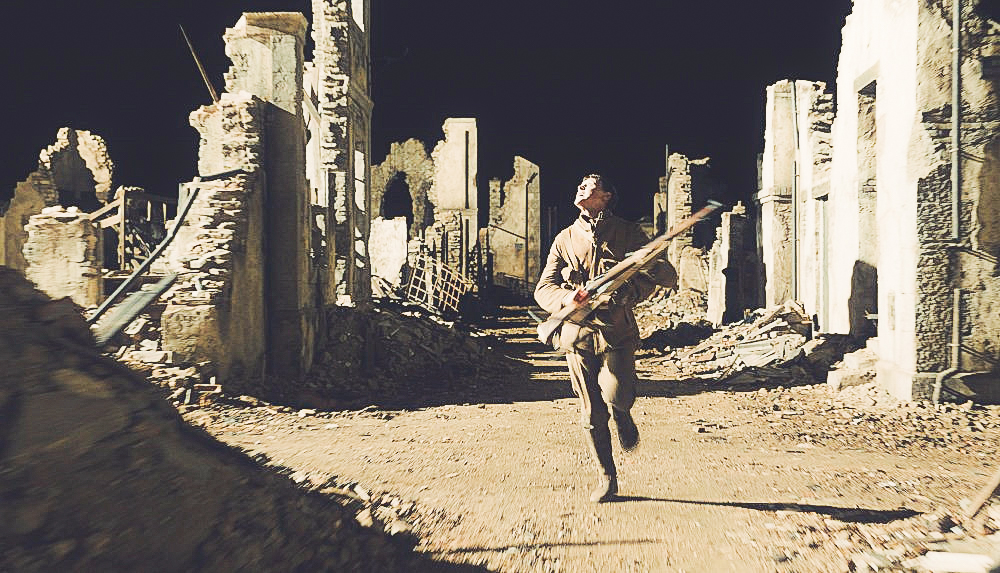
Master of Light, Shadow,
& Simplicity
"The best cinematography is that which is subservient to the story."
"Cinematography is no about creating beautiful shut, it is about creating film"
Film-maker’s eye has earned Deakins 15 Oscar nominations (and two Oscars) in celebrated work with the Coen brothers, Sam Mendes , Denis Villeneuve and others.
He is a member of both the American and British Society of Cinematographers.
Deakins' first feature film in America as cinematographer was Mountains of the Moon (1990). He began his collaboration with the Coen brothers in 1991 on the film Barton Fink. He received his first major award from the American Society of Cinematographers for his outstanding achievement in cinematography for the internationally praised major motion picture The Shawshank Redemption (1994)
He is known for his work in The Assassination of Jesse James by the Coward Robert Ford (2007), No Country for Old Men (2007), True Grit (2010), Skyfall (2012), Sicario (2015), and Blade Runner 2049 (2017).
Deakins also worked as one of the visual consultants for Pixar's animated feature WALL-E.
Roger Deakins won an Oscar for best cinematographer for his work in Blade Runner 2049 and 1917 (2019)
https://www.rogerdeakins.com/"Create sense of reality with light"
Still Photography: The Foundation
Before he was a cinematographer, Deakins was a still photographer. His 2021 book, Byways, reveals a collection of black-and-white stills taken over five decades.
The "Ironic" Eye: His still work often captures the "vanished post-war Britain" with a sense of irony and quiet observation.
The Power of B&W: While his films are known for their bold colors (like the orange haze of Blade Runner 2049), his personal photography is strictly black-and-white, focusing entirely on texture, geometry, and light.
Simplicity: His stills lack the technical artifice of Hollywood. They are snapshots of life—rural Devon, seaside landscapes, and strangers—that demonstrate his ability to find a "frame" in the chaos of reality.
.jpg)

The Deakins "Look": Core Techniques
Whether in photography or film, Deakins utilizes a specific set of visual "rules":
Naturalism and Practical Lighting
Deakins is famous for using natural light or "practical" lights (lamps, candles, or fires actually present in the scene).
The Cove Light: To mimic natural window light in a studio, he often creates a "cove"—a massive 180-degree wrap of unbleached muslin lit by dozens of small bulbs—to create a soft, directional glow that looks authentic rather than theatrical.
Motivated Light: Every light source in a Deakins frame has a logical origin. If a character is by a window, the light comes from the window.
On a train returning from a day of shooting for The Reader, Germany, 2007. Photograph: Roger A Deakins
Silhouettes and Painting with Darkness
One of his most recognizable signatures is the use of high-contrast silhouettes.
Skyfall: The fight in the Shanghai skyscraper, where characters are reduced to black shapes against a glowing blue jellyfish backdrop.
Sicario: The tunnel sequence at dusk, where soldiers descend into a black void, their forms outlined only by the fading horizon.
Philosophy: He "lights what must be felt," rather than what must be seen, often leaving half of a character's face in total darkness to create depth.
Roger Deakins, Teignmouth Dog Jumping (2000). © Roger A. Deakins.

1. Cinematography is not about creating beautiful shots.
2. It's not about the technology.
3. Have a REASON to move the camera.
4. Have a style that suits the project.
5. Create a sense of reality with the light.
6. PLAN as much as you can but be ready to ADAPT.
7. Think about how you want the audience to feel.
8. Consider why and where you're placing the camera.
Personal Philosophy: "The Director's Film"
Despite his fame, Deakins remains humble about his role. He famously stated: "There’s nothing worse than a sharp image of a fuzzy concept." He believes:
Story First: If a shot is beautiful but doesn't serve the narrative, it's a bad shot.
Technique vs. Technology: He is wary of the obsession with 4K/8K resolution and new gadgets, preferring to focus on where the camera is placed and how the light hits the subject.
Collaboration: He has long-standing partnerships with the Coen Brothers, Sam Mendes, and Denis Villeneuve because he prioritizes their directorial vision over his own "style."
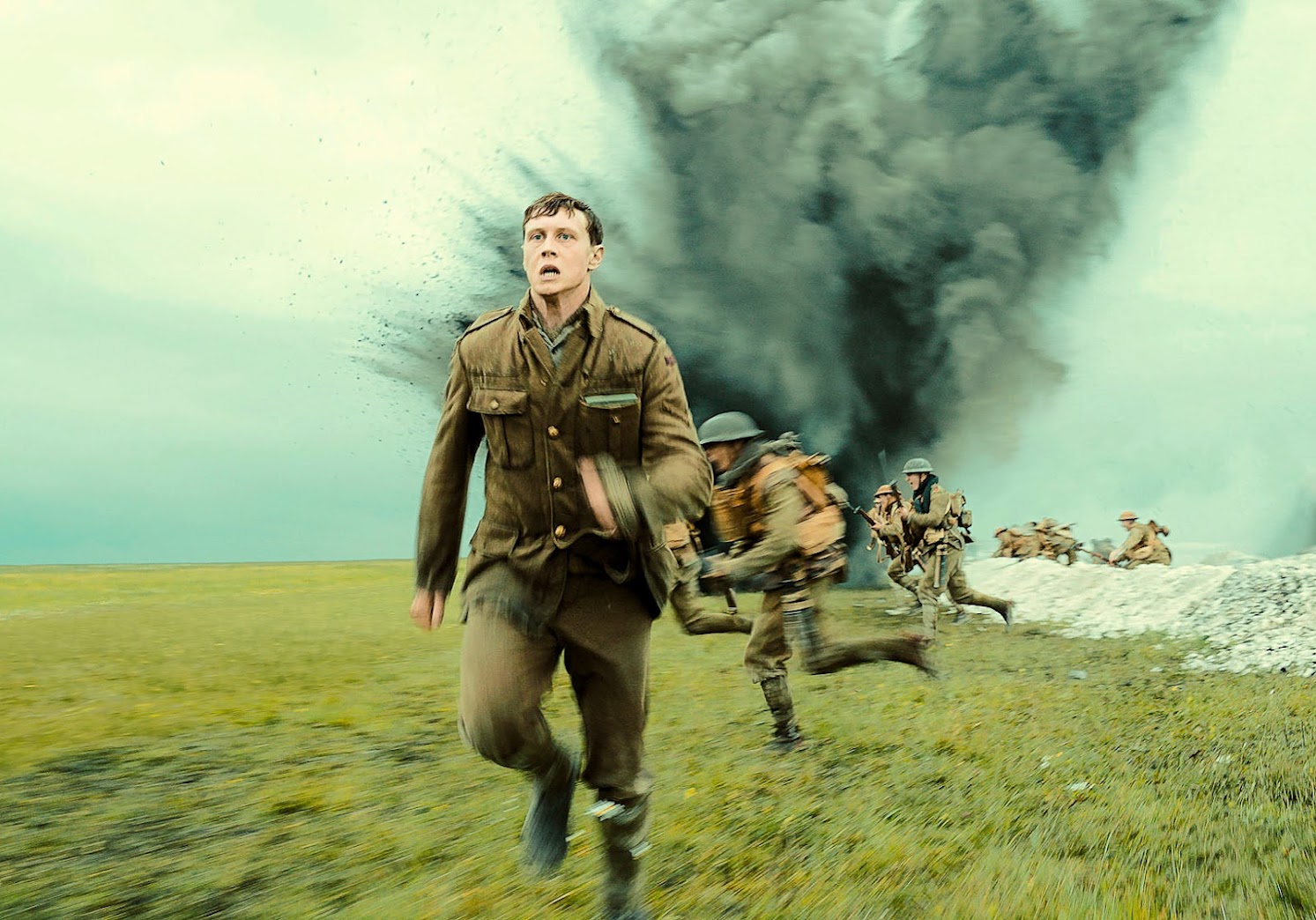
Villeneuve & Deakins on Visual Storytelling using Lighting, Composition, and Framing


.jpg)


.jpg)

.jpg)


.jpg)


-min%20(1).jpg)

.jpg)

.jpg)


.jpg)


.jpg)


.jpg)
.jpg)


.jpg)
.jpg)
.jpg)
.jpg)

-min%20(1).jpg)
.jpg)